
Authentic Japanese Fish Recipe with Soy Ginger Glaze
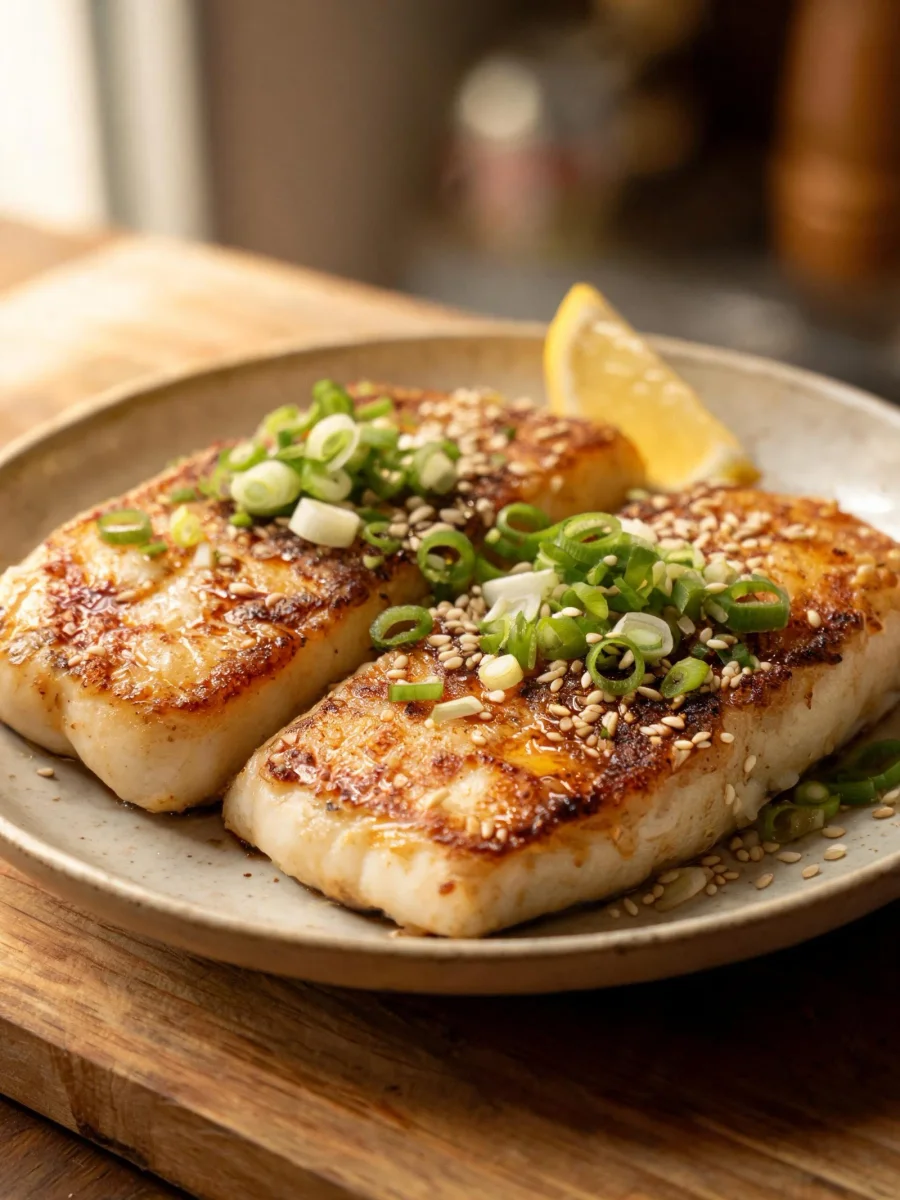
Pan-seared white fish is finished in a glossy soy, ginger and garlic glaze, then brightened with lemon. It is a quick Japanese-inspired main that pairs easily with rice and vegetables.
Ingredients
- 4 fillets, about 170 g each (6 oz each)white fish, such as cod, halibut or sea bass
- about 3 g (½ teaspoon)fine sea salt
- about 0.5 g (¼ teaspoon)black pepper
- 15 ml (1 tablespoon)neutral oil, such as vegetable or avocado oil
- 45 ml (3 tablespoons)soy sauce
- 30 ml (2 tablespoons)mirin
- 15 ml (1 tablespoon)sake or dry sherry
- 5 ml (1 teaspoon)sesame oil
- 5 ml (1 teaspoon)honey
- about 6 g (1 tablespoon)fresh ginger, grated
- 2 clovesgarlic, minced
- 2green onions, thinly sliced
- 5 ml (1 teaspoon)sesame seeds
- ½lemon, for serving
Instructions
- 1
Dry the fish
Take the fillets out of the fridge 10 minutes before cooking. Pat both sides of each one completely dry with kitchen paper.
- 2
Mix the glaze
In a small bowl, stir together the soy sauce, mirin, sake, sesame oil, honey, grated ginger and minced garlic. Set the mixture aside.
- 3
Season the fillets
Lightly season both sides of each fillet with salt and pepper.
- 4
Sear the first side
Heat the neutral oil in a non-stick or cast-iron frying pan over medium-high heat until hot but not smoking. Carefully add the fish and cook without moving it for 3 to 4 minutes, until a golden crust forms.
- 5
Cook the other side
Carefully turn each fillet. If it sticks, leave it for another 30 seconds so it can release. Cook the second side for 2 to 3 minutes.
- 6
Reduce the glaze
Pour the prepared glaze into the pan, around and over the fish. Over medium heat, let it bubble and reduce for 1 to 2 minutes, spooning the thickening glaze over the fillets.
- 7
Garnish and serve
Move the fillets to plates and spoon the remaining pan glaze over them. Finish with the sliced green onions, sesame seeds and a squeeze of fresh lemon.
What is Japanese soy ginger fish?
Soy, mirin and sake are familiar Japanese seasoning ingredients, and ginger and garlic bring a savoury, aromatic edge to this glaze. The method here is a quick pan-seared preparation rather than a claim to one specific traditional dish.
A brief sear gives the fillets colour, while reducing the glaze in the same pan lets it cling to the fish. Lemon at the end cuts through the sweet-salty finish.
Nutrition and macros by portion
The nutrition label shows one serving as written: 250 calories, 34g protein, 8g carbs, 9g fat.
| Portion | Adjustment | kcal | Protein | Carbs | Fat |
|---|---|---|---|---|---|
| Lighter | Use less pan oil | 175 kcal | 24g | 6g | 6g |
| This serving | As written | 250 kcal | 34g | 8g | 9g |
| Hungry | Add a larger rice portion | 375 kcal | 51g | 12g | 14g |
The fish provides most of the protein, while the oil and sesame oil contribute much of the fat. Rice, if served alongside, will supply most of the meal’s carbohydrate; the glaze adds a smaller amount from mirin and honey. Pair the fillet with a generous serving of vegetables and a measured portion of rice for a balanced plate.
Choose fish that holds together
Firm fillets: Cod, halibut and sea bass are suggested options; choose pieces of similar thickness so they cook at a similar pace.
Dry surface: Patting the fish thoroughly dry helps it sear instead of releasing moisture into the pan. Taking it out of the fridge 10 minutes beforehand also takes off the chill.
Build the glaze before cooking
Balanced mix: Soy sauce supplies salt and savouriness, mirin and honey add sweetness, and sake rounds out the flavour. Ginger and garlic make the sauce fragrant without needing a long marinade.
Ready at hand: Mix everything before heating the pan, as the fish cooks quickly and the glaze goes in immediately after the second side is seared.
Get a clean sear
Hot pan: Heat the oil over medium-high until it is hot but not smoking, then lower the fillets in gently. Give them the full 3 to 4 minutes undisturbed so a golden crust can form.
Easy release: If a fillet resists when you try to turn it, wait another 30 seconds rather than pulling it loose. A thin, flexible spatula can help support delicate fish.
Watch the finish
Thickening sauce: Once poured into the pan, the glaze should bubble and reduce for 1 to 2 minutes. Spoon it over the fish as it thickens, and avoid leaving it unattended because the honey can catch.
Flaky centre: The fish is ready when it is opaque and separates into flakes with gentle pressure. The exact point depends on the thickness of the fillets, so check the thickest piece.
Serve with simple sides
Rice: Plain steamed rice or brown rice makes a useful base for the pan glaze. Add a green vegetable, such as steamed broccoli or quickly cooked greens, for contrast.
Finish last: Add the spring onions, sesame seeds and lemon just before serving so the garnish stays fresh and the citrus remains bright.
Recipe notes & tips
- Choose fillets of similar thickness so they finish cooking at roughly the same time.
- Prepare the glaze and slice the garnishes before you start searing the fish.
- Use a wide pan so the fillets sit in a single layer without crowding.
- Turn the fish with a thin spatula, supporting it underneath as you lift.
- Spoon the glaze over the fish as it reduces so the tops get coated too.
- Taste a little of the pan glaze before serving; soy sauce brands vary in saltiness.
Variations
- Use salmon: Swap in salmon fillets and adjust the cooking time to their thickness.
- Add chilli: Stir a little chilli into the glaze for a gentle heat.
- Use tamari: Replace the soy sauce with tamari for a similar savoury profile.
- Add citrus zest: Grate a little lemon zest into the glaze for a brighter aroma.
- Try a different fish: Use another firm white fish, keeping the fillets a similar thickness.
Common mistakes to avoid
- Wet fish: It can steam rather than brown; pat both sides thoroughly dry before seasoning.
- Moving it too soon: The fish may tear or stick; leave it undisturbed for 3 to 4 minutes before checking.
- Forcing a stuck fillet: It may not be ready to turn; wait another 30 seconds for it to release.
- Crowded pan: The fillets may cook unevenly; use a pan large enough to arrange them in one layer.
- Over-reduced glaze: Honey can catch as the sauce thickens; keep it over medium heat and watch it closely.
How to store
Refrigerate leftover fish and glaze in a covered container for up to 2 days. Reheat gently in a covered pan over low heat with a small splash of water, just until warmed through; avoid prolonged heating, which can dry out the fish.
Frequently asked questions
Can I use frozen fish?
Yes, thaw it completely in the fridge first, then pat it very dry before seasoning. Excess moisture makes it harder to get a good sear.
Can I make the glaze without sake?
Use the dry sherry listed as an alternative. The flavour will vary slightly, but the glaze will still work.
How can I tell when the fish is cooked?
The flesh should look opaque and separate into flakes when gently pressed. Check the thickest part, since cooking time depends on fillet thickness.
Can I make this in a non-stick pan?
Yes. The recipe works in either a non-stick or cast-iron frying pan; use medium-high heat and avoid heating the oil until it smokes.
What can I serve with the fish?
Steamed rice and a green vegetable work well, as both complement the savoury-sweet glaze without competing with it.
Cook it from the original
This recipe comes from bluerecipes.com. Their page has the author’s own photos, notes and tips — the best place to cook it from.
Open the recipe on bluerecipes.com