
Pastry for Pies and Tarts
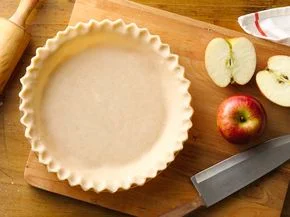
This basic pastry makes a tender, flaky base for pies and tarts, whether you need a single crust or a top and bottom. Chill the dough before rolling so it is easier to handle and holds its shape in the oven.
Ingredients
- 125 g (1 cup)Gold Medal™ plain flour
- 2.5 g (1/2 teaspoon)salt
- 81 g (1/3 cup plus 1 tablespoon)shortening
- 30–45 ml (2–3 tablespoons)cold water
Instructions
- 1
Make one crust
For an unbaked single crust, combine the flour and salt in a medium bowl. Cut in the shortening with a pastry blender, or pull two table knives through the mixture in opposite directions, until the pieces are about the size of small peas. Add the cold water 1 tablespoon at a time, tossing with a fork until the flour is moistened and the pastry nearly comes away from the side of the bowl; add 1–2 teaspoons more water if needed. Gather the pastry into a ball, then flatten it into a round on a lightly floured surface. Wrap it in cling film and chill for about 45 minutes, until firm and cold but still pliable. If chilled for longer, let it soften slightly before rolling. Roll on a floured surface into a circle 5 cm larger than an upside-down 23 cm glass pie plate, or 7.5 cm larger than a 25–28 cm tart tin. Fold the pastry into quarters and transfer it to the plate or tin. Unfold it and ease it into place, pressing against the base and sides without stretching. For a pie plate, trim the overhang to 2.5 cm, fold and roll it under level with the rim, then flute as desired. Continue with the pie recipe.
- 2
Bake one crust
For a baked crust, heat the oven to 245°C (475°F). Mix the flour and salt in a medium bowl, then cut in the shortening until the pieces are about the size of small peas. Add the cold water 1 tablespoon at a time, tossing with a fork until the flour is moistened and the pastry nearly comes away from the bowl; add 1–2 teaspoons more water if needed. Gather into a ball and flatten into a round on a lightly floured surface. Wrap in cling film and chill for about 45 minutes, until firm and cold but still pliable; if chilled longer, soften it slightly before rolling. Roll on a floured surface into a circle 5 cm larger than an upside-down 23 cm glass pie plate. Fold into quarters and transfer to the plate, then unfold and ease into place, pressing against the base and sides. For a pie, trim the overhang to 2.5 cm, fold and roll it under level with the rim, and flute if desired. For a tart, trim the pastry level with the top of the tin. Prick the base and sides thoroughly with a fork. Bake for 8–10 minutes, until lightly browned, then cool on a wire rack.
- 3
Make two crusts
For a two-crust pie, mix 250 g (2 cups) flour and 5 g (1 teaspoon) salt in a medium bowl. Cut in 177 g (2/3 cup plus 2 tablespoons) shortening until the pieces are about the size of small peas. Add 60–90 ml (4–6 tablespoons) cold water 1 tablespoon at a time, tossing with a fork until the flour is moistened and the pastry nearly comes away from the bowl; add 1–2 teaspoons more water if needed. Gather the pastry into a ball, divide it in half and flatten each half into a round on a lightly floured surface. Wrap both rounds in cling film and chill for about 45 minutes, until firm and cold but still pliable. If chilled longer, soften slightly before rolling. Roll one round on a lightly floured surface into a circle 5 cm larger than an upside-down 23 cm glass pie plate. Fold it into quarters, transfer it to the plate, unfold and ease it into place without stretching. Add the desired filling. Roll out the other round, fold it into quarters and cut slits for steam to escape. Unfold it over the filling, trim the overhang to 2.5 cm, then fold and roll the top edge under the lower one and press to seal at the rim. Flute as desired and continue with the pie or tart recipe.
What is pastry for pies and tarts?
Pie pastry is a simple mixture of flour, fat and water, used to line a tin or enclose a filling. This version uses shortening and is designed to work as an unbaked single crust, a pre-baked shell or a two-crust pie.
The method follows a classic home-baking approach: keep the pieces of fat distinct, add only enough water to bring the dough together, and chill it before rolling.
Nutrition and macros by portion
The nutrition label shows one serving as written: 145 calories, 2g protein, 12g carbs, 10g fat.
| Portion | Adjustment | kcal | Protein | Carbs | Fat |
|---|---|---|---|---|---|
| Lighter | Smaller pastry portion | 102 kcal | 1g | 8g | 7g |
| This serving | As written | 145 kcal | 2g | 12g | 10g |
| Hungry | Larger pie slice | 218 kcal | 3g | 18g | 15g |
The flour supplies most of the carbohydrates, while the shortening provides most of the fat; the pastry contains only a little protein from the flour. Serve a slice with fruit or a generous portion of vegetables alongside the pie filling to round out the plate.
Choose the right flour
Plain flour: The listed recipe uses plain flour, which gives the pastry its structure without added raising agents.
Self-raising flour: It can be used instead, but leave out the salt; the flavour and texture will differ from the plain-flour version.
Keep the fat in small pieces
Small peas: Cut the shortening into the flour until visible, pea-sized pieces remain. This helps create a more layered, flaky texture once baked.
Gentle handling: Use a pastry blender or two table knives, and stop mixing once the pieces are the right size rather than blending the mixture smooth.
Add water gradually
A tablespoon at a time: Toss the mixture with a fork as you add cold water, so it moistens evenly without becoming wet.
Ready to gather: The dough should be moistened and nearly pull away from the bowl. Add the optional extra 1–2 teaspoons only if dry flour remains and the dough will not come together.
Chill before rolling
About 45 minutes: Refrigerate the flattened dough until it is firm and cold but still pliable. This gives the shortening time to firm slightly.
Longer chilling: If the pastry becomes very firm, let it soften a little before rolling so it does not crack.
Fit the pastry without stretching
Ease it in: Fold the rolled pastry into quarters to transfer it, then unfold and gently settle it against the base and sides of the tin. Stretching can make it shrink during baking.
Finish the edge: For a pie, trim the overhang, fold it under and flute if you like. For a tart shell, trim level with the top of the tin and prick the base and sides before baking.
Know which version to use
Unbaked shell: Use the single-crust instructions when the pie recipe calls for an unbaked pastry base.
Baked shell: Bake the pricked pastry at 245°C for 8–10 minutes, until lightly browned, when the recipe needs a pre-baked crust.
Top and bottom: The two-crust method uses a doubled quantity of flour, salt and shortening, with enough cold water to bring the dough together. Cut slits in the top layer so steam can escape.
Recipe notes & tips
- Measure the water carefully and add it gradually, since the dough may need less than the full amount.
- Keep the shortening cold so it remains in small pieces as you work it into the flour.
- Use a lightly floured surface and rolling pin to help prevent sticking.
- Ease the pastry into the tin rather than pulling it to fit.
- For a baked tart shell, prick the base and sides thoroughly before it goes into the oven.
Variations
- Self-raising flour: Use it in place of plain flour, but omit the salt as directed.
- Tart shell: Roll the single crust to fit a 25–28 cm tart tin and trim it level with the rim.
- Two-crust pie: Double the flour, salt and shortening quantities given for a single crust and divide the dough into two rounds.
- Fluted edge: Fold the pie pastry under at the rim and shape the edge as desired.
- Pre-baked shell: Prick the pastry all over and bake it until lightly browned before adding a filling.
Common mistakes to avoid
- Overworking the fat: Stop cutting it in when the pieces are about the size of small peas.
- Adding too much water: Add it one tablespoon at a time and use the extra only if the dough needs it.
- Skipping the chill: Refrigerate for about 45 minutes so the pastry firms before rolling.
- Stretching the dough: Ease it into the tin instead, to help prevent shrinkage.
- Forgetting steam vents: Cut slits in the top crust of a two-crust pie before placing it over the filling.
How to store
Wrap unbaked pastry tightly and refrigerate it until ready to roll; if it becomes firm, let it soften slightly first. A baked shell can be kept covered at room temperature for up to 2 days. Reheat a baked shell briefly in a moderate oven if you want to crisp it before filling.
Frequently asked questions
Can I make the pastry ahead?
Yes. Wrap the flattened dough and chill it until you are ready to roll. If it has become very firm, leave it out briefly until pliable.
How do I know when the dough has enough water?
The flour should be moistened and the pastry should nearly come away from the side of the bowl. Add water in small amounts if dry patches remain.
Why does the dough need to be chilled?
The recipe chills the pastry so the shortening firms slightly, which helps the baked crust turn out flaky and makes the dough easier to handle.
Do I need to bake the crust before filling it?
Only if your pie or tart recipe calls for a baked shell. For that version, prick the pastry and bake it at 245°C for 8–10 minutes, until lightly browned.
Can I use this recipe for a two-crust pie?
Yes. Follow the two-crust method, which specifies 250 g flour, 5 g salt and 177 g shortening, plus 60–90 ml cold water. Divide the dough into two rounds and cut steam vents in the top.
Cook it from the original
This recipe comes from goldmedalflour.com. Their page has the author’s own photos, notes and tips — the best place to cook it from.
Open the recipe on goldmedalflour.com