
Sweet Paratha
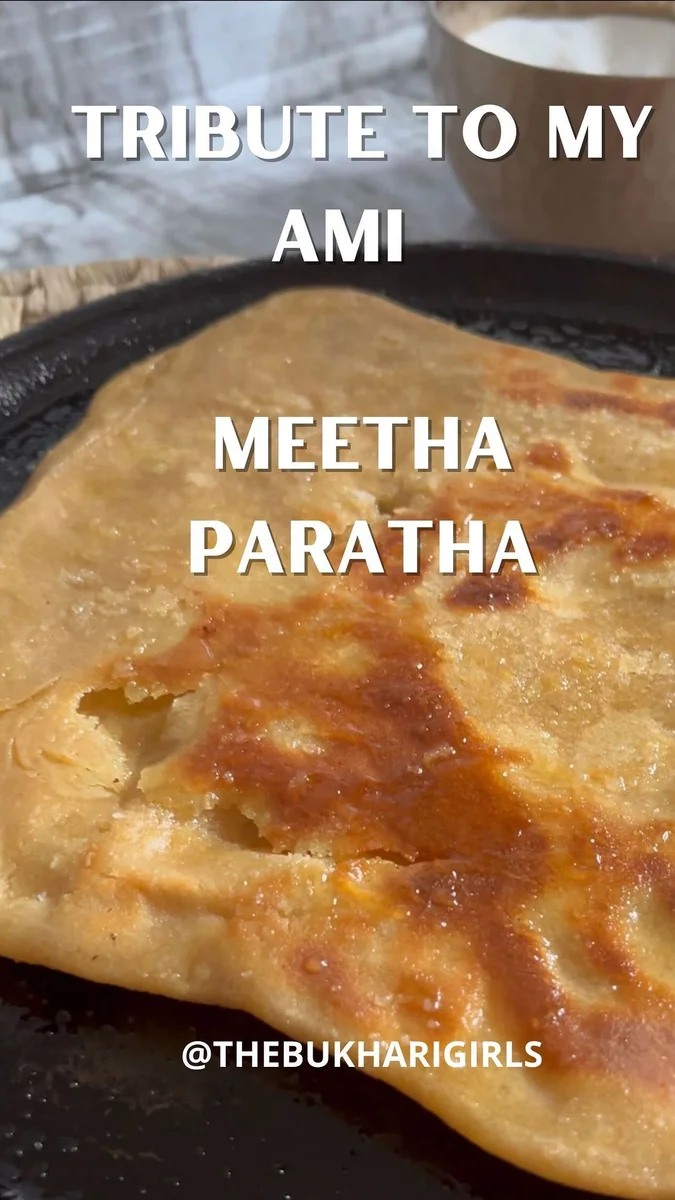
Sweet paratha is a pan-cooked whole-wheat flatbread layered with ghee and sugar, then folded and cooked until golden. It makes a warm, crisp-edged treat for breakfast or a snack.
Ingredients
- 120 g (1 cup)whole-wheat flour
- About 25 g (2 tbsp) per parathasugar
- About 30 ml (2 tbsp), or as neededghee
- ½ tspoil
- To tastesalt
- As neededwarm water
- As needed for dustingwhole-wheat flour
Instructions
- 1
Mix the flour
Put the whole-wheat flour, salt and ½ teaspoon of oil in a wide bowl. Mix them together with your fingers.
- 2
Knead the dough
Add warm water gradually, mixing until a soft dough forms. Knead for a couple of minutes until it is soft and pliable.
- 3
Rest the dough
Cover the dough with a kitchen cloth and leave it to rest for at least 20 minutes.
- 4
Heat the tawa
Set a tawa over medium heat.
- 5
Divide the dough
Pinch the dough into equal-sized balls.
- 6
Roll into circles
Roll each ball into a 10 cm (4-inch) circle, dusting with flour as needed.
- 7
Fill and fold
Brush melted ghee over the dough and sprinkle on the sugar. Fold it into a square.
- 8
Roll the square
Roll the folded dough gently.
- 9
Cook the parathas
Cook each paratha on the tawa. Brush both sides with ghee and sprinkle on some sugar.
- 10
Brown both sides
Cook until golden brown on both sides.
- 11
Serve warm
Serve the parathas while warm.
What is sweet paratha?
Paratha is a South Asian flatbread, commonly made with wheat flour and cooked on a hot griddle. Sweet versions layer the dough with sugar and fat for a richer, lightly crisp result.
Here, ghee and sugar are folded into the dough before it is rolled again. That simple layering gives the paratha sweet pockets and browned edges.
Nutrition and macros by portion
The nutrition label shows one serving as written: 300 calories, 5g protein, 47g carbs, 11g fat.
| Portion | Adjustment | kcal | Protein | Carbs | Fat |
|---|---|---|---|---|---|
| Lighter | Use less sugar and ghee | 210 kcal | 4g | 33g | 8g |
| This serving | As written | 300 kcal | 5g | 47g | 11g |
| Hungry | Add another paratha | 450 kcal | 8g | 71g | 17g |
Most of the carbohydrates come from the whole-wheat flour and sugar, while ghee supplies most of the fat. There is some protein in the flour, but the recipe is not protein-rich; serve a paratha with plain yoghurt for a more balanced plate.
The dough matters
Soft dough: add the warm water gradually so you can stop when the dough is pliable rather than sticky.
Resting time: leave the covered dough for at least 20 minutes, as directed. This gives it time to relax and makes it easier to roll.
Folding in the filling
Ghee layer: brush it over the rolled dough so the sugar has something to cling to.
Gentle rolling: after folding the dough into a square, roll without pressing hard. Too much pressure can push sugar out through the edges.
Cooking on the tawa
Even heat: medium heat gives the dough time to cook through while the outside turns golden. If the tawa is too hot, the surface may brown before the middle is cooked.
Doneness: look for golden-brown colour on both sides, as the method specifies. Brush with ghee while cooking.
Sweetness and texture
The recipe calls for about 2 tablespoons of sugar per paratha, so the result is distinctly sweet. Sprinkle the additional sugar during cooking to suit your taste.
The edges can turn crisp while the centre remains softer. Serve soon after cooking for the best contrast.
Serving ideas
Serve the parathas warm on their own, or pair them with plain yoghurt to offset their sweetness.
Fresh fruit makes a simple accompaniment. A savoury side can also turn them into part of a more substantial meal.
Recipe notes & tips
- Add warm water a little at a time to avoid making the dough sticky.
- Keep the dough covered while you shape the portions so it does not dry out.
- Dust lightly when rolling; excess flour can burn on the hot tawa.
- Use melted ghee so it spreads evenly over the dough.
- Roll the folded square gently to help keep the sugar inside.
- Cook over medium heat and check both sides for an even golden colour.
Variations
- Reduce the sugar: use less in the filling for a milder sweetness.
- Add cardamom: mix a little ground cardamom with the sugar for a fragrant filling.
- Use cinnamon: sprinkle a small amount over the ghee before folding.
- Serve with yoghurt: add plain yoghurt on the side for a cool contrast.
- Try a fruit side: serve with sliced banana or another fresh fruit.
Common mistakes to avoid
- Adding water too quickly: the dough can turn sticky, so add it gradually.
- Skipping the rest: the dough may be harder to roll, so leave it covered for at least 20 minutes.
- Overfilling the dough: sugar may escape during rolling, so keep the filling within the folded edges.
- Rolling too firmly: the filling can be squeezed out, so use a gentle touch.
- Using high heat: the outside can brown too fast, so cook over medium heat.
- Serving after it cools: the texture is best warm, so serve soon after cooking.
How to store
Let leftover parathas cool, then store them in an airtight container in the fridge for up to 3 days. Reheat in a dry pan over low to medium heat until warmed through.
Frequently asked questions
Can I make the dough ahead?
Yes. Cover it well and keep it refrigerated, then let it lose some of its chill before rolling.
How much water should I use?
The recipe does not specify an amount. Add warm water gradually until the dough is soft and pliable.
Can I use butter instead of ghee?
Ghee is specified for brushing, but melted butter can be used if needed. It may brown differently, so keep an eye on the parathas as they cook.
Why is the sugar coming out?
The dough may have been overfilled or rolled too firmly. Keep the sugar inside the folded edges and roll gently.
How do I know when a paratha is cooked?
It should be golden brown on both sides, as described in the method.
Can I make these less sweet?
Yes. Use less sugar in the filling and add only a small sprinkle during cooking, or leave that final sprinkle out.
Cook it from the original
This recipe comes from fooooods.com. Their page has the author’s own photos, notes and tips — the best place to cook it from.
Open the recipe on fooooods.com