
Pork Gyoza Recipe
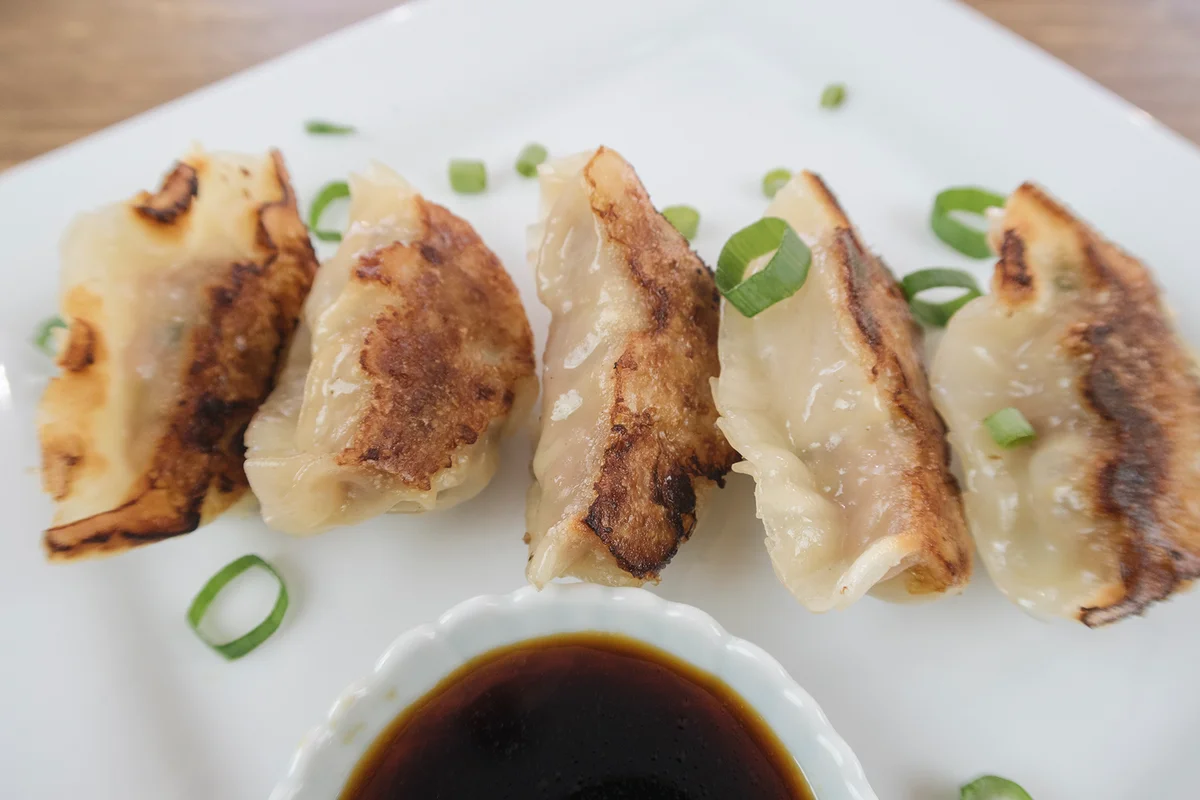
These Japanese pork gyoza are filled with seasoned pork, cabbage and aromatics, then pan-fried and steamed for tender wrappers and crisp bottoms. Store-bought wrappers make shaping a manageable project, and a sharp soy, vinegar and chilli oil dip finishes them.
Ingredients
- 1 packagegyoza wrappers
- 454 g (1 pound)minced pork
- 3spring onions, finely chopped
- 1–2garlic cloves, finely chopped
- 10 ml (2 tsp)grated ginger
- 5 ml (1 tsp)red miso paste (or soy sauce if unavailable)
- 710 ml (3 cups)Chinese leaf, finely chopped
- 15 ml (1 tbsp)vegetable oil or sesame oil
- 15 ml (1 tbsp)soy sauce
- 7.5 ml (½ tbsp)rice vinegar
- A few drops, optionalchilli oil
Instructions
- 1
Mix the filling
Put all the filling ingredients in a bowl and mix thoroughly with your hands until evenly combined.
- 2
Fill and fold
Set out the gyoza wrappers and place a small amount of pork mixture in the centre of each. Wet your fingers and moisten the wrapper edge, fold it in half to make a half-moon, then pleat and press the edge closed.
- 3
Heat the oil
Set a frying pan over medium-low heat and add half of the oil.
- 4
Brown the bases
Once the oil is warm, arrange the gyozas flat-side down. Fry for 2 minutes without moving them.
- 5
Steam the gyozas
Pour water into the pan and cover it with a lid. Cook for 8 minutes, until the wrappers are soft and the water has evaporated.
- 6
Crisp the bottoms
Remove the lid and let any remaining water evaporate. Add the remaining oil and fry for 2–5 minutes. Leave the gyozas undisturbed for at least 2 minutes before trying to move them, so the bases can release without tearing.
- 7
Rest the gyozas
When the gyozas release from the pan, take them out and leave them to rest for a couple of minutes while you make the dipping sauce.
- 8
Mix the sauce
Combine the soy sauce, rice vinegar and chilli oil in a dipping dish. Taste and add more vinegar or chilli oil if you like.
What are pork gyoza?
Gyoza are Japanese dumplings, commonly filled with pork and vegetables and cooked so the base turns crisp while the top steams. They are related to Chinese jiaozi, adapted into a Japanese style of dumpling.
This version uses ready-made wrappers and a filling of pork, Chinese leaf, spring onion, garlic and ginger. The pan-fry-then-steam method gives you contrasting textures without needing special equipment.
Nutrition and macros by portion
The nutrition label shows one serving as written: 67 calories, 3g protein, 7g carbs, 3g fat.
| Portion | Adjustment | kcal | Protein | Carbs | Fat |
|---|---|---|---|---|---|
| Lighter | Use less cooking oil | 47 kcal | 2g | 5g | 2g |
| This serving | As written | 67 kcal | 3g | 7g | 3g |
| Hungry | Serve with rice | 101 kcal | 5g | 11g | 5g |
The pork contributes most of the protein and a share of the fat, while the wrappers provide much of the carbohydrate; the cooking oil adds further fat. Serve a portion with vegetables alongside to round out the plate.
Building the filling
Pork: it gives the filling richness and helps bind the chopped vegetables and seasonings together. Mix until the ingredients are evenly distributed, rather than working the mixture for a long time.
Chinese leaf: chop it finely so it fits neatly inside the wrappers and cooks through during steaming. The recipe uses it raw in the filling.
Folding and sealing
Small filling: use only a little in each wrapper, leaving a clear border so the edges can meet. Too much makes it difficult to pleat and seal the dumpling.
Moistened edge: run a damp fingertip around the wrapper before folding. Press the seam firmly closed as you pleat it to help prevent filling escaping in the pan.
Getting the texture right
First fry: keep the gyozas flat-side down and still for the first 2 minutes. This gives the bottoms time to brown and release from the pan.
Steam: cover the pan after adding water and cook for 8 minutes, until the wrappers soften and the water has evaporated. If they are still firm, check that the pan stayed covered during this stage.
Finishing without tearing
Uncover: let any remaining water cook off before adding the rest of the oil. The recipe allows 2–5 minutes for the final fry.
Release: resist lifting the dumplings too early; wait at least 2 minutes after adding the extra oil. If a base still seems stuck, give it a little longer rather than pulling at the wrapper.
Serving the gyoza
Dip: the soy sauce brings savouriness, rice vinegar adds acidity and chilli oil contributes heat. Taste the mixture and adjust the vinegar or chilli oil to suit your preference.
On the plate: serve the gyoza hot with the dipping sauce. For a more substantial meal, add rice and a simple vegetable side.
Recipe notes & tips
- Keep unused wrappers covered while shaping so their edges do not dry out.
- Finely chop the Chinese leaf, spring onions and garlic for an even filling.
- Use a small amount of filling in each wrapper to make sealing easier.
- Arrange the dumplings in a single layer with their flat sides against the pan.
- Taste the dipping sauce before serving and adjust its vinegar or chilli oil.
Variations
- More ginger: increase the grated ginger for a sharper, more aromatic filling.
- Extra heat: add more chilli oil to the dipping sauce a few drops at a time.
- Sesame finish: choose sesame oil for the pan to bring a toasted note.
- Soy in the filling: use soy sauce in place of red miso if miso is unavailable.
- Vegetable side: serve with lightly cooked greens for a simple accompaniment.
Common mistakes to avoid
- Overfilling wrappers: use a smaller amount so the edges can seal properly.
- Dry wrapper edges: dampen the edge with water before folding and pressing it closed.
- Moving them too soon: leave the bases alone for at least 2 minutes so they can release.
- Skipping the lid: cover the pan during the 8-minute steaming stage to soften the wrappers.
- Pulling at stuck dumplings: give them more time to fry rather than tearing the skins.
How to store
Refrigerate cooked gyoza in a covered container and eat within 3 days. Reheat in a frying pan until hot throughout, adding a small splash of water and covering briefly if the wrappers need softening.
Frequently asked questions
Can I use frozen gyoza wrappers?
Yes. Defrost them according to the packet instructions and keep them covered while you fill them so they do not dry out.
How do I know the gyoza are cooked?
After the covered 8-minute steam, the wrappers should be soft and the water should have evaporated. The filling should be cooked through before serving.
Can I make the gyoza ahead?
You can shape them ahead and keep them covered in the fridge until ready to cook. Separate layers so the wrappers do not stick together.
Why are my gyoza sticking to the pan?
They may need more time to fry before you lift them. Let the bases cook for at least 2 minutes after adding the extra oil, then try loosening one gently.
Can I leave out the chilli oil?
Yes. It is optional, and the dipping sauce can be served without it. Add more vinegar if you would like a sharper dip.
Cook it from the original
This recipe comes from goodlifexplorers.com. Their page has the author’s own photos, notes and tips — the best place to cook it from.
Open the recipe on goodlifexplorers.com