
Mochi
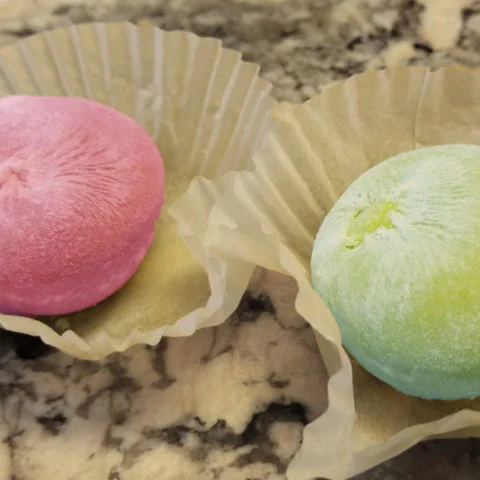
This simple Japanese mochi is a soft, chewy rice-flour sweet made with a short list of ingredients and baked in one dish. Cut it into bite-sized pieces and enjoy it plain or with your choice of ice cream, azuki paste or green tea powder.
Ingredients
- 60 g (½ cup)mochiko flour
- 100 g (½ cup)sugar
- 1.25 ml (¼ teaspoon)baking powder
- 120 ml (½ cup)water
- 100 ml (¼ of a 13½ oz can)full-fat coconut milk
- for dustingcornflour
- optionalice cream, azuki red bean paste, green tea powder or food colouring
Instructions
- 1
Preheat the oven
Heat the oven to 135–150°C. Use the higher temperature for higher elevations or older ovens.
- 2
Mix the batter
Stir the mochiko flour, sugar, baking powder, water and coconut milk until evenly combined. If you like, mix in a couple of drops of food colouring.
- 3
Bake the mixture
Line a baking dish with parchment paper and pour in the mixture. Cover the whole dish with foil and bake for 50–65 minutes, until the mochi is slightly firm.
- 4
Cool and cut
Leave the mochi to cool for at least an hour, then dust it with cornflour and cut it into small pieces. If you like, dust with green tea powder or serve with ice cream or azuki red bean paste.
What is mochi?
Mochi is a Japanese sweet known for its springy, chewy texture, traditionally made from glutinous rice. This baked version uses mochiko, a finely milled glutinous rice flour, with coconut milk for a rich, tender bite.
A short ingredient list and oven method make this an approachable way to prepare mochi at home. The pieces can be served plain or finished with the optional toppings.
Nutrition and macros by portion
The nutrition label shows one serving as written: 200 calories, 2g protein, 38g carbs, 5g fat.
| Portion | Adjustment | kcal | Protein | Carbs | Fat |
|---|---|---|---|---|---|
| Lighter | Smaller pieces, fewer toppings | 140 kcal | 1g | 27g | 4g |
| This serving | As written | 200 kcal | 2g | 38g | 5g |
| Hungry | Double the batch | 300 kcal | 3g | 57g | 8g |
Most of the carbohydrates come from the mochiko flour and sugar, while the full-fat coconut milk supplies most of the fat. The recipe has little protein; serve a few pieces alongside fruit and a source of protein, such as yoghurt, to make a more balanced snack.
Choosing the ingredients
Mochiko flour: Use glutinous rice flour labelled mochiko; ordinary rice flour will not give the same characteristic chew.
Coconut milk: Full-fat coconut milk gives the mixture a richer texture. Stir it well before measuring if the contents have separated in the can.
Sugar: The sugar sweetens the mochi and contributes to its soft, chewy texture, so avoid reducing it substantially on a first attempt.
Mixing a smooth batter
Even mixing: Combine the dry ingredients with the water and coconut milk until the mixture looks uniform. Check the bottom and sides of the bowl for pockets of flour.
Colour: Add just a couple of drops of food colouring while mixing, if using. The colour is optional and does not change the baking method.
Baking until set
Covered dish: Parchment makes the baked mochi easier to lift out, while foil covers the dish during baking as directed.
Doneness: Start checking at 50 minutes. The recipe’s cue is a slightly firm texture; if it has not reached that point, continue baking and check again before 65 minutes.
Cooling and cutting
Cooling time: Let the mochi cool for at least an hour before cutting. This gives it time to firm up enough to handle.
Cornflour: Dust the surface and knife with cornflour as needed to help prevent sticking. Cut into small pieces once the slab has cooled.
Serving ideas
Toppings: Green tea powder adds a pleasantly bitter contrast, while ice cream or azuki red bean paste makes the pieces more dessert-like.
On its own: The mochi can also be enjoyed plain, with a light dusting of cornflour. Because this recipe makes a small batch, double the ingredients if you want to share it with more people.
Recipe notes & tips
- Use mochiko rather than ordinary rice flour for the intended chewy texture.
- Mix thoroughly so no dry flour remains at the bottom of the bowl.
- Use the higher end of the oven range if that suits your oven or elevation.
- Allow at least an hour for cooling before you try to cut the mochi.
- Dust the knife and cut surfaces with cornflour if they become sticky.
- Add optional toppings after baking rather than mixing them into the batter.
Variations
- Green tea finish: Dust the cut pieces with green tea powder just before serving.
- Azuki topping: Serve the mochi with azuki red bean paste for a sweet, earthy contrast.
- Ice cream: Pair the pieces with a scoop of ice cream for a chilled dessert.
- Coloured mochi: Mix in a couple of drops of food colouring for a different look.
- Plain batch: Leave out the optional additions and serve the pieces with their cornflour dusting.
Common mistakes to avoid
- Using ordinary rice flour: It will not produce the same chewy texture; choose mochiko flour.
- Leaving flour pockets: Mix until the batter is completely even, scraping the bowl as you go.
- Skipping the foil: Cover the whole dish with foil as the recipe directs.
- Cutting too soon: Wait at least an hour for the mochi to cool before slicing.
- Sticking to the knife: Dust the knife with cornflour and cut the cooled slab into small pieces.
How to store
Store leftover pieces in an airtight container at room temperature for up to 1 day, or refrigerate for up to 3 days. Refrigeration can make mochi firmer; let it sit at room temperature before serving.
Frequently asked questions
Can I use ordinary rice flour instead of mochiko?
Mochiko is glutinous rice flour and gives mochi its chewy texture. Ordinary rice flour is not a direct substitute for this recipe.
How do I know when the mochi is done?
Bake for 50–65 minutes, until it feels slightly firm, as specified in the method. Check as it approaches the lower end of the time range.
Why does the mochi need to cool before cutting?
The recipe calls for at least an hour of cooling so the slab can firm up before you handle and cut it.
Can I leave out the coconut milk?
Coconut milk is part of the batter and contributes richness, so leaving it out would change the result. The recipe recommends full-fat coconut milk.
What can I serve with mochi?
Serve it plain, dusted with green tea powder, or alongside ice cream or azuki red bean paste.
Cook it from the original
This recipe comes from gluttodigest.com. Their page has the author’s own photos, notes and tips — the best place to cook it from.
Open the recipe on gluttodigest.com