
Flounder & Carrot
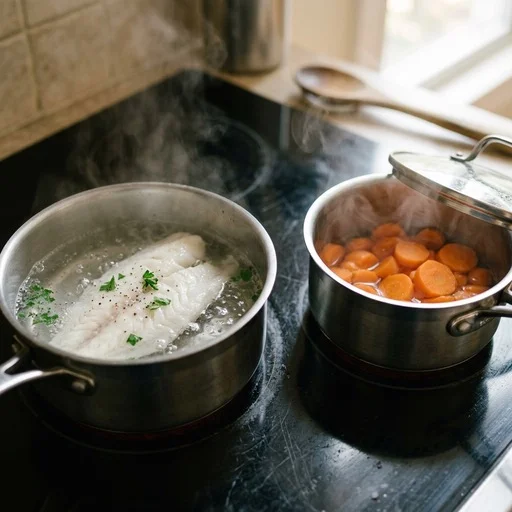
A smooth, mild purée of poached flounder and steamed carrot, made for an early fish meal. It is a simple option when you want to introduce fish alongside a familiar, naturally sweet vegetable.
Ingredients
- 80 gskinless flounder fillet
- 100 gcarrot, peeled and sliced
- for steaming and poachingwater
Instructions
- 1
Steam the carrot
Peel and slice the carrot into rounds. Steam for 10–12 minutes, until very soft.
- 2
Poach the fish
Poach the skinless flounder in simmering water for 6–8 minutes, until cooked through. Remove it and check carefully for bones.
- 3
Blend until smooth
Put the steamed carrot and flaked flounder in a blender with a little cooking liquid. Blend until smooth and creamy.
- 4
Cool before serving
Leave the purée to cool to room temperature before serving.
What is flounder and carrot?
This is a simple fish-and-vegetable purée rather than a dish tied to one particular culinary tradition. Combining flaky white fish with soft carrot makes a mild, smooth meal for a baby beginning to explore fish.
The version here cooks the two ingredients separately, then blends them together. That gives you control over each ingredient’s texture and lets you use a little cooking liquid to adjust the finish.
Nutrition and macros by portion
The nutrition label shows one serving as written: 111 calories, 15g protein, 10g carbs, 2g fat.
| Portion | Adjustment | kcal | Protein | Carbs | Fat |
|---|---|---|---|---|---|
| Lighter | Use a smaller portion | 78 kcal | 11g | 7g | 1g |
| This serving | As written | 111 kcal | 15g | 10g | 2g |
| Hungry | Make a larger batch | 167 kcal | 23g | 15g | 3g |
Carrot provides most of the carbohydrates, while flounder supplies most of the protein and a small amount of fat. To balance the meal, offer it as part of a varied day of age-appropriate foods rather than adding ingredients to the purée.
Why cook the ingredients separately?
Carrot: steaming the sliced rounds until very soft makes them easier to blend into a creamy purée.
Flounder: poaching keeps the fillet moist without adding another ingredient. Check it carefully for bones after cooking and before blending.
Getting the texture right
Blend the fish and carrot thoroughly, adding only a little cooking liquid at first. Add more gradually if the mixture is too thick for your preferred texture.
For a less smooth texture, mash or pulse the cooked ingredients rather than blending continuously, while keeping the consistency appropriate for your baby’s stage.
Doneness cues
Carrot: after 10–12 minutes of steaming, a piece should be very soft and easy to squash with a fork.
Fish: after 6–8 minutes in simmering water, the flounder should be cooked through and flake easily. Cooking time can vary with the thickness of the fillet, so check the centre.
Serving and cooling
Allow the blended mixture to cool to room temperature before serving, as directed. Check the temperature yourself before offering it to your baby.
Serve the purée on its own or alongside other age-appropriate foods. Follow your usual safe feeding practices and supervise your baby while eating.
A simple first fish meal
The carrot brings natural sweetness and most of the dish’s carbohydrate, while the flounder supplies most of its protein. The fish also contributes most of the fat, though the recipe contains no added oil.
Because this is a small, single-ingredient-focused meal, you can balance the plate across the day with other suitable foods rather than changing the purée itself.
Recipe notes & tips
- Cut the carrot into similarly sized rounds so the pieces soften at a similar rate.
- Keep the poaching water at a gentle simmer rather than a rolling boil.
- Flake the fish apart and inspect it carefully for bones before blending.
- Add cooking liquid a little at a time so the purée does not become too thin.
- Cool the purée before serving and check its temperature.
Variations
- Adjust the texture: mash the cooked ingredients instead of blending for a less smooth finish suited to your baby’s stage.
- Use another root vegetable: replace some carrot with a well-cooked, soft root vegetable.
- Make it thicker: use less cooking liquid and blend only until the ingredients come together.
- Make extra: prepare a larger batch by scaling up the ingredients and cooking times as needed.
Common mistakes to avoid
- Undercooked carrot: steam until very soft so it blends smoothly.
- Boiling the fish hard: keep the water at a simmer to poach the fillet gently.
- Missing a bone: flake and inspect the fish carefully before it goes into the blender.
- Adding too much liquid: start with a little and add more only until the texture is right.
- Serving it too warm: let the purée cool to room temperature and check it before feeding.
How to store
Refrigerate leftovers promptly in a clean, covered container and use within 24 hours. Reheat only the portion needed until piping hot, then cool it to a safe temperature; do not reheat the same portion more than once.
Frequently asked questions
Can I use frozen flounder?
Yes, thaw it safely before poaching and check that it is cooked through. Follow the storage instructions on the fish packaging.
How can I tell when the flounder is cooked?
It should be opaque and flake easily. Check the thickest part, then inspect the flakes carefully for bones.
Can I make the purée without a blender?
Yes. Mash the very soft carrot and flaked fish thoroughly with a fork, adding a little cooking liquid to loosen the mixture.
Can I freeze this purée?
It can be frozen in clean, portion-sized containers. Thaw it safely in the refrigerator and reheat the portion thoroughly before cooling it to serving temperature.
Can I make it ahead?
You can prepare it ahead and refrigerate it promptly in a covered container for up to 24 hours. Reheat only the amount you plan to serve.
Cook it from the original
This recipe comes from blwrecipes.com. Their page has the author’s own photos, notes and tips — the best place to cook it from.
Open the recipe on blwrecipes.com