
Shrimp and Pesto Pasta
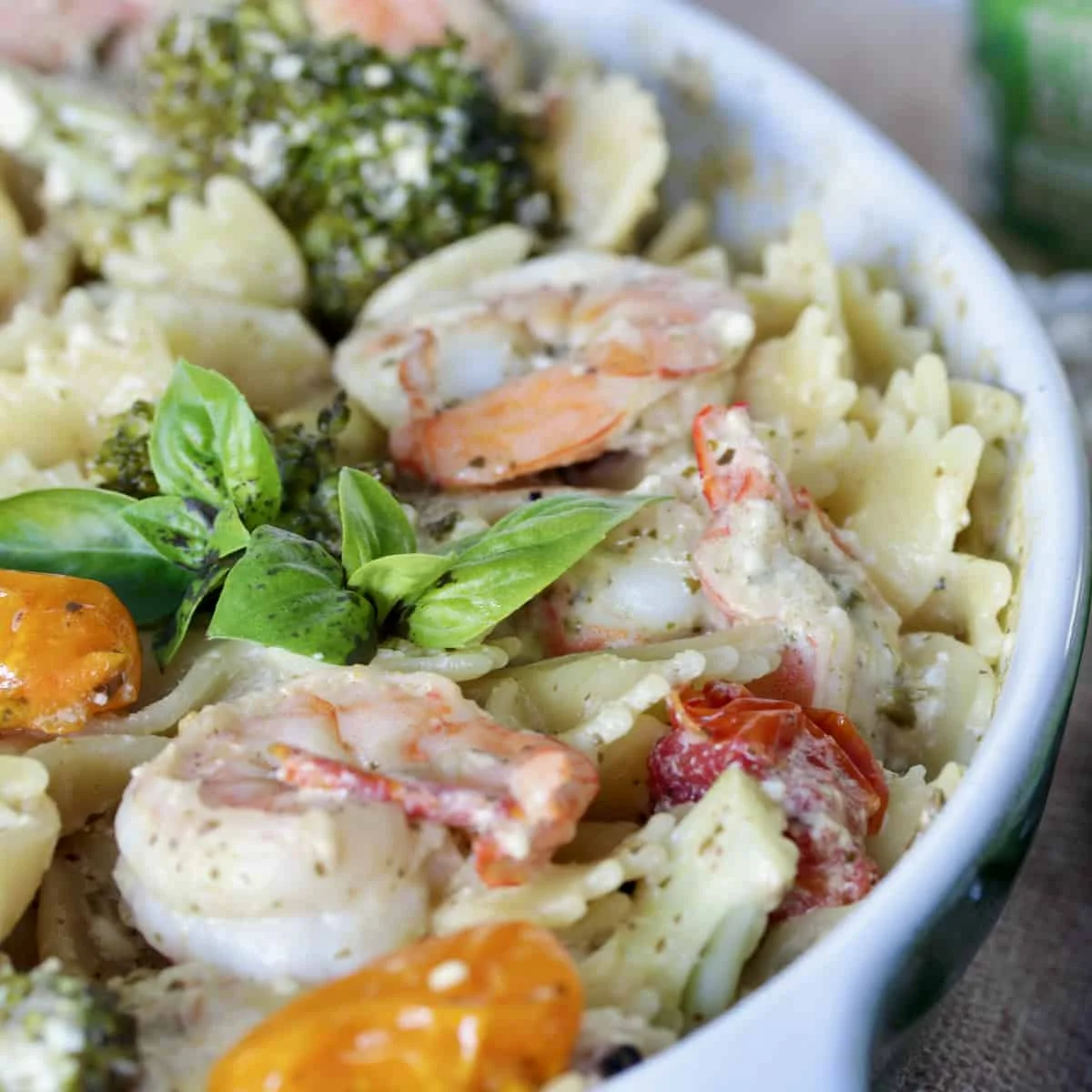
This baked feta pasta combines shrimp, cherry tomatoes and broccoli with a distinctive sea asparagus pesto. It is an oven-led meal with a creamy sauce, warm pasta and crisp pesto-topped baguette for serving.
Ingredients
- 1 jar (113 g / 4 oz)Foraged & Found sea asparagus pesto
- 1 block (227 g / 8 oz)feta cheese
- 37.5 ml (2½ tablespoons)extra-virgin olive oil
- 0.6 ml (⅛ teaspoon)red pepper flakes
- 300 g (2 cups)cherry tomatoes, assorted colours if you like
- 180 g (2 cups)broccoli florets
- 227 g (½ pound; U 51 to 60)fresh or frozen shrimp, peeled, deveined, tails removed and thawed
- 0.6 ml (⅛ teaspoon)red pepper flakes
- 227 g (8 oz)farfalle pasta, or your favourite shape
- 1 small loaf (255 g / 9 oz)French baguette, sliced horizontally in half
- 30 ml (2 tablespoons)grated Parmesan cheese
- To tastefresh herbs, for garnish
Instructions
- 1
Heat the oven
Heat the oven to 200°C (400°F). Arrange the racks so one is in the lower-centre position and the other is in the upper part of the oven.
- 2
Prepare the feta
Spoon 1 tablespoon of pesto over the feta. Place it in the centre of a 23 × 33 cm (9 × 13 inch) baking dish, drizzle with ½ tablespoon of olive oil and sprinkle with red pepper flakes.
- 3
Coat the vegetables
In a large bowl, toss 3 tablespoons of pesto with the remaining olive oil, tomatoes and broccoli until the vegetables are coated. Spoon them around the feta in the baking dish.
- 4
Bake the vegetables
Bake the dish on the centre rack for 20 minutes.
- 5
Add the shrimp
Meanwhile, toss the shrimp with 2 tablespoons of pesto. After the first 20 minutes of baking, take the dish out of the oven and arrange the shrimp around its edge, on top of the broccoli and tomatoes. Return it to the oven and bake for 8–10 minutes, until the shrimp are pink and cooked through.
- 6
Cook the pasta
Cook the pasta according to the packet directions in lightly salted water. Drain it, reserving 120 ml (½ cup) of the pasta water.
- 7
Toast the bread
Spread some of the remaining pesto over the cut sides of the bread and sprinkle with Parmesan. Place it on a baking sheet and bake on the upper rack for 5 minutes, or until golden and crisp. Slice into serving pieces.
- 8
Make the sauce
Take the baking dish out of the oven and immediately toss the feta, shrimp, broccoli and tomatoes together, adding some of the reserved pasta water to make a creamy sauce. Add the warm pasta and toss again.
- 9
Garnish and serve
Top with fresh herbs and serve with the bread.
What is baked feta pasta?
Baked feta pasta is a modern pasta dish built around feta baked with vegetables until it softens and can be mixed into a sauce. It draws on familiar Italian ingredients and pasta-making traditions, while this oven-baked format is a newer, widely adapted approach.
Here, sea asparagus pesto brings a briny, savoury note, while shrimp, broccoli and tomatoes make the tray bake a more substantial meal. The bread uses some of the same pesto, so it echoes the flavours in the pasta.
Nutrition and macros by portion
The nutrition label shows one serving as written: 354 calories, 16g protein, 53g carbs, 9g fat.
| Portion | Adjustment | kcal | Protein | Carbs | Fat |
|---|---|---|---|---|---|
| Lighter | More broccoli, less bread | 248 kcal | 11g | 37g | 6g |
| This serving | As written | 354 kcal | 16g | 53g | 9g |
| Hungry | Larger pasta portion | 531 kcal | 24g | 80g | 14g |
The pasta and baguette provide most of the carbohydrates, while olive oil, pesto and feta contribute much of the fat. Shrimp and feta supply protein, with additional contributions from the pasta. Pair a serving with a green salad or extra vegetables for a fresher, more varied plate.
Why sea asparagus pesto works
Pesto is divided between the feta, vegetables, shrimp and bread, layering its flavour throughout the meal. Sea asparagus gives this version a coastal character that suits the shrimp and salty feta.
Pesto can vary in saltiness, so taste the finished sauce before adding any extra seasoning. The recipe uses lightly salted water for the pasta, rather than specifying an amount of salt.
Bake the vegetables around the feta
Even distribution: arrange the tomatoes and broccoli around the feta so they sit in the olive oil and pesto mixture. Keeping the feta in the centre makes it easy to mash into the vegetables once baked.
Timing: the vegetables and feta bake for 20 minutes before the shrimp goes in. That gives the vegetables a head start without exposing the shrimp to the full oven time.
Check the shrimp for doneness
Placement: arrange the shrimp around the edge of the dish, over the vegetables, after the initial bake. Tossing it with pesto first coats it evenly.
Doneness: bake for 8–10 minutes, until the shrimp are pink and cooked through. The exact time within that range depends on the shrimp and how cold it is when it goes into the oven.
Get a creamy sauce
Mix promptly: once the dish comes out of the oven, toss the feta with the shrimp and vegetables while everything is hot. The soft feta breaks up and coats the other ingredients.
Pasta water: add it a little at a time as you toss, using only as much as needed to make the sauce creamy. Reserve it before draining the pasta, since it is harder to bring the sauce together without it.
Coordinate the pasta and bread
Pasta timing: cook it according to its packet directions while the vegetables bake, then drain and keep it warm for tossing with the sauce. The recipe reserves 120 ml (½ cup) of pasta water for loosening the mixture.
Bread timing: toast the pesto-coated baguette for 5 minutes on the upper rack near the end of cooking. Keep an eye on it so the cut sides turn golden and crisp without over-browning.
What to serve alongside
The baguette is already part of the recipe, offering a crisp contrast to the soft pasta and sauce. Add the fresh herbs just before serving for a bright finishing touch.
For a more balanced plate, serve the pasta with a simple green salad or extra steamed vegetables. This adds freshness without competing with the pesto and feta.
Recipe notes & tips
- Thaw frozen shrimp fully before tossing it with pesto and baking.
- Cut the broccoli florets to a similar size so they cook more evenly.
- Reserve the pasta water before draining, and add it gradually to the sauce.
- Use a baking dish large enough to spread the vegetables around the feta.
- Toast the bread on the upper rack for the specified 5 minutes, checking for a golden, crisp surface.
Variations
- Change the pasta: use another favourite pasta shape in place of farfalle.
- Choose the tomatoes: use assorted-colour cherry tomatoes for a varied look.
- Adjust the heat: reduce or increase the red pepper flakes to suit your preference.
- Add extra herbs: finish with a generous handful of fresh herbs just before serving.
- Serve without bread: leave out the baguette for a pasta-only meal.
Common mistakes to avoid
- Adding shrimp at the start: it can overcook during the longer bake; add it after the first 20 minutes.
- Draining all the pasta water: reserve 120 ml (½ cup) before draining to help make the sauce creamy.
- Adding all the pasta water at once: the sauce may become too loose; mix it in gradually.
- Waiting to mix the feta: it is easiest to incorporate while the ingredients are hot, so toss everything immediately after baking.
- Forgetting to check the bread: it needs only about 5 minutes on the upper rack; remove it when golden and crisp.
How to store
Refrigerate leftover pasta in a covered container for up to 2 days. Reheat gently in the microwave or in a pan, adding a small splash of water to loosen the sauce; store the bread separately and refresh it briefly in the oven.
Frequently asked questions
Can I use frozen shrimp?
Yes. Thaw the shrimp before tossing it with pesto, as the recipe specifies, and pat it dry if it is particularly wet.
How do I know when the shrimp is cooked?
Bake it for 8–10 minutes after adding it to the dish. It should be pink and cooked through.
Can I use a different pasta shape?
Yes. The recipe allows for farfalle or your favourite shape; cook it according to the packet directions.
Do I need to use all the reserved pasta water?
No. Add some while tossing until the feta mixture forms a creamy sauce. The recipe reserves 120 ml (½ cup), but you may not need all of it.
Can I make the bread without pesto?
Yes. The bread can be served without the pesto topping, though it will no longer have the same pesto flavour. The recipe spreads some of the remaining pesto on the cut sides before adding Parmesan.
Cook it from the original
This recipe comes from goodgriefcook.com. Their page has the author’s own photos, notes and tips — the best place to cook it from.
Open the recipe on goodgriefcook.com