
Healthy Baked Salmon with Fresh Herb Green Sauce
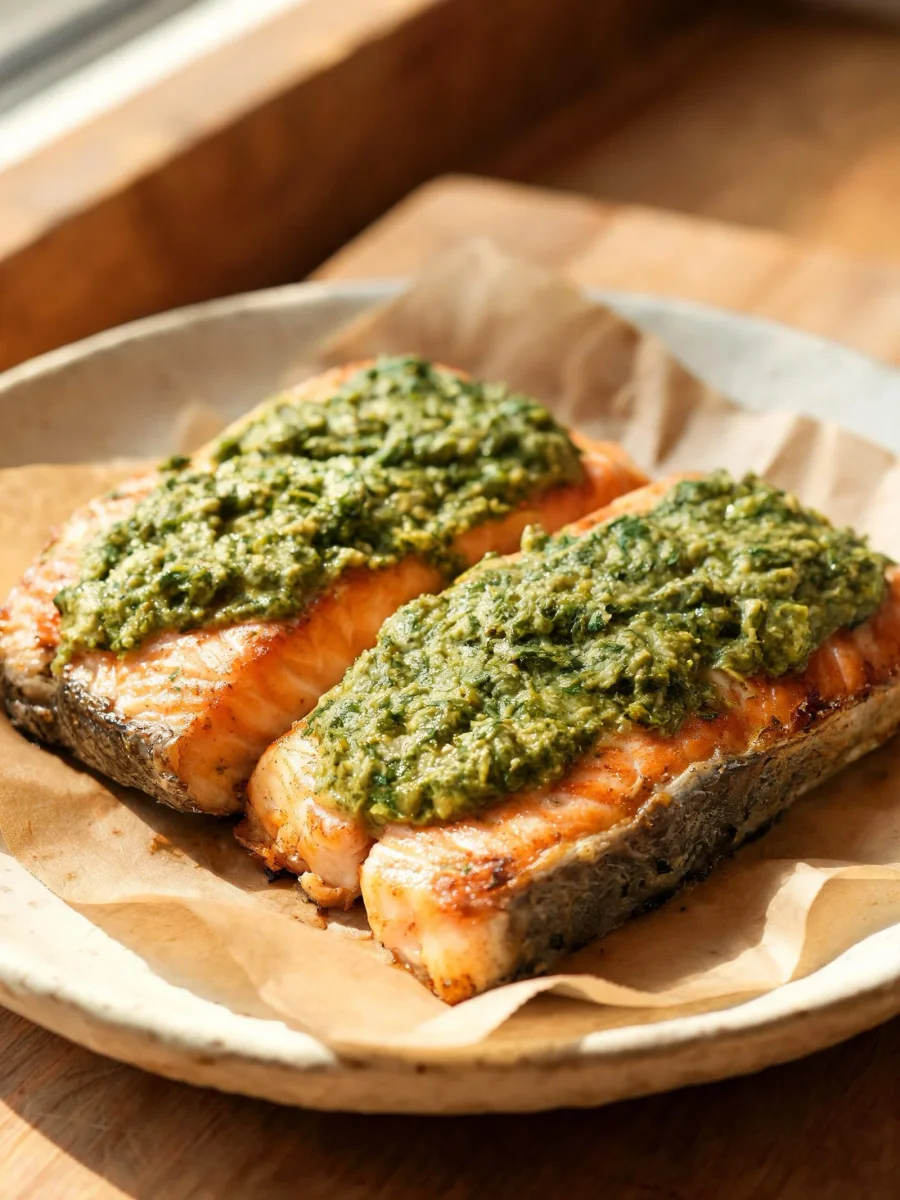
Oven-baked salmon fillets topped with a fresh basil, pine nut and Parmesan sauce. It is a straightforward way to make a flavourful main course, with the sauce prepared while the oven heats.
Ingredients
- 40 gfresh basil, packed
- 34 gpine nuts, toasted
- 2 clovesgarlic, peeled
- 25 gParmigiano-Reggiano, grated
- 60 mlextra virgin olive oil
- 15 mlfresh lemon juice
- ½ tspkosher salt
- ¼ tspblack pepper, freshly ground
- 4 fillets (170 g each)salmon, skin-on or off
- 15 mlolive oil
- to tastekosher salt and black pepper
Instructions
- 1
Heat the oven
Preheat the oven to 200°C (400°F). Line a baking sheet with parchment paper.
- 2
Toast the pine nuts
Toast the pine nuts in a dry frying pan over medium-low heat for 3–5 minutes, until golden and fragrant. Transfer them straight away to cool.
- 3
Chop the sauce ingredients
Pulse the toasted pine nuts, basil, garlic and Parmesan in a food processor until coarsely chopped.
- 4
Add the oil
With the processor running, slowly pour in the 60 ml extra virgin olive oil until the sauce is mostly smooth.
- 5
Season the sauce
Stir in the lemon juice, ½ teaspoon kosher salt and ¼ teaspoon black pepper. Set the sauce aside.
- 6
Prepare the salmon
Pat the salmon fillets completely dry with kitchen paper and place them on the prepared baking sheet.
- 7
Season the fillets
Drizzle the fillets with 15 ml olive oil and season generously with salt and pepper.
- 8
Add the pesto
Spoon the pesto evenly over the salmon fillets, spreading it into a thick layer.
- 9
Bake the salmon
Bake for 15–20 minutes, until the salmon flakes easily with a fork and reaches an internal temperature of 54–57°C (130–135°F).
- 10
Rest before serving
Leave the salmon to rest on the baking sheet for 3–5 minutes before serving.
What is baked salmon with herb sauce?
This American-style main pairs oven-baked salmon with a basil sauce inspired by pesto, the Italian combination of herbs, nuts, cheese and olive oil. Here, the sauce goes on before baking, so it forms a savoury topping as the fish cooks.
The method is simple: make the sauce, coat the fillets and bake. Drying the salmon first helps the topping stay in place.
Nutrition and macros by portion
The nutrition label shows one serving as written: 550 calories, 41g protein, 4g carbs, 39g fat.
| Portion | Adjustment | kcal | Protein | Carbs | Fat |
|---|---|---|---|---|---|
| Lighter | Use less pesto | 385 kcal | 29g | 3g | 27g |
| This serving | As written | 550 kcal | 41g | 4g | 39g |
| Hungry | Add potatoes or rice | 825 kcal | 62g | 6g | 59g |
Salmon supplies most of the protein and a substantial share of the fat, while the olive oil and pine nuts add more fat and energy. The small amount of carbohydrate comes mainly from the basil, nuts and cheese. Pair a fillet with vegetables and a suitable portion of potatoes or rice to round out the plate.
Why the ingredients work
Basil: use fresh leaves for the sauce’s herbal flavour and green colour. Pack the leaves into the measuring cup, but avoid crushing them tightly.
Pine nuts and Parmesan: toasting the nuts brings out their aroma, while the grated cheese gives the sauce a savoury, slightly salty edge.
Olive oil and lemon: oil helps the sauce blend and coat the fish; lemon juice adds brightness. The second measure of oil is for seasoning the salmon itself.
Make a smooth, textured sauce
Pulse the basil, garlic, pine nuts and cheese until chopped before adding the oil. This gives the ingredients a head start without turning the leaves into a paste too early.
Pour the oil in gradually with the processor running. Stop when the mixture is mostly smooth; a little texture is welcome, and the lemon and seasoning go in after blending.
Check salmon doneness
Thickness: fillets can vary, so use the 15–20-minute range as a guide rather than relying on the clock alone. Begin checking the thinner pieces sooner.
Texture: cooked salmon should separate into flakes when gently tested with a fork. The recipe’s target internal temperature is 54–57°C (130–135°F), measured in the thickest part.
Timing and preparation
The oven heats while you toast the pine nuts and blend the sauce, making the steps easy to organise within the 35-minute total time. Keep an eye on the nuts: they can go from fragrant to over-toasted quickly.
Prepare the salmon just before baking. Pat it dry, then add the oil and seasoning so the pesto can be spread over the top in an even layer.
What to serve alongside
Serve the fillets with roasted or boiled potatoes, rice, or crusty bread to catch any sauce. A green salad or steamed vegetables add freshness and make a balanced plate.
If the pesto is particularly rich, choose simple sides with little added oil. A squeeze of lemon at the table can lift the flavours.
Recipe notes & tips
- Toast the pine nuts in a dry pan and transfer them out as soon as they smell fragrant.
- Let the toasted nuts cool before blending so they do not wilt the basil.
- Pat the salmon dry thoroughly before adding the oil and pesto.
- Spread the sauce in an even layer so it covers the tops of the fillets.
- Check the thickest part of a fillet with a thermometer near the end of the baking time.
- Rest the salmon for 3–5 minutes before serving to make it easier to handle.
Variations
- Try walnuts: use them in place of the pine nuts for a different nutty flavour.
- Change the herbs: replace some of the basil with fresh parsley for a milder sauce.
- Add lemon zest: mix a little finely grated zest into the sauce for a more pronounced citrus note.
- Make it dairy-free: leave out the Parmesan and season the sauce to taste.
- Add a little chilli: pulse a small amount of chilli with the basil for gentle heat.
Common mistakes to avoid
- Leaving the pine nuts unattended: they brown quickly, so stir them and remove them as soon as they are golden.
- Adding wet salmon: excess moisture can make the topping slide, so pat each fillet thoroughly dry.
- Pouring in the oil too quickly: the sauce may blend unevenly, so stream it in slowly with the processor running.
- Overbaking the fish: it can become dry, so check for flakes and the stated internal temperature near the end of the cooking range.
- Skipping the rest: cutting into the fillets immediately can make serving messy; wait 3–5 minutes.
How to store
Refrigerate leftover salmon in an airtight container and eat within 2 days. Reheat gently in a low oven or microwave until just warmed through; avoid prolonged heating, which can dry the fish.
Frequently asked questions
Can I use salmon with the skin on?
Yes. The recipe works with skin-on or skinless fillets. Place them on the prepared baking sheet with the pesto spread over the top.
Can I make the sauce ahead?
Yes, you can prepare it ahead and keep it covered in the refrigerator. Stir it before spreading it over the salmon.
How do I know when the salmon is ready?
It should flake easily when tested with a fork and reach 54–57°C (130–135°F) in the thickest part, as specified in the recipe.
Can I use another type of nut?
Walnuts can stand in for pine nuts. Toast them in the same way, watching closely as they cook.
What can I serve with it?
Try potatoes, rice or bread alongside a green salad or vegetables. Keep the sides simply prepared so the herb sauce remains the focus.
Can I cook the salmon without parchment paper?
Parchment helps with cleanup and reduces sticking. If you do not use it, lightly oil the baking sheet first.
Cook it from the original
This recipe comes from bluerecipes.com. Their page has the author’s own photos, notes and tips — the best place to cook it from.
Open the recipe on bluerecipes.com