
Homemade Dumplings
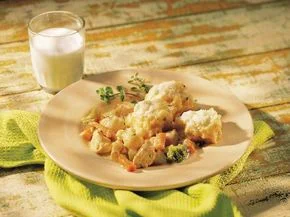
These soft, savoury dumplings cook on top of bubbling stew, where they absorb a little of its flavour as they steam. They are a simple way to make a pot of meat or vegetable stew more substantial.
Ingredients
- 180 g (1½ cups)Gold Medal™ plain flour
- about 1 g (1 tablespoon)dried parsley flakes, if desired
- 8 g (2 teaspoons)baking powder
- 3 g (½ teaspoon)salt
- 42 g (3 tablespoons)shortening
- 180 ml (¾ cup)milk
Instructions
- 1
Mix dry ingredients
In a medium bowl, combine the flour, parsley, baking powder and salt.
- 2
Cut in shortening
Use a pastry blender or two knives worked across each other to cut in the shortening until the mixture resembles fine crumbs. Stir in the milk.
- 3
Cook the dumplings
Drop the dough in 10 spoonfuls onto the meat or vegetables in boiling stew, taking care not to drop it directly into the liquid. Cook uncovered for 10 minutes, then cover and cook for 10 minutes longer.
What are homemade dumplings?
These are spoonfuls of simple flour dough cooked on top of a stew rather than boiled separately. Dumplings like these are familiar in home-style cooking, where they turn a bubbling pot into a filling one-dish meal.
This version uses baking powder for lift and shortening for a tender, crumbly dough. Parsley is optional, so the dumplings work just as well as a plain, savoury topping.
Nutrition and macros by portion
The nutrition label shows one serving as written: 105 calories, 3g protein, 15g carbs, 4g fat.
| Portion | Adjustment | kcal | Protein | Carbs | Fat |
|---|---|---|---|---|---|
| Lighter | One dumpling, more vegetables | 74 kcal | 2g | 11g | 3g |
| This serving | As written | 105 kcal | 3g | 15g | 4g |
| Hungry | Extra dumpling portion | 158 kcal | 5g | 23g | 6g |
The flour and milk provide most of the carbohydrates, while the shortening contributes much of the fat; the flour and milk also supply some protein. Serve a dumpling with a generous share of the stew's meat or vegetables to make a more balanced plate.
The dough ingredients
Dry ingredients: mixing the flour, baking powder, salt and parsley first distributes the raising agent and seasoning through the dough.
Shortening: cut it in until the mixture looks like fine crumbs, as directed. This helps keep the cooked dumplings tender rather than tough.
Milk: stir it in to bring the mixture together, stopping once there is no dry flour left. The recipe gives no instruction to knead the dough.
Getting the stew ready
Boiling stew: add the dumplings when the stew is hot and bubbling, so they begin cooking straight away.
Placement: spoon the dough onto the meat or vegetables, not directly into the liquid. Keeping the mounds above the liquid lets them cook as a topping rather than disperse into the stew.
How to tell they are cooked
Uncovered stage: leave the pot uncovered for the first 10 minutes of cooking. Then cover it and cook for 10 minutes more, following the recipe's timing.
Texture: the dumplings should be set through rather than doughy in the middle. If you are unsure, check one in the centre of the pot before serving.
Serving the dumplings
With stew: serve the dumplings straight from the pot alongside the meat or vegetables they cooked on. Spoon some of the stew around them so each portion includes both the soft topping and the savoury base.
At the table: they are best served hot, soon after cooking, while their surface is still soft from the covered steaming stage.
Herb options
Fresh herbs: for a more pronounced herb flavour, replace the parsley with 2 teaspoons of chopped fresh basil, sage or thyme, as suggested in the recipe.
Dried herbs: use 1 teaspoon of dried basil, sage or thyme instead of the parsley. Celery seed is another option given in the recipe.
Recipe notes & tips
- Measure the flour without packing it into the cup, or weigh it for consistency.
- Cut the shortening in until the mixture resembles fine crumbs.
- Stir the milk in just until the dough comes together.
- Keep the stew boiling when you add the spoonfuls of dough.
- Place each dumpling on the meat or vegetables rather than directly in the liquid.
- Follow the uncovered and covered cooking times so the dumplings have time to set.
Variations
- Fresh herbs: use 2 teaspoons of chopped basil, sage or thyme in place of the parsley.
- Dried herbs: use 1 teaspoon of dried basil, sage or thyme instead of the parsley.
- Celery seed: swap the parsley for 1 teaspoon of celery seed.
- Self-raising flour: replace the plain flour with self-raising flour and leave out the baking powder and salt.
Common mistakes to avoid
- Dropping dough into the liquid: place spoonfuls on the stew's meat or vegetables so they cook as dumplings.
- Adding dumplings before the stew boils: wait until it is bubbling so the cooking starts promptly.
- Overworking the dough: stir in the milk only until the mixture comes together to avoid tough dumplings.
- Skipping the covered stage: cover the pot after the first 10 minutes and cook for 10 minutes longer.
- Using too much flour: measure it carefully so the dough does not turn dry and stiff.
How to store
Refrigerate leftover dumplings with the stew in a covered container and use within 3 days. Reheat gently in a covered saucepan until hot throughout; the dumplings may soften as they sit in the stew.
Frequently asked questions
Can I make the dough ahead?
The recipe does not give a make-ahead step. For the best texture, mix the dough just before dropping it onto the boiling stew.
Can I use self-raising flour?
Yes. The recipe says to use self-raising flour and omit both the baking powder and salt.
Do I have to add parsley?
No, the parsley is optional. You can leave it out or use the suggested fresh or dried herbs, or celery seed.
Why do the dumplings go on top of the stew?
The method directs you to place them on the meat or vegetables, not directly into the liquid. This keeps them as spoonfuls of dough on the stew rather than mixing them into its broth.
How long do the dumplings cook?
Cook them uncovered for 10 minutes, then cover the pot and cook for 10 minutes longer.
Can I cook these dumplings without stew?
This method is designed for dumplings cooked on top of boiling stew. It does not give instructions for cooking them separately.
Cook it from the original
This recipe comes from goldmedalflour.com. Their page has the author’s own photos, notes and tips — the best place to cook it from.
Open the recipe on goldmedalflour.com