
Gold Medal™ Classic French Bread
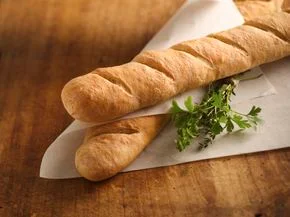
This classic French-style loaf has a soft, elastic crumb and a golden crust, with poppy or sesame seeds on top. It takes time to rise, but the hands-on preparation is straightforward and makes two loaves.
Ingredients
- 3 to 3½ cups (375–438 g)plain flour or bread flour
- 1 tablespoon (about 13 g)sugar
- 1 teaspoon (about 5 g)salt
- 1 packet (2¼ teaspoons; about 7 g)active dry yeast, regular or quick
- 1 cup (237 ml), very warm, 49–54°Cwater
- 2 tablespoons (30 ml)vegetable oil
- as neededcornmeal
- 1egg white
- 1 tablespoon (15 ml)cold water
- to tastepoppy seeds or sesame seeds
Instructions
- 1
Mix the dough
In a large bowl, combine 2 cups of the flour with the sugar, salt and yeast. Add the very warm water and oil. Beat with an electric mixer on low speed for 1 minute, scraping the bowl frequently, then beat on medium speed for 1 minute, scraping frequently. Stir in enough of the remaining flour, ½ cup at a time, to make a soft dough that is easy to handle.
- 2
Knead and rise
Knead the dough on a lightly floured surface for about 5 minutes, until smooth and elastic. Grease a large bowl with shortening or cooking spray, add the dough and turn it to coat all sides. Cover and leave in a warm place for 1 hour 30 minutes to 2 hours, until doubled in size. It is ready when an indentation remains after you touch it.
- 3
Shape the loaves
Grease a large baking sheet with shortening or cooking spray and sprinkle it with cornmeal. Gently press your fist into the dough to deflate it, then divide it in half. On a lightly floured surface, roll each half into a 38 × 20 cm rectangle. Starting from a 38 cm side, roll each piece tightly into a loaf and pinch the seam closed. Gently roll back and forth to taper the ends, then place both loaves on the baking sheet.
- 4
Score and rise
With a sharp knife, cut slashes 6 mm deep across the top of each loaf, spacing them about 5 cm apart. Brush the loaves with cold water and leave them uncovered in a warm place for about 1 hour, until doubled in size.
- 5
Bake the bread
Heat the oven to 190°C. In a small bowl, mix the egg white with 1 tablespoon of cold water and brush the mixture over the loaves. Sprinkle with poppy or sesame seeds. Bake for 25 to 30 minutes, until golden brown and hollow-sounding when tapped. Move the loaves from the baking sheet to a wire rack and leave to cool.
What is French bread?
French bread is a long, lean loaf, commonly associated with the baguette and other crusty breads from France. This home-style version makes two loaves with a soft inside and a golden, egg-washed crust.
A slow rise gives the dough time to expand before baking, while rolling it tightly helps create an even shape. The recipe keeps the flavour simple, with seeds as an optional finishing touch.
Nutrition and macros by portion
The nutrition label shows one serving as written: 70 calories, 2g protein, 13g carbs, 1g fat.
| Portion | Adjustment | kcal | Protein | Carbs | Fat |
|---|---|---|---|---|---|
| Lighter | Smaller bread portion | 49 kcal | 1g | 9g | 1g |
| This serving | As written | 70 kcal | 2g | 13g | 1g |
| Hungry | Larger bread portion | 105 kcal | 3g | 20g | 2g |
Most of the carbohydrate comes from the flour, while the oil contributes fat and the flour and egg white provide some protein. Serve a slice alongside a protein-rich filling and vegetables for a more balanced plate.
Choosing the flour
Plain flour: This makes a tender, easy-to-shape loaf and is the everyday option in the recipe.
Bread flour: Its stronger structure can give the dough a chewier bite. Add the reserved flour gradually; the dough should remain soft rather than stiff.
Watch the dough, not just the clock
First rise: Allow 1 hour 30 minutes to 2 hours in a warm place, until the dough has doubled. The indentation test is useful: a mark that stays after a gentle touch signals that it is ready.
Second rise: After shaping and scoring, leave the loaves uncovered for about 1 hour, again looking for a doubled size. A cool room can make either rise take longer.
Kneading and shaping
Kneading: Work the dough for about 5 minutes on a lightly floured surface, until it feels smooth and elastic. Use only enough extra flour to keep it manageable, since too much can make the finished bread dense.
Rolling: Roll each portion into a rectangle, then roll it up tightly from the long side and seal the seam. This helps the loaf hold its shape as it rises and bakes.
Scoring and topping
Scoring: Cut shallow, evenly spaced slashes about 6 mm deep. A sharp knife helps make clean cuts without dragging the dough.
Finish: Brush with the egg-white mixture for a glossy top, then add poppy or sesame seeds if you like. The recipe calls for brushing the shaped loaves with cold water before their final rise.
How to tell when it is baked
Bake at 190°C for 25 to 30 minutes, until the crust is golden brown. Tap a loaf gently: it should sound hollow when ready.
Cool the loaves on a wire rack rather than leaving them on the baking sheet. This lets air circulate around the crust as the bread cools.
Serving ideas
Serve slices alongside soup, salad or a main meal, or use them for sandwiches. The plain dough also suits both savoury and sweet toppings.
For a crunchier crust, spray the loaves with water immediately before baking and put a pan of water in the oven, as suggested in the recipe tips.
Recipe notes & tips
- Measure the flour carefully and add it gradually so the dough stays soft.
- Scrape down the bowl while mixing to bring the ingredients together evenly.
- Use the doubled-in-size and indentation cues to judge the first rise.
- Seal the seam firmly after rolling each loaf so it stays closed.
- Use a sharp knife to make neat slashes without pressing hard on the dough.
- Cool the baked loaves on a wire rack before slicing.
Variations
- Crunchier crust: Spray the loaves with water just before baking and add a pan of water to the oven.
- Poppy topping: Brush the loaves with the egg-white mixture and finish with poppy seeds.
- Sesame topping: Use sesame seeds instead of poppy seeds.
- Hard rolls: After deflating the dough, divide it into 12 equal pieces and shape each into a ball.
- Quick yeast: Use the quick active dry yeast option listed in the recipe.
Common mistakes to avoid
- Adding all the flour at once: Stir it in ½ cup at a time so the dough does not become too stiff.
- Rushing the first rise: Wait until the dough has doubled and an indentation remains when touched.
- Over-flouring the work surface: Use a light dusting so the dough stays soft.
- Rolling loosely: Roll each rectangle tightly and pinch the seam closed to help the loaf hold its shape.
- Cutting too deeply: Keep the slashes about 6 mm deep so they score the surface without cutting far into the loaf.
- Slicing while hot: Let the loaves cool on a wire rack before cutting.
How to store
Once completely cool, store the bread in a sealed bag or bread container at room temperature and use within 2 to 3 days. Reheat slices briefly in a warm oven, or freeze the cooled loaves for longer storage and thaw before serving.
Frequently asked questions
Can I use plain flour instead of bread flour?
Yes. The recipe allows either plain flour or bread flour; the dough should be soft and easy to handle with either choice.
How do I know when the dough has risen enough?
For the first rise, look for dough that has doubled in size and holds an indentation after a gentle touch. For the second rise, wait until the shaped loaves have doubled.
Can I make rolls from this dough?
Yes. After deflating the dough, divide it into 12 equal pieces and shape each into a ball. Let them rise uncovered for about 1 hour, then bake at 220°C for 15 to 20 minutes, until brown.
How can I get a crunchier crust?
Spray the loaves with water right before baking and add a pan of water to the oven, following the recipe tip.
Why is the rising time longer than for some breads?
The recipe uses a longer first rise to help develop the characteristic texture. Use the dough’s size and feel as well as the stated time to judge when it is ready.
Cook it from the original
This recipe comes from goldmedalflour.com. Their page has the author’s own photos, notes and tips — the best place to cook it from.
Open the recipe on goldmedalflour.com