
Dairy Free "Butter" Chicken
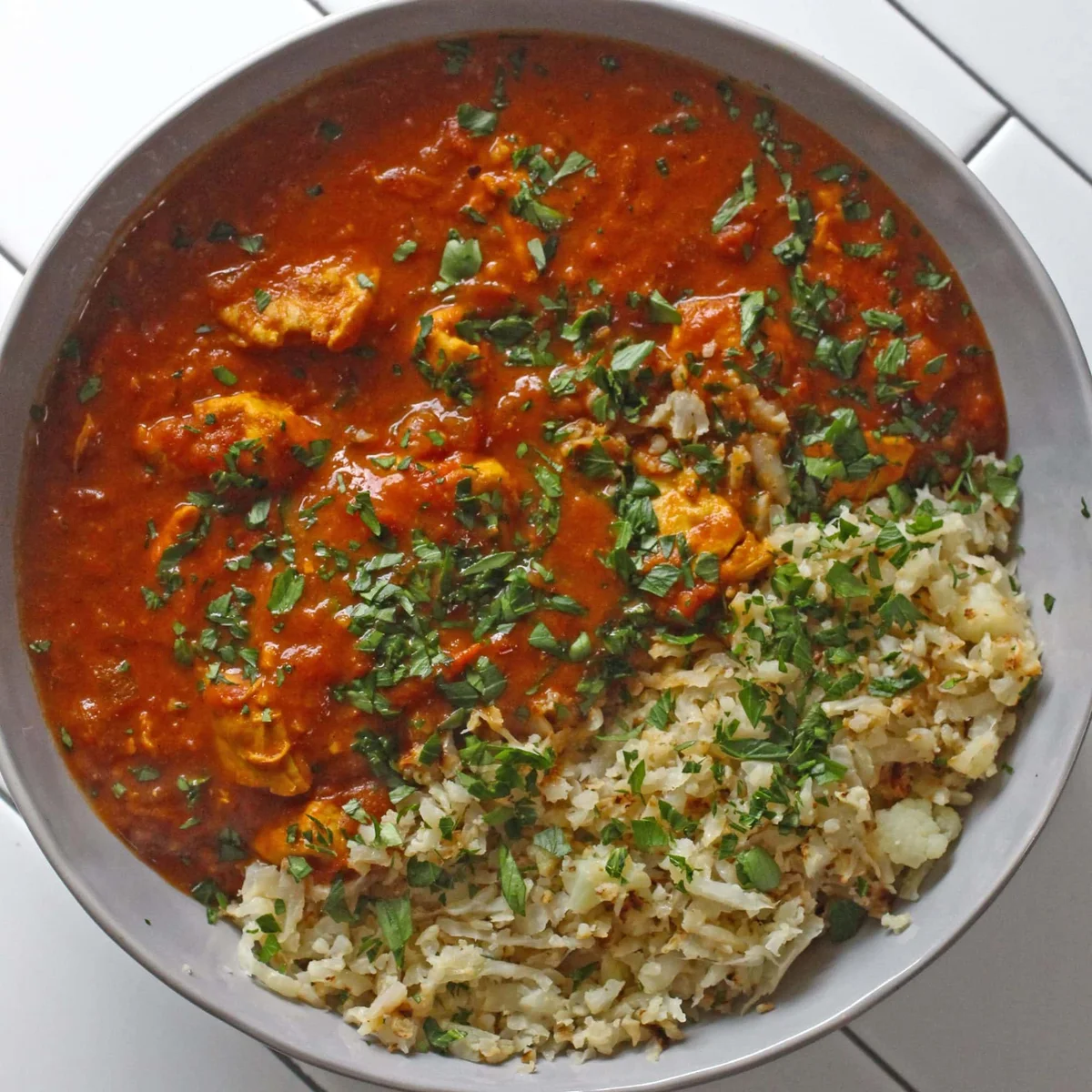
This dairy-free take on butter chicken simmers chicken in a warmly spiced tomato and coconut sauce. Serve it over cauliflower rice for a comforting meal with a creamy texture and plenty of fragrant sauce.
Ingredients
- 1onion, diced
- 680 g (1½ lb)chicken, cut into 2.5 cm (1-inch) cubes
- 5 clovesgarlic, grated
- 5 cm (2 inches)ginger, grated
- 15 ml (1 tbsp)garam masala
- 5 ml (1 tsp)cumin
- 5 ml (1 tsp)coriander
- 2.5 ml (½ tsp)turmeric
- 2.5 ml (½ tsp)cayenne
- 15 ml (1 tbsp)red wine vinegar
- 794 g (28 oz)crushed tomatoes
- 397 g (14 oz)coconut milk
- As neededcauliflower rice
- For garnishcilantro
- A littleoil
Instructions
- 1
Soften the onion
Warm a little oil in a large pot or Dutch oven. Add the diced onion and cook for about 5 minutes, until softened.
- 2
Brown the chicken
Add the chicken and cook over high heat for 5 minutes to brown it.
- 3
Toast the spices
Lower the heat, then add the ginger, garlic, garam masala, cumin, coriander, turmeric and cayenne. Stir to coat and cook for 3 minutes.
- 4
Deglaze the pot
Pour in the red wine vinegar and scrape the bottom of the pot to loosen the browned bits.
- 5
Simmer the sauce
Add the crushed tomatoes and coconut milk, then stir to combine. Simmer for 20 minutes.
- 6
Serve with rice
Serve with cauliflower rice and finish with cilantro.
What is butter chicken?
Butter chicken, or murgh makhani, is an Indian dish known for tender chicken in a rich, spiced tomato sauce. This version leaves out dairy and uses coconut milk to make the sauce creamy.
The method keeps things straightforward: brown the chicken, briefly cook the aromatics and spices, then simmer everything in the sauce. Cauliflower rice makes a simple base for serving.
Nutrition and macros by portion
The nutrition label shows one serving as written: 510 calories, 35g protein, 20g carbs, 32g fat.
| Portion | Adjustment | kcal | Protein | Carbs | Fat |
|---|---|---|---|---|---|
| Lighter | Use light coconut milk | 357 kcal | 25g | 14g | 22g |
| This serving | As written | 510 kcal | 35g | 20g | 32g |
| Hungry | Serve a larger portion | 765 kcal | 53g | 30g | 48g |
Chicken supplies most of the protein, while coconut milk and cooking oil contribute much of the fat; tomatoes and cauliflower rice contribute carbohydrates and fibre. Serve with a generous amount of cauliflower rice to balance the creamy curry, bearing in mind that its quantity is not specified in the recipe.
The spice base
Whole spices: garam masala, cumin, coriander, turmeric and cayenne bring warmth, earthiness and adjustable heat. Cooking them briefly with the ginger and garlic helps their flavours mingle with the chicken.
Fresh aromatics: grated ginger and garlic distribute evenly through the sauce. Grate them finely so you don't end up with large pieces in each bite.
Browning and deglazing
Browned chicken: give the pieces 5 minutes over high heat, as directed, to build colour on the surface. They do not need to be fully cooked at this stage; the simmer finishes the cooking.
Pan flavour: vinegar loosens the browned bits left on the pot's base. Scrape them up before adding the tomatoes and coconut milk.
Getting the sauce right
Coconut milk: it brings the creamy body that dairy would usually provide. Stir it thoroughly into the crushed tomatoes for an even sauce.
Gentle simmer: cook the sauce for 20 minutes, stirring as needed so it does not catch on the bottom. The finished sauce should be hot and cohesive, with the chicken cooked through.
Choosing the heat level
Cayenne: the listed half teaspoon gives the sauce a noticeable kick. For a milder result, use less cayenne; for more heat, add extra to taste.
Garam masala: this is the main blended spice in the dish, so use a fresh, aromatic blend if you have one. The other spices round it out rather than replace it.
Serving the curry
Cauliflower rice: spoon the curry over it just before serving so it can catch the sauce. Prepare the rice according to its own instructions, since the recipe does not specify a cooking method.
Fresh finish: scatter cilantro over the top for a bright contrast to the rich sauce. If you like, serve with extra cauliflower rice alongside.
Recipe notes & tips
- Cut the chicken into evenly sized pieces so they brown and finish cooking at a similar pace.
- Grate the ginger and garlic finely to help them blend into the sauce.
- Keep the spice mixture moving in the pot during its 3-minute cook so it does not scorch.
- Scrape the base thoroughly after adding the vinegar to lift the browned flavour into the sauce.
- Stir occasionally while the curry simmers to prevent the sauce from sticking.
Variations
- Milder curry: reduce the cayenne for less heat.
- More heat: add extra cayenne to taste.
- Fresh garnish: use chopped fresh coriander leaves in place of cilantro.
- Extra vegetables: serve with additional cauliflower rice.
- Dairy version: use cream in place of coconut milk, while noting this changes the dairy-free recipe.
Common mistakes to avoid
- Crowding the pot: the chicken may steam rather than brown; brown it in batches if needed.
- Burning the spices: keep the heat low and stir for the full 3 minutes.
- Leaving browned bits behind: scrape the base of the pot after adding the vinegar.
- Skipping the simmer: allow the full 20 minutes for the chicken to cook in the sauce.
- Adding the garnish too early: sprinkle on the cilantro when serving for a fresh finish.
How to store
Refrigerate leftover curry in a covered container and use within 3 days. Reheat gently in a saucepan until hot throughout, stirring occasionally; store and reheat cauliflower rice separately if possible.
Frequently asked questions
How can I tell when the chicken is cooked?
After the 20-minute simmer, check that the largest piece is cooked through with no pink in the centre. The exact time can vary with the size of the pieces and the heat of the simmer.
Can I make the curry less spicy?
Yes. Reduce or omit the cayenne, then taste the sauce and adjust if needed.
Can I use light coconut milk?
Yes, though the sauce may be less rich and creamy. Stir it well into the tomatoes before simmering.
What can I serve instead of cauliflower rice?
Serve it with another rice or grain if you prefer. The recipe specifies cauliflower rice but does not require a particular accompaniment.
Can I make it ahead?
Yes. Cook the curry, cool it promptly and refrigerate it in a covered container; reheat gently until hot throughout.
Can I freeze the curry?
The curry can be frozen in a sealed, freezer-safe container. Thaw it in the fridge before reheating, and prepare the cauliflower rice fresh if you can.
Cook it from the original
This recipe comes from glutenfreesociety.org. Their page has the author’s own photos, notes and tips — the best place to cook it from.
Open the recipe on glutenfreesociety.org