
kai jeow (Thai omelet)
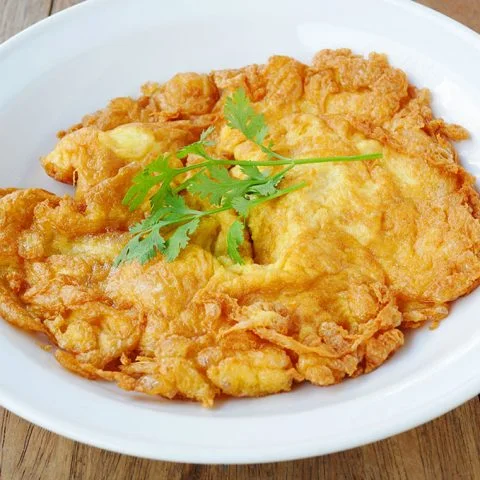
Kai jeow is a Thai-style omelette fried until puffed and golden at the edges. It takes only a few ingredients and works as a quick meal with rice or a simple side.
Ingredients
- 2eggs
- 120 g (½ cup)raw minced meat, pork, beef or chicken (optional)
- ½ teaspoonsoy sauce
- ½ teaspoonfish sauce
- 60–120 ml (¼–½ cup)vegetable oil
Instructions
- 1
Whisk the mixture
Whip the eggs with the soy sauce and fish sauce in a bowl. Stir in the raw minced meat if using.
- 2
Heat the oil
Warm the oil in a wok over medium heat. Check that it is hot by sprinkling in a little water and seeing whether it sizzles, then add the egg mixture.
- 3
Fry both sides
Cook until the first side is golden brown, then flip the omelette and fry the other side until golden brown too.
- 4
Drain the omelette
Set it on a plate lined with kitchen paper for 30 seconds to 1 minute on each side so excess oil can drain.
- 5
Serve
Transfer the omelette to a clean plate and enjoy.
What is kai jeow?
Kai jeow is a Thai omelette, commonly cooked in hot oil until it puffs and develops crisp, browned edges. This version keeps the seasoning simple, using soy sauce and fish sauce for savoury depth.
Minced meat is an optional addition, making the omelette more substantial. Serve it freshly fried, when its browned exterior contrasts with the soft egg inside.
Nutrition and macros by portion
The nutrition label shows one serving as written: 105 calories, 3g protein, 0g carbs, 10g fat.
| Portion | Adjustment | kcal | Protein | Carbs | Fat |
|---|---|---|---|---|---|
| Lighter | Use less frying oil | 74 kcal | 2g | 0g | 7g |
| This serving | As written | 105 kcal | 3g | 0g | 10g |
| Hungry | Add minced meat | 158 kcal | 5g | 1g | 14g |
The eggs provide protein and fat, while the optional minced meat adds more protein and some fat. Most of the recipe's fat comes from the frying oil; serve a portion with rice and vegetables for a more balanced plate.
Choosing the ingredients
Eggs: Whip them with the sauces so the seasoning is distributed through the mixture. The recipe uses two eggs for four servings, so the omelette is best treated as part of a meal rather than the only substantial item.
Meat: Pork, beef or chicken can be used, or leave it out. If adding it, mix the raw mince thoroughly through the egg before frying.
Sauces: Soy sauce and fish sauce both bring saltiness and savoury flavour. Measure them carefully, as the quantities are small and the flavours are concentrated.
Getting the oil ready
Hot oil helps the egg puff as it hits the wok and encourages the outside to brown. The recipe suggests sprinkling in a little water to check for a sizzle; take care, as water can splatter when it meets hot oil.
Use a wok and enough oil from the stated range to coat the cooking area generously. Keep the heat at medium while the oil warms.
Frying and flipping
First side: Let the omelette cook until it is golden brown before turning it. Moving it too soon can make it harder to flip in one piece.
Second side: Fry until golden brown as well. If you have added minced meat, make sure the omelette is cooked through before serving.
Texture and serving
The aim is a puffed omelette with golden, lightly crisp edges and a tender centre. A short rest on kitchen paper drains excess oil without leaving the omelette there for too long.
Serve it soon after cooking, with rice or a crisp vegetable side. Those simple accompaniments complement the salty, savoury egg.
Recipe notes & tips
- Whip the eggs and sauces together thoroughly before adding the mince.
- Keep the wok over medium heat as the oil warms.
- Add the egg mixture only once the oil is hot.
- Wait for the underside to turn golden before flipping.
- Drain the omelette briefly on kitchen paper, as directed.
Variations
- Pork version: Use pork mince for the optional meat.
- Beef version: Choose beef mince for a different savoury flavour.
- Chicken version: Use chicken mince in the egg mixture.
- Meat-free: Leave out the optional mince and fry the seasoned eggs on their own.
Common mistakes to avoid
- Oil not hot enough: Wait for it to heat before adding the egg mixture so the omelette can puff.
- Flipping too early: Let the first side become golden brown before turning.
- Rough flipping: Turn the omelette carefully once it has set enough to hold together.
- Skipping the drain: Rest the fried omelette on kitchen paper for 30 seconds to 1 minute on each side.
- Serving too late: Transfer it to a clean plate after draining so it is ready to eat.
How to store
Refrigerate leftovers in a covered container and eat within 2 days. Reheat in a frying pan until hot throughout; the omelette may lose some of its crispness.
Frequently asked questions
Can I leave out the minced meat?
Yes. The recipe lists the meat as optional, so you can make the omelette with eggs and sauces alone.
Which minced meat can I use?
Use pork, beef or chicken mince, as listed in the ingredients.
How do I know when to flip it?
Wait until the first side is golden brown, then turn it and cook the other side until golden brown too.
How much oil should I use?
The recipe gives a range of 60–120 ml. Use enough to fry the omelette in the wok, taking care when the oil is hot.
Can I make it ahead?
It is best served soon after frying, when the edges are at their crispest. You can refrigerate leftovers and reheat them later.
Cook it from the original
This recipe comes from gluttodigest.com. Their page has the author’s own photos, notes and tips — the best place to cook it from.
Open the recipe on gluttodigest.com