
Baby Chicken Congee
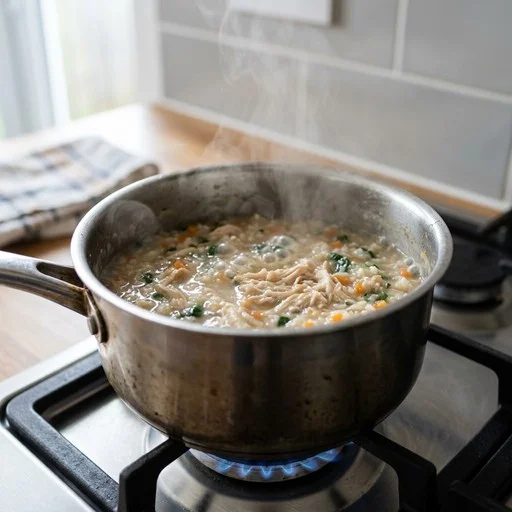
Baby chicken congee is a soft rice porridge cooked with chicken until the grains break down and the mixture turns creamy. It is a simple, gently flavoured option for a baby who is ready for complementary foods, with the texture adjusted to suit them.
Ingredients
- 65 g (⅓ cup)white rice
- 150 gboneless chicken thighs, diced small
- 710 ml (3 cups)low-sodium chicken stock
- 120 ml (½ cup)water
- 1 thin slicefresh ginger
Instructions
- 1
Rinse and dice
Rinse the white rice under cold water. Dice the boneless chicken thigh into very small, 1 cm pieces.
- 2
Combine ingredients
Put the rice and diced chicken in a pot with the chicken stock and water. Add the thin slice of fresh ginger for a subtle flavour.
- 3
Bring to boil
Bring the mixture to the boil over high heat, then turn the heat down straight away to a very gentle simmer.
- 4
Simmer the congee
Cook uncovered for 35–40 minutes, stirring occasionally, until the rice breaks down and the mixture is thick, creamy and porridge-like.
- 5
Cool and serve
Remove the ginger slice. Check that the congee has a smooth, thick porridge consistency; if it is too thick, stir in a little water. Cool to a safe temperature and serve warm.
What is chicken congee?
Congee is a rice porridge eaten in many parts of Asia, with consistency ranging from loose and soupy to thick and creamy. This version cooks rice and chicken together until the grains soften and the flavours mingle.
The method is straightforward: a gentle simmer gives the rice time to break down, while small pieces of chicken cook through in the same pot. A slice of ginger adds a mild aromatic note and is removed before serving.
Nutrition and macros by portion
The nutrition label shows one serving as written: 580 calories, 38g protein, 53g carbs, 22g fat.
| Portion | Adjustment | kcal | Protein | Carbs | Fat |
|---|---|---|---|---|---|
| Lighter | Use more water | 406 kcal | 27g | 37g | 15g |
| This serving | As written | 580 kcal | 38g | 53g | 22g |
| Hungry | Serve a larger portion | 870 kcal | 57g | 80g | 33g |
The rice provides most of the carbohydrates, while the chicken thigh contributes much of the protein and fat. Stock adds flavour and may contribute sodium; check its label, and balance an older child's or adult's plate with vegetables alongside the congee.
Choosing the ingredients
Rice: White rice softens readily and helps create the characteristic creamy body. Rinsing it first removes loose surface starch and any dust.
Chicken: Boneless thigh stays tender during the long simmer. Cutting it into small, even pieces helps it cook through alongside the rice.
Stock: Low-sodium stock seasons the porridge without making it overly salty. Check the label, as sodium levels vary between brands.
Getting the simmer right
Gentle heat: Bring the pot to the boil, then reduce the heat promptly. A steady, quiet simmer lets the rice soften without the mixture boiling vigorously.
Stirring: Stir occasionally, especially as the porridge thickens, so rice does not catch on the bottom of the pot. Keep the pot uncovered as directed.
Checking the texture
Rice: After 35–40 minutes, the grains should have broken down and the congee should look thick and creamy rather than like separate rice in broth.
Chicken: Make sure the small pieces are cooked through before serving. For a baby, adjust the finished texture to what they can manage, mashing or blending if needed.
Timing and consistency
The stated cooking time is 35–40 minutes, but the final thickness can vary with the pot, heat and rice. Begin checking near the end of the cooking period and stir more often as it thickens.
If the porridge becomes too thick, loosen it with a little water and stir well. Allow it to cool before serving, and check its temperature carefully.
Serving the congee
Serve it warm, not hot, and remove the ginger slice before portioning. The recipe makes one serving; a baby may eat only part of it, depending on appetite and stage of feeding.
For a family meal, adults can serve their own portion with suitable accompaniments, while keeping the baby's portion at an appropriate texture and avoiding extra salt.
Recipe notes & tips
- Cut the chicken into even 1 cm pieces so it cooks consistently.
- Keep the heat low after bringing the pot to the boil.
- Stir more frequently as the rice thickens to help prevent sticking.
- Remove the ginger before serving, as instructed.
- Add water a little at a time if the finished congee is thicker than you want.
- Cool the serving thoroughly and check its temperature before feeding.
Variations
- Thinner porridge: Stir in extra water after cooking to reach a looser consistency.
- Smoother texture: Mash or blend the cooked congee to suit the baby's feeding stage.
- More ginger aroma: Use the same thin slice during cooking and remove it before serving.
- Adult seasoning: Add any extra seasoning only to adult portions at the table.
- Different rice: Brown rice can be used, but it will need a different cooking time and may not break down as readily.
Common mistakes to avoid
- Rushing the simmer: The rice may stay firm; keep it at a gentle simmer until it breaks down.
- Using large chicken pieces: They may not cook as evenly; cut the thigh into small, even pieces.
- Leaving the heat too high: The porridge can catch on the bottom; lower the heat as soon as it boils.
- Skipping occasional stirring: Rice can stick as the mixture thickens; stir from time to time.
- Serving it too hot: Check the temperature and let the congee cool to a safe warmth first.
- Leaving in the ginger: Remove the slice before serving.
How to store
Cool leftovers promptly and refrigerate in a covered container, using within 1–2 days. Reheat thoroughly until steaming, stir well, then cool to a safe temperature before serving; add water if it has thickened. Freeze small portions if needed and thaw and reheat thoroughly before use.
Frequently asked questions
Can I make the congee ahead?
Yes. Cool it promptly, store it covered in the fridge and use within 1–2 days, or freeze portions. Reheat thoroughly and cool to a safe temperature before serving.
How do I know when the chicken is cooked?
The small pieces should be cooked through with no raw-looking centre. If checking with a food thermometer, follow local food-safety guidance for poultry.
Can I make it smoother?
Yes. Mash or blend the cooked congee to the texture suitable for your baby's feeding stage. Check carefully for any pieces that remain.
What if the congee is too thick?
Stir in a little water until it reaches the consistency you want. Add it gradually so the porridge does not become too thin.
Can I use ordinary chicken stock?
The recipe specifies low-sodium stock. Check the label, since regular stock can contain more salt; do not add extra salt to the baby's portion.
Is this recipe suitable from six months?
The description presents it for a baby who is ready to begin solids, often around six months. Readiness and suitable texture vary, so follow your health visitor's or clinician's feeding advice.
Cook it from the original
This recipe comes from blwrecipes.com. Their page has the author’s own photos, notes and tips — the best place to cook it from.
Open the recipe on blwrecipes.com