
Fried Zucchini
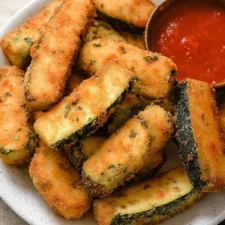
Fried zucchini is a crisp, breadcrumb-coated appetiser or side made with batons of fresh courgette. This recipe seasons the zucchini before coating it in flour, egg and Italian breadcrumbs for a flavourful crust.
Ingredients
- 454 gzucchini
- 1½ teaspoons plus extrakosher salt
- 60 gplain flour
- ¼ teaspoonbicarbonate of soda
- 2 largeeggs
- 60 mlbuttermilk
- 110 gItalian breadcrumbs
- as needednon-stick cooking spray
- as neededvegetable oil
Instructions
- 1
Cut the zucchini
Halve the zucchini crosswise, then cut it into batons about 8.9 × 1.3 cm (3½ × ½ inches).
- 2
Salt and dry
Season the batons with 1 teaspoon of salt and leave them for 10 minutes. Pat them dry.
- 3
Set up the bowls
Use three bowls: combine the flour and bicarbonate of soda in the first; beat the eggs with the remaining ½ teaspoon of salt and the buttermilk in the second; put the breadcrumbs in the third.
- 4
Coat the batons
Working in batches, coat the zucchini in each bowl in turn. Shake off excess coating before moving each piece to the next bowl.
What is fried zucchini?
Fried zucchini is a familiar American appetiser or side: pieces of zucchini are coated and cooked until the outside is crisp. This version uses Italian breadcrumbs for its outer layer and a buttermilk-and-egg mixture to help them adhere.
The supplied method covers cutting, salting and breading, but does not include instructions for cooking the coated zucchini. Use a complete frying method before serving.
Nutrition and macros by portion
The nutrition label shows one serving as written: 250 calories, 8g protein, 30g carbs, 12g fat.
| Portion | Adjustment | kcal | Protein | Carbs | Fat |
|---|---|---|---|---|---|
| Lighter | Use less cooking oil | 175 kcal | 6g | 21g | 8g |
| This serving | As written | 250 kcal | 8g | 30g | 12g |
| Hungry | Serve a larger portion | 375 kcal | 12g | 45g | 18g |
The zucchini and breadcrumb coating provide most of the carbohydrates, while the eggs contribute protein and some fat. Vegetable oil and the egg coating contribute fat; serve with a fresh salad or vegetables to add balance to the plate.
Why salt the zucchini first?
Salting: A 10-minute rest draws moisture to the surface and seasons the pieces. Patting them dry afterwards helps the coating cling rather than slide on a wet surface.
Cutting: Even batons are easier to coat consistently. Aim for the stated size so the pieces are similar in thickness.
How the coating works
Flour: The first layer gives the egg mixture a surface to grip. The small amount of bicarbonate of soda is mixed into the flour as directed.
Egg and buttermilk: Beat these together with the remaining salt to make the wet coating. Let excess drip off before moving to the crumbs.
Breadcrumbs: Press or turn each piece in the Italian breadcrumbs so it is covered on all sides, then shake away loose crumbs.
Keep the coating tidy
Three bowls: Arrange them in order and keep one hand for the dry coatings and the other for the egg mixture if you want to limit clumping on your fingers.
Batches: Coat a manageable number of pieces at a time. The recipe specifies batches but gives no batch size, so avoid piling coated batons on top of one another.
Serving and finishing
Serve the zucchini soon after cooking, while the coating is at its crispest. It works as a snack or as a side alongside a main dish.
The ingredient list includes vegetable oil and non-stick cooking spray, but the supplied method does not say how much oil to use or give a cooking temperature or time. Follow a trusted frying method for the cooking stage rather than guessing at those details.
Recipe notes & tips
- Pat the salted zucchini thoroughly dry before starting the coating.
- Keep the three coating bowls in the order listed so the pieces move smoothly from flour to egg mixture to breadcrumbs.
- Shake off loose flour and breadcrumbs between stages to help keep the coating even.
- Coat the zucchini in batches, as directed, to make each piece easier to handle.
- The recipe lists cooking spray and vegetable oil but does not specify their use; check your chosen frying method before you begin.
Variations
- Seasoned crumbs: Add dried herbs to the breadcrumbs for an aromatic coating.
- Garlic flavour: Mix a little garlic powder into the flour for a savoury note.
- Spicy coating: Stir chilli flakes into the breadcrumbs for extra heat.
- Parmesan crust: Mix finely grated Parmesan into the breadcrumbs for a savoury variation.
- Dipping sauce: Serve with a tomato-based or yoghurt-based dip on the side.
Common mistakes to avoid
- Skipping the drying step: Damp zucchini can make the coating slip; pat the pieces dry after their 10-minute rest.
- Uneven batons: Pieces of very different thickness may cook unevenly; cut them to a similar size.
- Wet flour layer: Excess egg mixture can make the breadcrumbs clump; let excess coating drip off before dipping into the crumbs.
- Loose crumbs: A thick layer of unattached crumbs can fall away; shake each piece gently between bowls.
- Assuming cooking details: The supplied method ends after breading; use a complete frying method for temperature and timing rather than improvising.
How to store
For best texture, cook and serve the zucchini promptly. If you have breaded pieces waiting to be cooked, keep them covered in the refrigerator and cook them within a day; the recipe does not provide reheating instructions.
Frequently asked questions
Can I prepare the zucchini ahead?
You can cut and salt it ahead, but pat it dry before coating. Breaded pieces are best cooked soon after coating; if necessary, keep them covered in the refrigerator and use within a day.
Why is the zucchini salted before breading?
The 10-minute rest seasons the pieces and brings moisture to the surface. Patting them dry helps the coating adhere.
Can I use ordinary breadcrumbs?
The ingredient list specifies Italian breadcrumbs. Plain breadcrumbs can be used, though the finished coating may have a different seasoning.
How much vegetable oil should I use?
The recipe lists vegetable oil but does not give an amount or explain the cooking stage. Use the quantity and method from a trusted frying guide.
How long should I fry the zucchini?
The supplied method does not include a frying time or temperature. Follow a complete frying recipe for those details.
Cook it from the original
This recipe comes from cakebakingtips.com. Their page has the author’s own photos, notes and tips — the best place to cook it from.
Open the recipe on cakebakingtips.com