
Flannel Hash
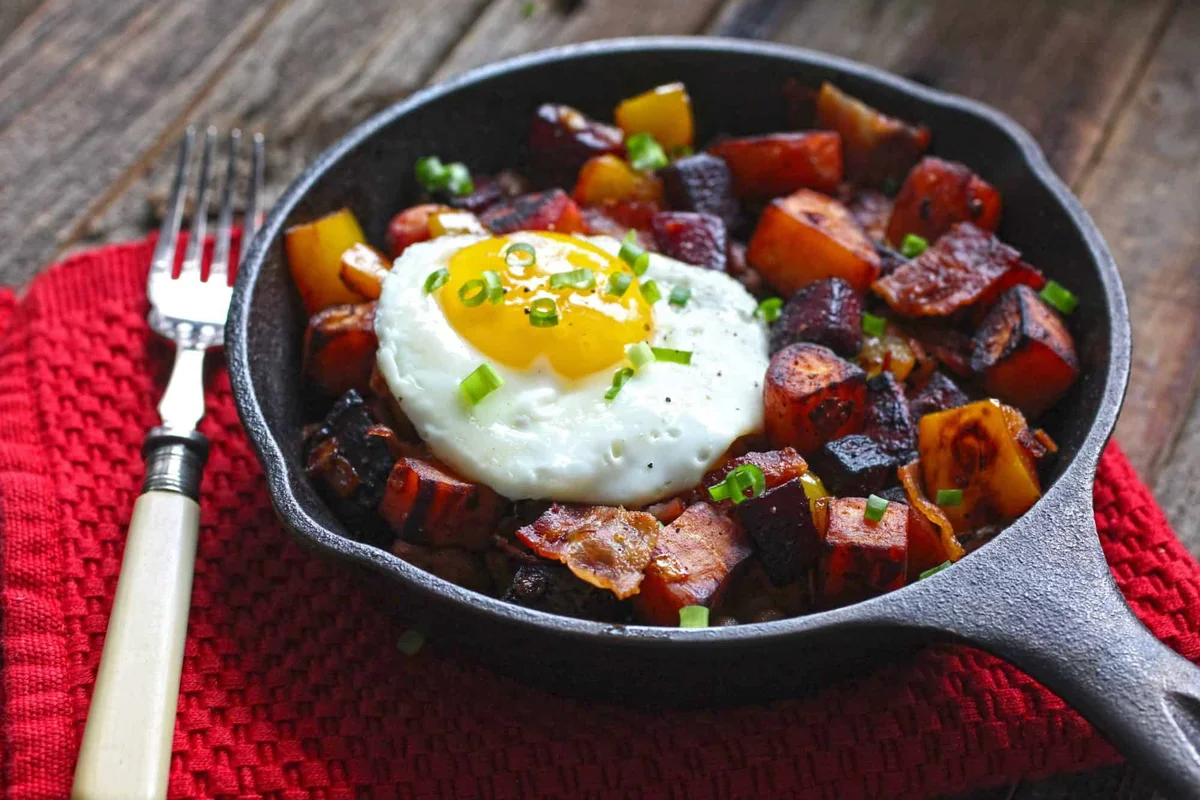
Flannel hash is a pan-fried mix of sweet potato, beetroot, pepper and onion, cooked in bacon fat and served with eggs. It makes a colourful, hearty breakfast or brunch from straightforward ingredients.
Ingredients
- 3 slicesbacon
- 1 largesweet potato, peeled and cut into 2.5 cm cubes
- 2beetroots, peeled and cut into 2.5 cm cubes
- 1yellow pepper, diced
- 1 smallonion, diced
- 3 or 4eggs
- for garnishspring onions
Instructions
- 1
Cook the bacon
Heat a large frying pan and add the bacon. Cook over a medium heat for about 10 minutes, until crisp and the fat has rendered. Lift out the bacon, leaving the fat in the pan.
- 2
Brown the vegetables
Cook the beetroot and sweet potato in the bacon fat over a medium-low heat, browning them and cooking until tender.
- 3
Add pepper and onion
When the sweet potato has about 5 minutes left to cook, add the pepper and onion.
- 4
Return the bacon
Once everything is tender and browned, return the bacon to the pan and stir to combine.
- 5
Cook the eggs
Meanwhile, cook the eggs as you prefer: scrambled, fried or poached.
- 6
Serve the hash
Divide the hash between plates, top with the eggs and garnish with spring onions.
What is flannel hash?
Flannel hash is a rustic American-style hash: chopped vegetables are browned together in a pan and served with eggs. Its name is often associated with New England cooking, though the exact history of the dish is not firmly established.
This version gets its colour and earthy sweetness from beetroot and sweet potato, while bacon provides savoury flavour and cooking fat.
Nutrition and macros by portion
The nutrition label shows one serving as written: 270 calories, 10g protein, 31g carbs, 12g fat.
| Portion | Adjustment | kcal | Protein | Carbs | Fat |
|---|---|---|---|---|---|
| Lighter | Use less bacon fat | 189 kcal | 7g | 22g | 8g |
| This serving | As written | 270 kcal | 10g | 31g | 12g |
| Hungry | Add an extra egg | 405 kcal | 15g | 47g | 18g |
Sweet potato and beetroot provide most of the carbohydrates, while the bacon and eggs contribute much of the fat and protein. Serve with a generous portion of salad or other green vegetables to add freshness and balance the plate.
The vegetables and bacon
Bacon fat: cooking the root vegetables in the rendered fat gives them a savoury coating and helps them brown. Keep the heat moderate so the fat does not smoke.
Even cubes: cut the sweet potato and beetroot into similarly sized pieces so they cook at roughly the same pace.
Getting the texture right
Tender centres: the sweet potato and beetroot should be easy to pierce with a fork before you finish the hash. The pieces can take a while to soften, so check them as they cook.
Browned edges: let the vegetables sit against the pan long enough to colour, stirring occasionally rather than constantly. Add the pepper and onion near the end so they soften without losing all their bite.
Timing the eggs
Separate cooking: the recipe cooks the eggs while the vegetables finish, so they can be prepared to suit each person. Scrambled, fried or poached eggs all work as a topping.
Serve promptly: plate the hash once it is tender and browned, then add the eggs and spring onions while everything is hot.
Serving ideas
Fresh contrast: serve with spring onions as directed, or add a crisp green salad alongside the hash.
For brunch: toast or warm bread makes a practical accompaniment, especially if you want something to scoop up the egg yolk.
Recipe notes & tips
- Use a large frying pan so the vegetables have room to brown.
- Cut the root vegetables into evenly sized cubes for more even cooking.
- Keep the heat at medium-low while the beetroot and sweet potato soften.
- Stir from time to time, but allow the vegetables to rest against the pan to develop browned edges.
- Cook the eggs just before serving so they are hot when added to the hash.
Variations
- More greens: stir in a handful of spinach near the end and cook until wilted.
- Herb finish: scatter chopped parsley over the plated hash for a fresh note.
- Chilli heat: add a pinch of chilli flakes with the pepper and onion.
- Extra vegetables: add diced mushrooms with the onion and pepper.
- Change the egg: top each serving with a poached egg for a soft yolk.
Common mistakes to avoid
- Crowding the pan: the vegetables may steam rather than brown, so use a roomy pan.
- Uneven cubes: different-sized pieces cook at different rates; cut the beetroot and sweet potato to a similar size.
- Heat too high: the bacon fat can scorch before the roots soften; keep the pan over medium-low heat for the vegetables.
- Adding the onion too early: it can become very soft while the roots cook; add it with the pepper when the sweet potato has about 5 minutes left.
- Skipping the tenderness check: browned vegetables may still be firm inside; test a piece with a fork before finishing.
How to store
Refrigerate leftover hash in a covered container for up to 3 days. Reheat it in a frying pan until piping hot; cook fresh eggs to serve with it.
Frequently asked questions
Can I make the hash ahead?
You can cook the vegetable hash ahead and refrigerate it, then reheat it in a frying pan. Cook the eggs fresh when you are ready to serve.
How do I know when the beetroot and sweet potato are cooked?
They should be browned in places and tender when pierced with a fork. If they are still firm, continue cooking over medium-low heat.
Can I use cooked beetroot?
The method is written for raw beetroot, which cooks in the pan with the sweet potato. Cooked beetroot will need less time, so add it later to warm and brown it without letting it become too soft.
Can I make this without bacon?
Yes. Cook the vegetables in a little oil instead, though the hash will lose the smoky savoury flavour that bacon brings.
Which style of eggs works best?
Any of the suggested options—scrambled, fried or poached—will work. Choose based on whether you want the egg mixed through or served on top.
Cook it from the original
This recipe comes from glutenfreesociety.org. Their page has the author’s own photos, notes and tips — the best place to cook it from.
Open the recipe on glutenfreesociety.org