
Cauliflower Mash
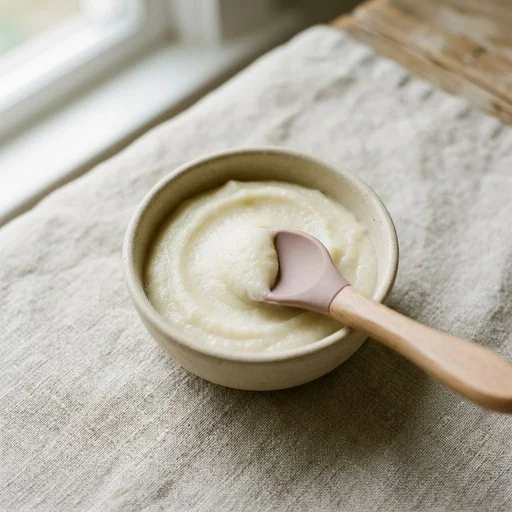
This simple cauliflower mash turns tender florets into a smooth or softly textured first food. Add breast milk, formula or water gradually to get a consistency that suits your baby.
Ingredients
- 150 gcauliflower florets
- as neededbreast milk, formula or water, for consistency
Instructions
- 1
Prepare cauliflower
Wash the cauliflower and break it into small, evenly sized florets.
- 2
Steam until tender
Steam the florets over boiling water for 10–12 minutes, until a fork pierces them easily and they are completely tender.
- 3
Choose a texture
Transfer the cooked cauliflower to a blender or food processor, or mash it with a fork for a chunkier texture suitable for older babies.
- 4
Mash until smooth
Blend or mash the cauliflower, adding breast milk, formula or water as needed to reach the desired consistency.
- 5
Cool before serving
Leave the mash to cool before serving.
What is cauliflower mash?
Cauliflower mash is cooked cauliflower crushed or blended into a soft purée. This version keeps the ingredient list simple and lets you adjust the texture with breast milk, formula or water.
It is a straightforward way to offer cauliflower when a baby is ready to begin solids, often around 6 months. Follow your baby’s readiness cues and any guidance from your health visitor or other healthcare professional.
Nutrition and macros by portion
The nutrition label shows one serving as written: 38 calories, 3g protein, 8g carbs, 0g fat.
| Portion | Adjustment | kcal | Protein | Carbs | Fat |
|---|---|---|---|---|---|
| Lighter | Use water to thin | 27 kcal | 2g | 5g | 0g |
| This serving | As written | 38 kcal | 3g | 8g | 0g |
| Hungry | Make a larger batch | 57 kcal | 4g | 11g | 1g |
The cauliflower provides most of this serving’s carbohydrates and fibre, with a small amount of protein and very little fat. Breast milk or formula will change the nutrition according to how much you add; water will not add meaningful energy or macros. For a balanced meal, serve it alongside other age-appropriate foods rather than relying on cauliflower alone.
Prepare evenly sized florets
Small florets: break the cauliflower into pieces of similar size so they steam at about the same rate.
A thorough wash and even preparation help make the short steaming stage more predictable.
Steam for a soft finish
Steaming: cook the florets over boiling water for 10–12 minutes, as directed, rather than relying on time alone.
Doneness: the cauliflower should be completely tender when pierced with a fork. If it still feels firm, continue steaming until it is easy to mash.
Adjust the texture gradually
Smooth mash: a blender or food processor makes a finer purée; add the liquid a little at a time to avoid making it too thin.
Chunkier mash: use a fork to leave more texture, as suggested for older babies. Choose a texture appropriate for your baby and supervise them while eating.
Use a suitable liquid
Breast milk or formula: stir in a little at a time to loosen the mash, using milk that has been prepared and handled as usual.
Water: use it when you want to adjust the consistency without adding milk. The recipe gives no set quantity, so stop once the mash reaches the texture you want.
Cool and serve
Cooling: let the mash cool before serving and check its temperature yourself. Make only as much as you need for the meal, or store leftovers promptly.
Serving: offer the mash with a clean spoon and keep your baby seated and supervised while eating.
Recipe notes & tips
- Cut the florets to a similar size to help them cook evenly.
- Check tenderness with a fork before transferring the cauliflower to the blender.
- Add breast milk, formula or water in small amounts so the mash does not become runny.
- Use a fork if you want to retain more texture instead of blending.
- Let the mash cool and check its temperature before offering it.
Variations
- Smoother purée: blend thoroughly and add liquid a little at a time.
- Chunkier texture: mash with a fork rather than using a blender.
- Water-thinned: use water to loosen the mash when preferred.
- Milk-thinned: add breast milk or formula gradually for a creamier consistency.
Common mistakes to avoid
- Uneven florets: break them into similar-sized pieces so they become tender at a similar rate.
- Undercooking: steam until a fork pierces the florets easily before mashing.
- Adding too much liquid: stir it in gradually and stop when the consistency is right.
- Serving too warm: leave the mash to cool and check the temperature before feeding.
- Blending when a chunkier texture is wanted: mash with a fork instead.
How to store
Cool leftovers promptly and store them in a covered container in the fridge for up to 2 days. Reheat until hot throughout, stir well and let the mash cool to a suitable serving temperature; do not reheat the same portion more than once.
Frequently asked questions
How do I know when the cauliflower is cooked?
After 10–12 minutes of steaming, a fork should pierce the florets easily. If they are still firm, steam them for longer.
How much liquid should I add?
There is no fixed amount. Add breast milk, formula or water a little at a time until the mash reaches the consistency you want.
Can I make this mash without a blender?
Yes. Mash the steamed florets with a fork for a chunkier result.
Can I freeze cauliflower mash?
You can freeze it in small, covered portions. Thaw it in the fridge, reheat until hot throughout, then stir and cool before serving.
When can I offer cauliflower mash to my baby?
The description notes that babies often begin solids around 6 months, when they are ready. Ask a healthcare professional if you are unsure about your baby’s readiness or suitable textures.
Cook it from the original
This recipe comes from blwrecipes.com. Their page has the author’s own photos, notes and tips — the best place to cook it from.
Open the recipe on blwrecipes.com