
Chickpea Curry with Cauliflower Rice
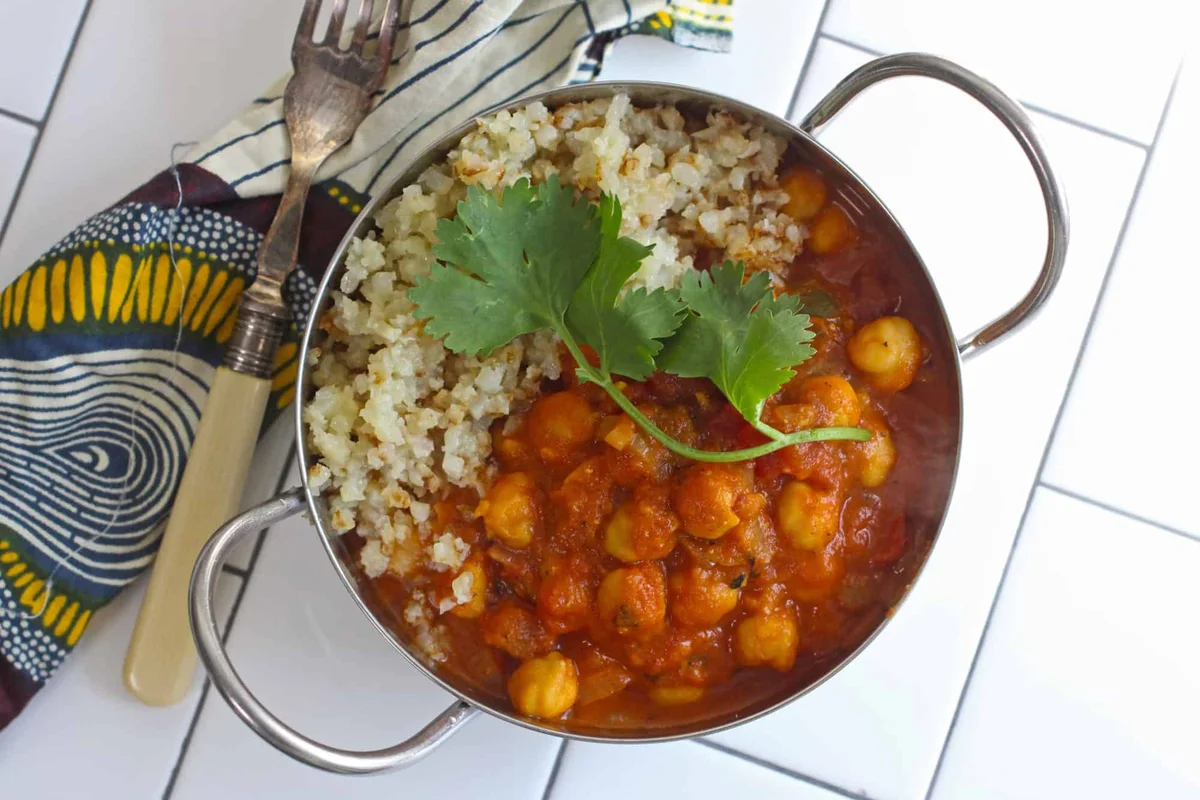
This chickpea curry simmers chickpeas in a spiced tomato and coconut sauce, served alongside lightly browned cauliflower rice. It makes a hearty, plant-based meal with warming spices and a fresh coriander finish.
Ingredients
- 1 largeonion, diced
- 5jalapeños, deseeded and chopped
- 5 clovesgarlic, grated
- 5 cm (2 inches)ginger, peeled and grated
- 1 teaspooncumin
- ¼ teaspoonground cloves
- ¼ teaspoonground turmeric
- 1 tablespooncurry powder
- 1 can, 794 g (28 oz), drained and rinsedchickpeas
- 1 can, 794 g (28 oz)crushed tomatoes
- 60 ml (¼ cup)canned coconut milk
- 3 cups (about 300 g)raw cauliflower rice
- to tastefresh coriander
- to tastesalt and pepper
Instructions
- 1
Cook the vegetables
In a medium pot, sauté the onion and jalapeños over medium heat with some olive oil for about 10 minutes.
- 2
Add aromatics
Stir in the garlic and ginger and cook for 2 minutes.
- 3
Add the spices
Add the cumin, cloves, turmeric and curry powder, then stir to combine.
- 4
Simmer the curry
Add the chickpeas, crushed tomatoes and coconut milk and stir. Bring to a simmer, cover and cook for about 15 minutes.
- 5
Cook the cauliflower
Meanwhile, heat some oil in a hot pan and cook the cauliflower rice until lightly browned. Remove it from the heat.
- 6
Serve the curry
Serve the chickpeas with the cauliflower rice on the side and garnish with coriander.
What is chickpea curry?
Chickpea curry is a broad family of dishes in which chickpeas are cooked with spices and a savoury sauce. This version pairs them with tomatoes, coconut milk and warming spices, then serves the curry with cauliflower rice.
The combination works because the chickpeas hold their shape in the sauce, while the tomatoes bring tang and the coconut milk softens the spices. Jalapeños add fresh heat, which you can adjust by removing more or fewer seeds.
Nutrition and macros by portion
The nutrition label shows one serving as written: 270 calories, 12g protein, 43g carbs, 8g fat.
| Portion | Adjustment | kcal | Protein | Carbs | Fat |
|---|---|---|---|---|---|
| Lighter | Use less coconut milk | 189 kcal | 8g | 30g | 6g |
| This serving | As written | 270 kcal | 12g | 43g | 8g |
| Hungry | Serve a larger portion | 405 kcal | 18g | 65g | 12g |
The chickpeas provide most of the carbohydrates, fibre and plant protein, while the coconut milk and cooking oil contribute much of the fat. Tomatoes and cauliflower add further carbohydrates and fibre. For a balanced plate, serve the curry with a generous portion of cauliflower rice and add another vegetable side if you like.
Building the flavour
Aromatics: cooking the onion and jalapeños first gives them time to soften before the garlic and ginger go in. Add those later so they cook briefly rather than scorching.
Spices: stir the cumin, cloves, turmeric and curry powder into the softened vegetables. This brief contact with the pot helps distribute their flavour through the curry.
Getting the curry texture right
Simmer: once the chickpeas, tomatoes and coconut milk are combined, bring the mixture to a gentle simmer and cover it for about 15 minutes. Keep the heat low enough that it bubbles gently rather than boiling hard.
Consistency: the finished sauce should cling to the chickpeas but remain spoonable. If it looks very loose, uncover it briefly and let it simmer; if it thickens too much, stir well before serving.
Cooking cauliflower rice
Use a hot pan and cook the cauliflower rice until it is lightly browned, as directed. Avoid leaving it in the pan after it is done, since residual heat can make it softer.
The cauliflower is served separately rather than stirred into the curry, so it keeps its own texture and offers a mild contrast to the spiced sauce.
Adjusting the heat
Jalapeños: removing their seeds reduces some of the chilli heat while keeping their fresh, green flavour. For a milder curry, use fewer jalapeños; for more heat, leave in some seeds.
Seasoning: taste the curry near the end and adjust the salt and pepper to suit. The recipe leaves their amounts to taste, so start modestly and add more if needed.
What to serve with it
Serve a portion of curry beside the cauliflower rice and finish with chopped coriander. The separate serving keeps the cauliflower from soaking up the sauce before it reaches the table.
For a more substantial meal, you could serve it with another side such as flatbread or rice, though neither is included in this recipe.
Recipe notes & tips
- Drain and rinse the chickpeas well before adding them to the pot.
- Grate the garlic and ginger finely so they disperse evenly through the curry.
- Keep the curry at a gentle simmer during its covered cooking time.
- Use a wide, hot pan for the cauliflower rice so it can brown rather than steam.
- Taste before serving and adjust the salt, pepper and chilli heat to your preference.
Variations
- Milder curry: Use fewer jalapeños or remove all their seeds.
- More coconut flavour: Add a little more coconut milk, keeping in mind that it will make the sauce richer.
- Extra vegetables: Add chopped vegetables to the pot along with the chickpeas and tomatoes.
- Fresh finish: Add a squeeze of lemon just before serving for a brighter flavour.
- Herb swap: Use fresh parsley if you do not have coriander.
Common mistakes to avoid
- Burning the aromatics: Keep the onion and jalapeños over medium heat and stir occasionally.
- Scorching the garlic: Add it after the onion has softened and cook it for only 2 minutes.
- Boiling the curry hard: Bring it to a simmer, then lower the heat so it cooks gently while covered.
- Steaming the cauliflower: Use a hot pan and avoid crowding it so it can brown lightly.
- Overcooking the cauliflower: Remove it from the heat once it is lightly browned.
How to store
Refrigerate leftover curry and cauliflower rice separately in covered containers and use within 3 days. Reheat the curry in a saucepan until hot throughout, adding a splash of water if needed; reheat the cauliflower rice in a pan or microwave until hot.
Frequently asked questions
Can I make this curry less spicy?
Yes. Use fewer jalapeños and remove all their seeds. You can also taste the curry before serving and adjust the heat with the amount of chilli you use next time.
Can I use dried chickpeas?
Yes, but cook them fully before adding them to the curry. The recipe calls for canned chickpeas, so dried chickpeas will need preparation and cooking separately.
Can I use frozen cauliflower rice?
Yes. Cook it in a hot pan, following the pack instructions as a guide, and cook off excess moisture so it can brown lightly.
How can I tell when the curry is ready?
After about 15 minutes of covered simmering, the sauce should be hot and the flavours well combined. The chickpeas should be tender but still hold their shape.
Can I prepare the curry ahead?
Yes. Make the curry ahead and refrigerate it, then reheat it before serving. Cook the cauliflower rice separately so it does not soften in the sauce.
Cook it from the original
This recipe comes from glutenfreesociety.org. Their page has the author’s own photos, notes and tips — the best place to cook it from.
Open the recipe on glutenfreesociety.org