
Classic Pancakes
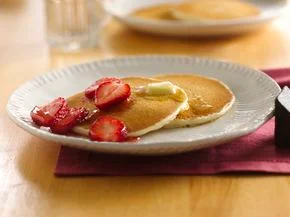
These classic pancakes are a simple breakfast made from a lightly mixed batter and cooked until golden on a hot griddle. Serve them with maple syrup or fresh fruit, or use one of the variations for a different flavour.
Ingredients
- 1egg
- 125 g (1 cup)plain flour or wholemeal flour
- 12 g (1 tablespoon)sugar
- 12 g (3 teaspoons)baking powder
- 1.5 g (1/4 teaspoon)salt
- 180 ml (3/4 cup)milk
- 30 ml (2 tablespoons)vegetable oil or melted butter
Instructions
- 1
Mix the batter
In a medium bowl, whisk the egg until fluffy. Add the remaining ingredients and stir just until the flour is moistened; the batter should be slightly lumpy. Avoid overmixing, which can make the pancakes tough. For thinner pancakes, stir in an additional 1–2 tablespoons of milk.
- 2
Heat the griddle
Heat a griddle or frying pan over medium-high heat to 190°C (375°F). To check it, sprinkle on a few drops of water: they should jump around. If needed, brush the surface with vegetable oil, or apply cooking spray before heating.
- 3
Cook the pancakes
For each pancake, pour slightly less than 60 ml (1/4 cup) of batter onto the griddle. Cook for 2–3 minutes, until bubbles appear on top and the edges look dry. Turn and cook the other side until golden brown.
What are classic pancakes?
Pancakes are a familiar breakfast made by cooking a flour-based batter on a hot, flat surface. This recipe is a straightforward American-style version, with baking powder helping the batter rise as it cooks.
The method keeps the batter slightly lumpy rather than smooth, which helps avoid tough pancakes. A choice of plain or wholemeal flour lets you make the same simple base with a different flavour and texture.
Nutrition and macros by portion
The nutrition label shows one serving as written: 103 calories, 3g protein, 16g carbs, 3g fat.
| Portion | Adjustment | kcal | Protein | Carbs | Fat |
|---|---|---|---|---|---|
| Lighter | Use less cooking fat | 72 kcal | 2g | 11g | 2g |
| This serving | As written | 103 kcal | 3g | 16g | 3g |
| Hungry | Make a larger portion | 155 kcal | 5g | 23g | 5g |
Flour supplies most of the carbohydrates, while the egg contributes protein and the oil or butter adds fat. Milk and the small amount of sugar also contribute carbohydrates. Serve a portion with fresh fruit or yoghurt for a more balanced plate.
Choosing the flour
Plain flour: gives the pancakes a light, familiar flavour and soft texture.
Wholemeal flour: brings a nuttier taste and a more substantial feel. Either flour works in the recipe as written.
Mixing without overworking
Whisk the egg until fluffy before stirring in the other ingredients. Once the flour goes in, mix only until it is moistened; small lumps in the batter are expected.
For a thinner batter, add 1–2 tablespoons of milk. Stir it in gently so the batter stays tender.
Getting the pan ready
Heat the griddle or frying pan over medium-high heat, aiming for 190°C (375°F). A few drops of water should skitter across the surface when it is ready.
If the cooking surface needs it, brush it with vegetable oil or spray it with cooking spray before heating. A properly heated pan helps the pancakes cook evenly.
Knowing when to turn
Pour slightly less than 60 ml (1/4 cup) of batter for each pancake. Wait 2–3 minutes, until bubbles form on top and the edges appear dry.
Turn the pancake once those cues appear, then cook the second side until golden brown. The colour and dry edges are useful checks alongside the cooking time.
Ways to serve them
Maple syrup is a simple topping, while fresh fruit adds a bright, juicy contrast. The recipe also suggests serving wholemeal pancakes with strawberry yoghurt and sliced strawberries.
For a more filling breakfast plate, pair the pancakes with yoghurt or fruit. Keep toppings separate at the table so everyone can choose how much to add.
Recipe notes & tips
- Leave small lumps in the batter rather than whisking it until smooth.
- Use the water-drop test to check that the griddle is hot enough.
- Pour slightly less than 60 ml of batter for each pancake.
- Wait for bubbles on top and dry-looking edges before turning.
- Cook the second side until golden brown.
Variations
- Add berries: Stir 120 g (1/2 cup) fresh or thawed, well-drained blackberries, blueberries or raspberries into the batter.
- Use buttermilk: Replace the 180 ml (3/4 cup) milk with 240 ml (1 cup) buttermilk, reduce the baking powder to 4 g (1 teaspoon) and add 2.5 g (1/2 teaspoon) bicarbonate of soda.
- Top with strawberries: Make the pancakes with wholemeal flour and serve each portion with 60 ml (1/4 cup) strawberry yoghurt and 75 g (1/2 cup) sliced fresh strawberries.
- Use orange juice: Replace the milk with orange juice and stir in 30 g (1/4 cup) dried cranberries and 30 g (1/4 cup) chopped dried apples after mixing the batter.
Common mistakes to avoid
- Overmixing the batter: Stop stirring as soon as the flour is moistened to help keep the pancakes tender.
- Turning too soon: Wait until bubbles form on top and the edges look dry before flipping.
- Using a cool griddle: Heat it to 190°C (375°F) and check with a few drops of water.
- Making the batter too thick: Stir in 1–2 tablespoons of extra milk for thinner pancakes.
- Cooking the second side for too long: Check for a golden-brown finish rather than leaving the pancakes on the pan unnecessarily.
How to store
Refrigerate cooled pancakes in a covered container and use within 3 days. Reheat in a frying pan over low heat or in a toaster until warmed through.
Frequently asked questions
Can I use wholemeal flour?
Yes. The recipe allows plain or wholemeal flour, and the method stays the same.
How do I make the batter thinner?
Stir in an additional 1–2 tablespoons of milk. Mix gently, just until incorporated.
Can I make these with buttermilk?
Yes. Use 240 ml (1 cup) buttermilk instead of 180 ml (3/4 cup) milk. Reduce the baking powder to 4 g (1 teaspoon) and add 2.5 g (1/2 teaspoon) bicarbonate of soda.
Can I add berries to the batter?
Stir in 120 g (1/2 cup) fresh or thawed, well-drained blackberries, blueberries or raspberries.
How can I tell when to flip a pancake?
Turn it when bubbles have formed on top and the edges look dry, usually after 2–3 minutes.
Can I use orange juice instead of milk?
Yes. Replace the milk with orange juice and add dried cranberries and chopped dried apples as described in the variation.
Cook it from the original
This recipe comes from goldmedalflour.com. Their page has the author’s own photos, notes and tips — the best place to cook it from.
Open the recipe on goldmedalflour.com