
Buckwheat & Raisin
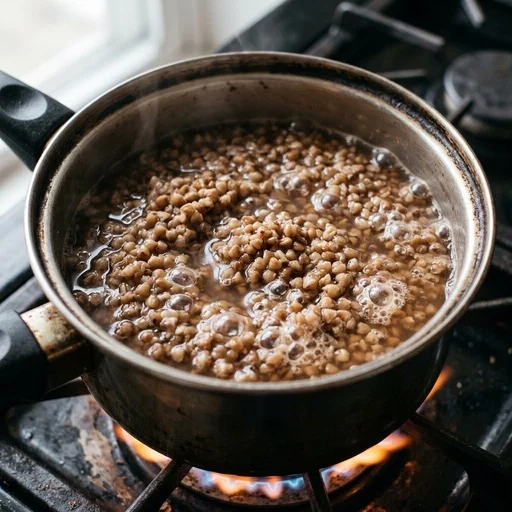
A soft buckwheat porridge sweetened with a smooth raisin purée. It is a simple, naturally wheat-free breakfast or snack, with the raisins softened before blending for an even texture.
Ingredients
- 43 g (¼ cup)buckwheat groats
- 360 ml (1½ cups)water
- 2 tablespoonsraisins, soaked
Instructions
- 1
Soak the raisins
Cover the raisins with warm water and leave them to soak for 10–15 minutes, until plump and softened.
- 2
Rinse the buckwheat
Rinse the buckwheat groats under cold running water.
- 3
Cook the groats
Put the buckwheat in a pan with 360 ml (1½ cups) water. Cook over medium heat for 12–15 minutes, until soft.
- 4
Blend and serve
Drain the raisins and blend them with a little water until smooth. Stir the purée into the cooked buckwheat and mix well. Serve warm. The recipe specifies that it is suitable for children aged 18 months and older.
What is buckwheat and raisin porridge?
Buckwheat is a seed used much like a grain; despite its name, it is not related to wheat and is naturally gluten-free. This simple baby-food dish cooks buckwheat groats until soft, then sweetens them with blended raisins.
The recipe pairs a plain, tender base with softened fruit, making the raisin purée easy to stir through. Buckwheat is sometimes introduced around six months, but this particular recipe states that it is suitable from 18 months.
Nutrition and macros by portion
The nutrition label shows one serving as written: 204 calories, 7g protein, 43g carbs, 2g fat.
| Portion | Adjustment | kcal | Protein | Carbs | Fat |
|---|---|---|---|---|---|
| Lighter | Use fewer raisins | 143 kcal | 5g | 30g | 1g |
| This serving | As written | 204 kcal | 7g | 43g | 2g |
| Hungry | Make a larger portion | 306 kcal | 10g | 65g | 2g |
Most of the carbohydrates come from the buckwheat and raisins, while the buckwheat also provides most of the protein and a small amount of fat. Serve with a suitable protein-rich food, such as plain yoghurt, to make the meal more balanced if that suits the child.
Choosing the ingredients
Buckwheat groats: Use plain groats rather than toasted kasha if you want the mildest flavour. Rinsing them first removes any loose dust.
Raisins: Soaking softens the fruit so it blends more readily. Use warm water for the soak, then add only a little fresh water while blending to control the purée’s consistency.
Soaking and blending
Soak the raisins for the full 10–15 minutes, checking that they feel plump and soft before draining. If they are still firm, give them a little longer in the warm water.
Blend the drained raisins until smooth, adding water gradually. A small amount is usually enough to help the fruit move around the blender without making the porridge watery.
Getting the texture right
Cooked groats: The buckwheat should be soft before you combine it with the raisin purée. If it is still firm at the end of the stated 12–15 minutes, continue cooking until tender.
Finished porridge: Stir thoroughly so the fruit is distributed throughout. Let it cool to a comfortable serving temperature, and adjust with a little water if you need a looser texture.
Timing the recipe
The raisins can soak while you rinse and begin cooking the groats, which helps the two parts come together without much extra waiting. Keep an eye on the pan as the water cooks down.
The recipe gives 12–15 minutes for cooking the buckwheat and 10–15 minutes for soaking the raisins. The groats’ tenderness, rather than the clock alone, is the best cue that they are ready.
Serving the porridge
Serve it warm in a small bowl, making sure it is not too hot. Stir once more just before serving so the raisin purée is evenly mixed in.
For a more complete meal for an older child, serve alongside a suitable source of protein, such as plain yoghurt, if appropriate for the child and already introduced.
Recipe notes & tips
- Rinse the groats under cold water before cooking.
- Use warm rather than boiling water to soak the raisins.
- Add blending water a little at a time so the purée stays thick.
- Check that the groats are soft before stirring in the fruit.
- Cool the porridge to a comfortable temperature before serving.
Variations
- Looser texture: Stir in a little extra water after cooking.
- Smoother porridge: Blend the cooked buckwheat and raisin purée together.
- More fruit: Add another small spoonful of soaked raisins to the purée.
- Gentler sweetness: Use fewer raisins and blend with just enough water to make a purée.
Common mistakes to avoid
- Firm raisins: Soak them until plump and soft before blending.
- Lumpy purée: Add water gradually and blend until smooth.
- Hard groats: Continue cooking until the buckwheat is soft.
- Watery porridge: Use only a little water when blending and adding it to the pan.
- Serving it too hot: Leave the finished porridge to cool before offering it.
How to store
Cool leftovers promptly, transfer them to a covered container and refrigerate for up to 2 days. Reheat until piping hot throughout, then cool to a comfortable serving temperature; stir in a little water if it has thickened.
Frequently asked questions
Is buckwheat gluten-free?
Buckwheat is naturally gluten-free and is not related to wheat. If gluten avoidance is important, check packaging and prevent cross-contamination during preparation.
How long should I soak the raisins?
Soak them in warm water for 10–15 minutes, until plump and softened. Drain before blending.
How do I know when the buckwheat is cooked?
Cook it for 12–15 minutes over medium heat, then check that the groats are soft. If they remain firm, continue cooking until tender.
What age is this recipe for?
The method specifies that this recipe is suitable for children aged 18 months and older. Although buckwheat can be introduced around six months, follow the recipe’s stated age guidance and adapt texture to the child.
Can I make the porridge smoother?
Yes. Blend the cooked buckwheat with the raisin purée, adding a little water as needed to reach a smooth consistency.
Can I prepare it ahead?
Yes. Refrigerate it in a covered container for up to 2 days, then reheat thoroughly and cool before serving.
Cook it from the original
This recipe comes from blwrecipes.com. Their page has the author’s own photos, notes and tips — the best place to cook it from.
Open the recipe on blwrecipes.com