
Bomboloni
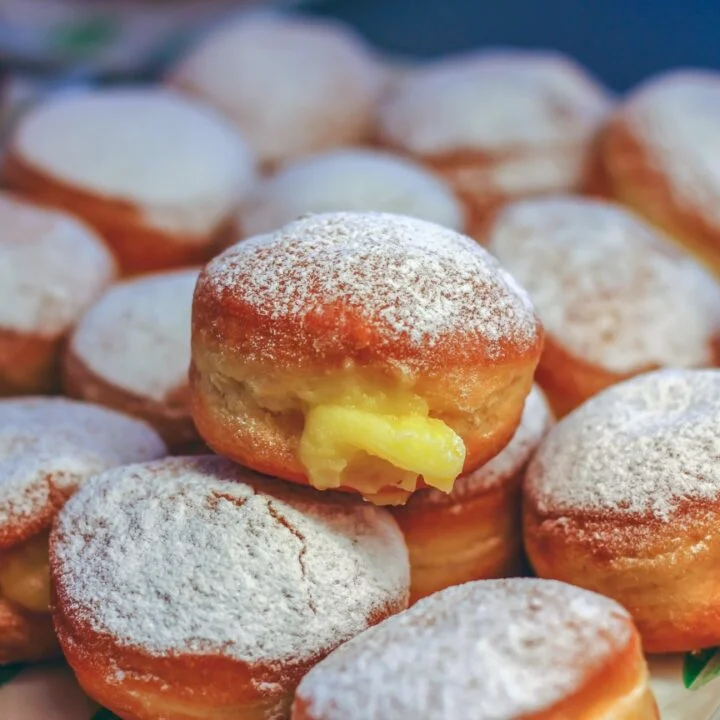
Bomboloni are soft, fried Italian doughnuts filled with a sweet centre. This version is made with a simple yeasted dough and can be filled with jam, chocolate spread, caramel or a cream of your choice.
Ingredients
- 500 g (4 cups)plain flour
- 2.5 g (1/2 tsp)salt
- 50 g (1/4 cup)sugar
- 240 ml (1 cup)milk, warmed
- 7 g (2-1/4 tsp)active dried yeast
- 57 g (1/4 cup)unsalted butter, at room temperature
- 2eggs
- 10 ml (2 tsp)vanilla extract
- As neededvegetable oil, for frying
- To tastegranulated sugar, for coating
- To tastefilling of your choice, such as strawberry jam, chocolate hazelnut spread, caramel, chantilly cream or lemon curd
Instructions
- 1
Activate the yeast
Stir the yeast and 1 teaspoon of the sugar into the warmed milk. Leave it for about 3 minutes to activate.
- 2
Mix the dough
Combine the flour, remaining sugar, salt and vanilla in a bowl, then add the activated yeast mixture. Add the butter and eggs, and knead everything together until you have an even dough.
- 3
Cut and prove
Lightly flour a clean work surface and roll the dough to about 1.3 cm (1/2 inch) thick. Cut out rounds with a roughly 7.5 cm (3 inch) cutter and space them on a floured baking sheet. Cover with a clean tea towel and leave to prove for 1.5 hours.
- 4
Fry and fill
Heat vegetable oil in a pan to about 177°C (350°F), filling the pan halfway. Fry the doughnuts on each side until golden brown, then transfer them to a paper-towel-lined plate to drain. Coat all over with granulated sugar, then pipe your chosen filling into each one using a piping bag fitted with a star nozzle.
What are bomboloni?
Bomboloni are Italian filled doughnuts made from a yeasted, enriched dough. They are typically fried, coated in sugar and filled after cooking.
This recipe keeps the dough straightforward, with milk, eggs, butter and vanilla for richness. The choice of filling makes it easy to tailor each batch to what you have on hand.
Nutrition and macros by portion
The nutrition label shows one serving as written: 850 calories, 19g protein, 113g carbs, 36g fat.
| Portion | Adjustment | kcal | Protein | Carbs | Fat |
|---|---|---|---|---|---|
| Lighter | Use less filling | 595 kcal | 13g | 79g | 25g |
| This serving | As written | 850 kcal | 19g | 113g | 36g |
| Hungry | Serve an extra doughnut | 1275 kcal | 29g | 170g | 54g |
The flour and sugar provide most of the carbohydrates, while butter, eggs and oil contribute much of the fat; the eggs, milk and flour also provide some protein. Filling can change the nutrition considerably, so choose a modest amount and serve a doughnut alongside fruit for a more balanced plate.
Building the dough
Yeast mixture: warm milk helps disperse the yeast, while a little sugar gives it a start. The short rest in this method is intended to activate it before it meets the flour.
Enrichment: eggs and butter make the dough richer than a plain bread dough. Knead until the mixture looks even, rather than leaving streaks of butter or dry flour.
Cutting and proving
Even thickness: roll the dough to about 1.3 cm so the rounds are similar in size and cook at a comparable rate. Cut cleanly, without twisting the cutter, to keep the edges neat.
Room to rise: leave space between the rounds on the baking sheet, as they expand during the 1.5-hour covered prove. The recipe does not specify a visual endpoint, so keep them covered for the stated time.
Frying for a golden finish
Oil temperature: heat the oil to 177°C before frying, and take care when working around hot oil. Fry the doughnuts on both sides until golden brown, as directed.
Drain promptly: move each batch to a paper-towel-lined plate after frying. This helps remove excess oil before you coat the doughnuts in sugar.
Filling the doughnuts
Filling choice: strawberry jam, chocolate hazelnut spread, caramel, chantilly cream and lemon curd are all suggested options. Choose a filling that can be piped through the nozzle.
Piping: fill the doughnuts after frying and coating them in sugar, using a star-tipped piping bag. Add the filling to each one rather than trying to fry it inside the dough.
Serving ideas
Serve the bomboloni soon after filling, while their sugar coating is fresh and the centres are soft. A small bowl of extra filling on the side can suit anyone who wants a little more.
Because these are sweet and rich, they pair well with unsweetened coffee or tea. Fresh berries can also add a tart contrast.
Recipe notes & tips
- Warm the milk rather than making it hot, so it is suitable for activating the yeast.
- Measure the sugar before starting so you can reserve 1 teaspoon for the yeast mixture.
- Flour the work surface and baking sheet lightly to help prevent the dough sticking.
- Keep the dough rounds spaced apart as they prove.
- Use a thermometer to bring the oil to 177°C before frying.
- Let excess oil drain before rolling the doughnuts in granulated sugar.
Variations
- Strawberry centre: pipe strawberry jam into each doughnut for a fruity filling.
- Chocolate hazelnut: use chocolate hazelnut spread for a rich, chocolatey centre.
- Caramel filling: pipe caramel into the fried doughnuts for a sweet, buttery middle.
- Chantilly cream: fill with chantilly cream shortly before serving.
- Lemon curd: use lemon curd for a bright, tangy contrast to the sugared dough.
Common mistakes to avoid
- Milk too hot: very hot milk can interfere with the yeast, so warm it gently.
- Uneven rounds: dough of different thicknesses can cook inconsistently; roll it to about 1.3 cm.
- Crowded baking sheet: rounds need room to expand; space them out before covering.
- Oil not hot enough: the doughnuts may absorb more oil; bring the oil to 177°C before frying.
- Skipping the drain: excess oil can leave the coating greasy; use a paper-towel-lined plate.
- Filling too early: filling before frying would not follow this method; pipe it in after the doughnuts are cooked and sugared.
How to store
These are best eaten soon after filling. If needed, keep them in an airtight container in the fridge for up to 2 days; warm briefly in the oven and expect the sugar coating and texture to be less fresh.
Frequently asked questions
Can I use a different filling?
Yes. The recipe suggests strawberry jam, chocolate hazelnut spread, caramel, chantilly cream and lemon curd, but any thick filling that can be piped should work.
How long should the dough prove?
The method specifies 1.5 hours, covered with a clean tea towel. It does not give a separate visual test for when the doughnuts are ready.
What temperature should the oil be?
Heat the oil to 177°C (350°F) before frying. Use a thermometer if available to check the temperature.
How do I know when the bomboloni are cooked?
The method says to fry each side until golden brown. It does not specify a cooking time.
Can I fill them before frying?
This method fills them after frying and coating them in sugar. Use a piping bag to add the filling once they are cooked.
Can I make them ahead?
They are best served soon after filling. You can prepare them earlier, but storing them will soften the sugar coating and change their texture.
Cook it from the original
This recipe comes from gluttodigest.com. Their page has the author’s own photos, notes and tips — the best place to cook it from.
Open the recipe on gluttodigest.com