
Easy Homemade Hummus
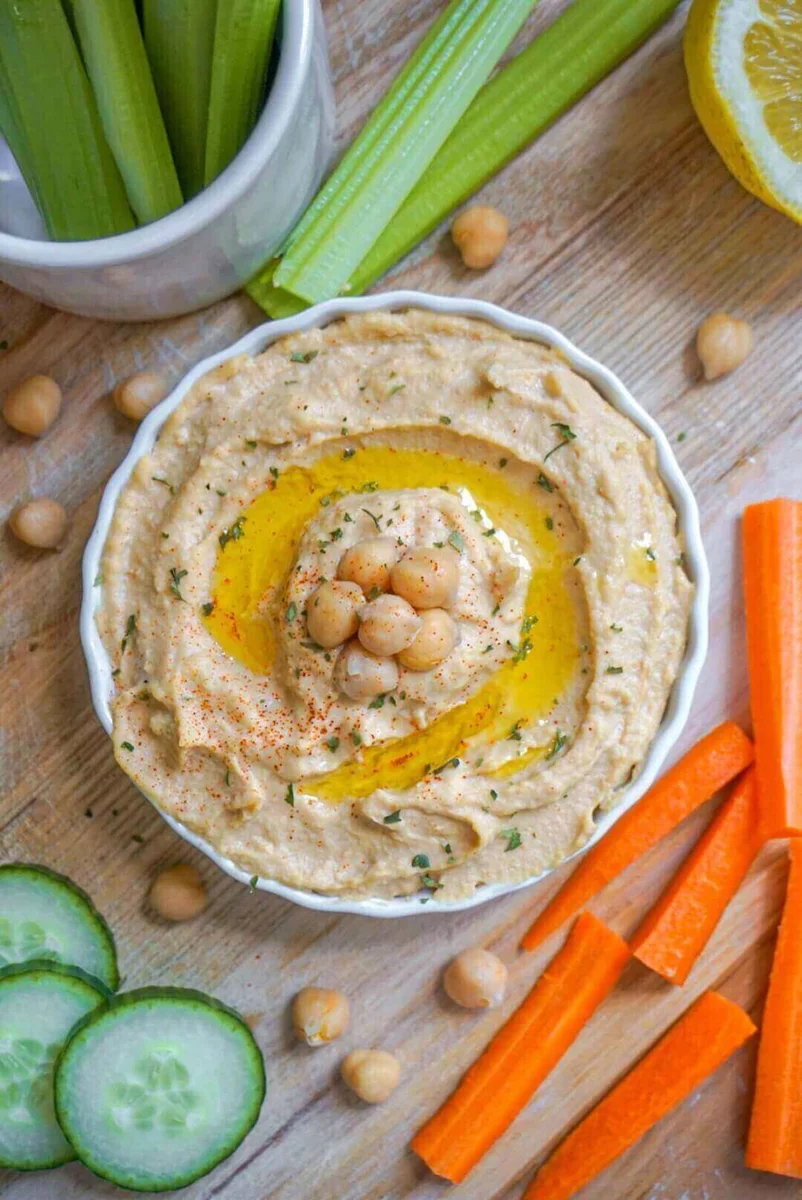
This quick homemade hummus blends chickpeas, tahini, lemon and olive oil into a smooth, savoury dip. Make it in about 10 minutes for a snack, starter or easy addition to a sharing spread.
Ingredients
- 425 g (15 oz) canchickpeas, rinsed and drained
- 120 ml (½ cup)tahini
- 60 ml (¼ cup)lemon juice
- 1garlic clove
- 60 ml (4 tablespoons)extra virgin olive oil
- 75–90 ml (5–6 tablespoons)water
- 1 teaspoonsalt
- ¼ teaspoonpaprika
Instructions
- 1
Blend the ingredients
Put all the ingredients in a food processor or blender and process for about 1–2 minutes, until smooth.
- 2
Transfer and garnish
Spoon the hummus into a serving bowl. If you like, finish with fresh chickpeas, a drizzle of olive oil, fresh parsley and a pinch of paprika.
- 3
Serve with dippers
Serve with warm pita bread, carrots, celery, cucumber or other dippers.
What is hummus?
Hummus is a Middle Eastern chickpea dip, typically made with tahini, lemon and garlic. This version keeps the ingredient list simple and relies on blending everything together for a creamy result.
The balance of nutty tahini, bright lemon and savoury chickpeas makes it at home as a dip or a spread.
Nutrition and macros by portion
The nutrition label shows one serving as written: 123 calories, 2g protein, 3g carbs, 12g fat.
| Portion | Adjustment | kcal | Protein | Carbs | Fat |
|---|---|---|---|---|---|
| Lighter | Use less olive oil | 86 kcal | 1g | 2g | 8g |
| This serving | As written | 123 kcal | 2g | 3g | 12g |
| Hungry | Serve a larger portion | 185 kcal | 3g | 5g | 18g |
The chickpeas supply most of the carbohydrates and some protein, while tahini and olive oil contribute most of the fat. Serve a portion with crunchy vegetables and pita to make a more varied snack or meal plate.
Why these ingredients work
Chickpeas: Rinsing and draining canned chickpeas removes their packing liquid and gives the dip a cleaner flavour. They provide the base and body.
Tahini and oil: Tahini brings a toasted sesame flavour, while extra virgin olive oil adds richness. Lemon juice and garlic keep that richness in check.
Getting a smooth texture
Blending: Give the processor or blender the full 1–2 minutes, stopping to scrape down the sides if needed. A longer blend helps break up the chickpeas and combine the tahini evenly.
Water: Add the measured water with the other ingredients, using the lower amount for a thicker dip. Add the remaining water gradually if you prefer a looser consistency.
Check the flavour
Seasoning: Salt and lemon help the chickpeas and tahini taste lively rather than flat. Taste the finished hummus and adjust only if needed.
Garlic: One clove gives the dip a clear savoury note. If you prefer a milder garlic flavour, use a smaller clove.
Serving ideas
Dippers: Warm pita, carrots, celery and cucumber all work well alongside the creamy dip. Cut vegetables into pieces that are easy to scoop with.
Finishing touches: A little olive oil, parsley, paprika or a few chickpeas makes a simple bowl look inviting. Add these just before serving.
Timing and preparation
This is a no-cook recipe, so its 10-minute preparation time is mostly blending and assembling. Drain and rinse the chickpeas before you start to keep the process moving.
The hummus can be made ahead and chilled, then stirred before serving if it has thickened.
Recipe notes & tips
- Drain the chickpeas thoroughly so excess liquid does not thin the dip.
- Use fresh lemon juice for a bright, fresh-tasting result.
- Scrape down the processor bowl if ingredients cling to the sides.
- Start with 75 ml water and add more if you want a looser hummus.
- Taste before serving and adjust the seasoning to your preference.
Variations
- More lemon: Add a little extra lemon juice for a sharper finish.
- Herb topping: Scatter chopped parsley over the bowl just before serving.
- Spiced finish: Dust the surface with a little extra paprika.
- Garlic flavour: Add another small clove for a more pronounced garlic note.
- Creamier dip: Blend for longer, stopping to scrape down the bowl as needed.
Common mistakes to avoid
- Adding all the water at once: Start with the smaller amount so you can control the consistency.
- Short blending: Process for the full 1–2 minutes to give the chickpeas time to break down.
- Skipping the drain: Rinse and drain the chickpeas first to avoid excess packing liquid.
- Ignoring the bowl sides: Stop and scrape them down so the ingredients blend evenly.
- Garnishing too early: Add optional toppings just before serving for a fresher appearance.
How to store
Keep leftover hummus in an airtight container in the fridge and use within 3–4 days. Stir it before serving; if it has thickened, mix in a little water.
Frequently asked questions
Can I make hummus without a food processor?
Yes. Use a blender, pausing to scrape down the sides as needed. A powerful blender will make it easier to achieve a smooth texture.
How can I make the hummus thinner?
Blend in a little more water at a time until it reaches the consistency you like.
Can I prepare it ahead?
Yes. Make it in advance and store it in an airtight container in the fridge. Stir before serving and add the garnish at the last moment.
What can I serve with hummus?
Try warm pita bread, carrots, celery or cucumber, as suggested in the recipe. It also works as a spread.
Why is my hummus not completely smooth?
It may need more blending. Process it for the full 1–2 minutes and scrape down the sides so all the chickpeas reach the blades.
Cook it from the original
This recipe comes from booboosbakery.com. Their page has the author’s own photos, notes and tips — the best place to cook it from.
Open the recipe on booboosbakery.com