
Gojo's Kikufuku (Zunda & Cream stuffed Mochi): Inspired by Jujutsu Kaisen
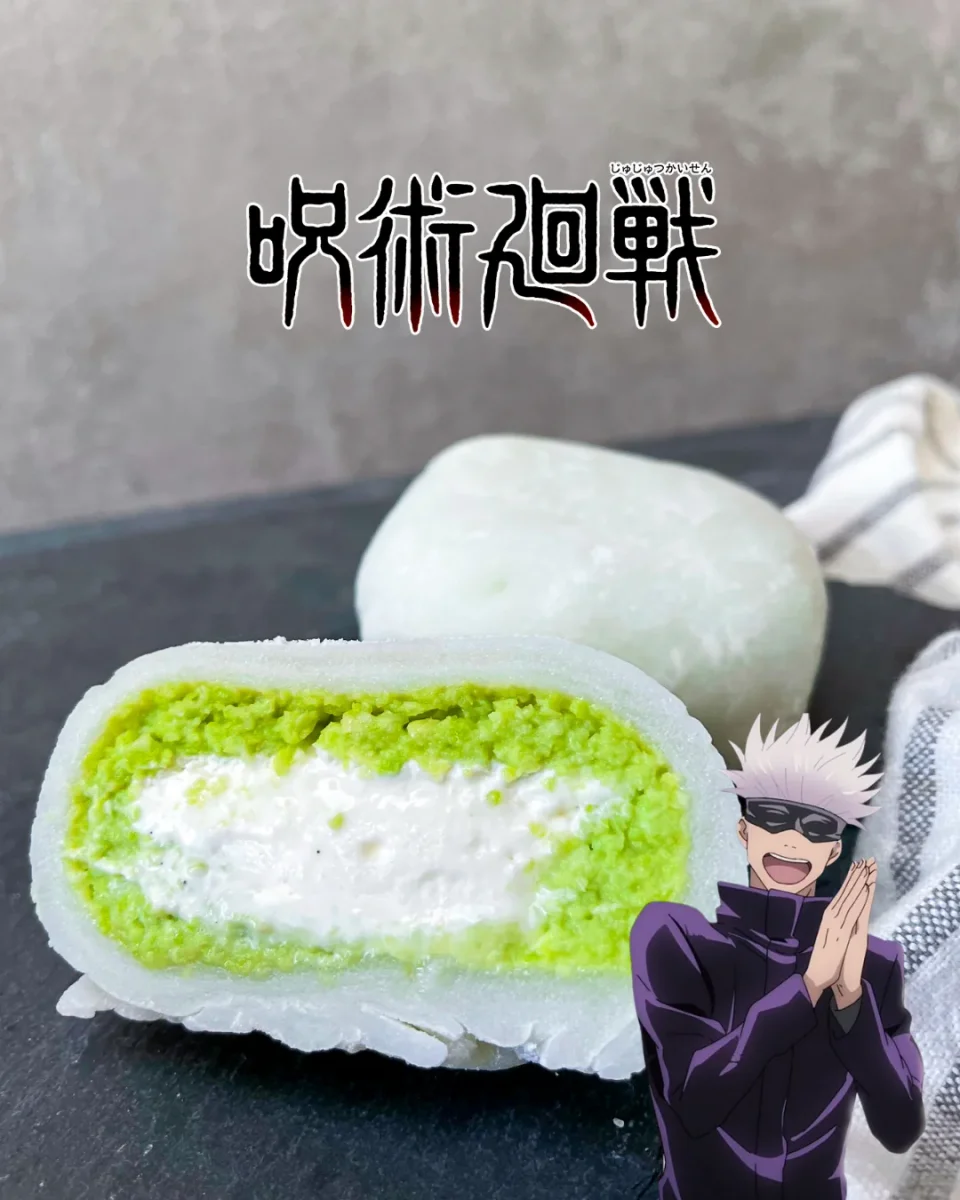
These Japanese-inspired mochi wrap chewy glutinous rice dough around sweet, earthy edamame paste and vanilla whipped cream. Make them when you want a soft, chilled treat with contrasting flavours and textures.
Ingredients
- 300 gpeeled edamame beans, fresh or frozen
- 30 ggranulated sugar
- ¼ tspsalt
- 3–4 Tbspwater, adjusted to the desired texture
- 240 ml (1 cup)whipping cream
- 1 tspcornflour
- 1 Tbspicing sugar
- ¼ tspvanilla bean paste, or vanilla extract
- 158 g (1 cup)mochiko, or glutinous rice flour
- 50 g (¼ cup)granulated sugar
- 240 ml (1 cup)water
- Lots, for dustingpotato starch
Instructions
- 1
Make the zunda
Defrost the edamame if using frozen beans, then pulse in a food processor until it reaches your preferred texture. Add a few tablespoons of water if needed to help it blend; a smooth paste works well. Put the paste in a small saucepan over medium-low heat with half the sugar and 1 tablespoon of water. Stir until the sugar dissolves, then add the remaining sugar and the salt and stir until dissolved.
- 2
Chill the paste
Refrigerate the zunda overnight to firm it, or spread it in a thin layer and place it in the freezer until firm.
- 3
Whip the cream
Whip the cream to soft peaks. Add the cornflour, icing sugar and vanilla paste, then continue whipping to firm peaks that are not crumbly. Stop before the cream is over-whipped.
- 4
Freeze the cream
Transfer the whipped cream to a container and put it in the freezer until hardened.
- 5
Shape the filling
Divide the zunda into 8 equal portions and roll them into balls. Place each portion between two medium-sized pieces of cling film and roll it into a disc. Working with one at a time, scoop a ball of whipped cream using a 1½-tablespoon cookie scoop or two spoons. Set it in the centre of a zunda disc, then use the cling film to wrap the paste around the cream. Twist the film closed and return the filling to the freezer.
- 6
Mix the dough
In a medium-large microwave-safe bowl, whisk the mochiko, sugar and water until smooth with no lumps. Scrape any batter from the sides back into the bowl, then cover with cling film and microwave for 1 minute.
- 7
Cook the dough
Mix the dough thoroughly with a wet spatula, cover again and microwave for another 1 minute. Repeat once more for a third minute. If the dough is not ready, continue in 30-second intervals, adjusting for your microwave. It should be very sticky and translucent.
- 8
Roll and cool
Generously cover a baking tray or large chopping board that will fit in the fridge with potato starch. Tip the hot mochi onto it, dust the dough and rolling pin with more starch, and roll the dough into a thin rectangle. Let it cool and set in the fridge for 15–30 minutes.
- 9
Cut the wrappers
Take the dough from the fridge and cut it into 8 pieces; the finished mochi will be generously filled.
- 10
Wrap the filling
Work with one mochi at a time so the filling stays frozen. Unwrap a filling ball and use a pastry brush to remove excess potato starch from a dough piece. Put the filling in the centre, fold the dough sides up and pinch them shut. For a neater shape and a secure seal, wrap the mochi in cling film and twist it closed. Return it to the freezer and repeat with the remaining pieces.
- 11
Set and serve
Leave the mochi in the freezer for at least a few hours to set. When ready to eat, thaw at room temperature for a few hours.
What is kikufuku?
Kikufuku is a Japanese sweet made from soft mochi wrapped around a filling; this version takes inspiration from the zunda-and-cream variety. Zunda is a sweetened paste traditionally made from edamame, giving the filling a fresh, gently savoury edge.
Here, the earthy bean paste surrounds vanilla whipped cream, all enclosed in chewy glutinous rice dough. Freezing the filling before wrapping makes it easier to handle and helps keep the layers distinct.
Nutrition and macros by portion
The nutrition label shows one serving as written: 260 calories, 6g protein, 31g carbs, 13g fat.
| Portion | Adjustment | kcal | Protein | Carbs | Fat |
|---|---|---|---|---|---|
| Lighter | Use less whipped cream | 182 kcal | 4g | 22g | 9g |
| This serving | As written | 260 kcal | 6g | 31g | 13g |
| Hungry | Serve two mochi | 390 kcal | 9g | 47g | 20g |
The glutinous rice flour and sugars provide most of the carbohydrate, while the cream contributes much of the fat and the edamame supplies protein as well as some carbohydrate. Serve one mochi with fresh fruit or tea for a simple treat, or pair it with a protein-rich meal if serving it as dessert.
Choosing the edamame
Bean texture: Pulse the defrosted beans until they reach the smoothness you like. A few tablespoons of water can help the food processor move the mixture, but add it gradually so the paste does not become loose.
Sweetness: The sugar is stirred into the paste in two additions. Keep the pan over medium-low heat and stir until each addition dissolves.
Getting the cream right
Soft peaks: Start by whipping the cream until the whisk leaves soft folds. Add the cornflour, icing sugar and vanilla at this point, then continue to firm peaks.
Stop in time: The cream should hold its shape but remain smooth rather than crumbly. Over-whipping can make it grainy and eventually turn it into butter, so check it frequently near the end.
Cooking the mochi dough
Smooth mixture: Whisk the flour, sugar and water thoroughly before microwaving, scraping down the bowl so no dry clumps remain.
Translucent finish: Stir with a wet spatula after each one-minute microwave interval. The dough is ready when it is thoroughly sticky and translucent; if it is not there yet, cook it in 30-second increments.
Rolling and shaping
Starch layer: Dust the work surface, dough and rolling pin generously with potato starch to prevent sticking. Brush excess starch off each wrapper before adding the filling so the seal can hold.
One at a time: Keep the filling balls frozen and wrap them individually. Pinch the dough closed, then use cling film to help tighten the shape and seal.
Setting and serving
Chill the dough sheet for 15–30 minutes before cutting it into 8 pieces. After assembling, freeze the mochi for at least a few hours to help them set.
Allow a few hours for the mochi to thaw at room temperature before serving. They are a lovely finish to a Japanese-inspired meal, or a sweet snack with green tea.
Recipe notes & tips
- If using frozen edamame, defrost it before blending so the paste processes evenly.
- Add the zunda water a little at a time to avoid making the paste too soft to wrap.
- Use a wet spatula when stirring the hot mochi dough to reduce sticking.
- Keep a generous layer of potato starch on the board and rolling pin while working.
- Return filling balls to the freezer promptly if they begin to soften.
- Thaw the finished mochi at room temperature rather than refrigerating them.
Variations
- Vanilla extract: Use it instead of vanilla bean paste for a similar flavour.
- Smoother zunda: Pulse the edamame for longer if you prefer a more uniform paste.
- Chunkier zunda: Leave some small pieces of edamame for a more textured filling.
- Less sweet: Reduce the sugar in the zunda slightly to make its earthy flavour more prominent.
- Tea pairing: Serve the mochi with green tea for a gently bitter contrast to the sweet filling.
Common mistakes to avoid
- Lumpy dough: Whisk until smooth before microwaving and scrape the sides of the bowl.
- Undercooked mochi: Look for a sticky, translucent dough and use extra 30-second microwave intervals if needed.
- Over-whipped cream: Stop at firm, smooth peaks before the cream turns crumbly.
- Soft filling: Freeze the cream and zunda portions until firm before wrapping them.
- Sticking wrappers: Dust the work surface and rolling pin well with potato starch.
- Loose seals: Brush excess starch from the wrapper, pinch the edges together and tighten with cling film.
How to store
The zunda can be kept in an airtight container in the fridge for about 3–4 days, or frozen for longer and thawed overnight in the fridge. Store the assembled mochi in the freezer rather than the fridge, which can spoil their texture. Thaw individual pieces at room temperature for a few hours before eating.
Frequently asked questions
Can I use frozen edamame?
Yes. Defrost the peeled beans before blending them into a paste.
How do I know when the mochi dough is cooked?
It should be thoroughly sticky and translucent after the microwave intervals. If it is not, continue in 30-second increments.
Can I make the filling ahead?
Yes. The zunda can be made ahead and chilled, and the whipped cream can be frozen until firm. Shape and freeze the filling portions before assembling the mochi.
Why should I avoid storing the mochi in the fridge?
Refrigeration can spoil the dough's soft, chewy texture. Keep assembled mochi frozen and thaw them at room temperature when you want to serve them.
How long should the mochi thaw?
Allow a few hours at room temperature, as the recipe directs. The time can vary with the size of the mochi and the room temperature.
Cook it from the original
This recipe comes from glutenfreewithme.com. Their page has the author’s own photos, notes and tips — the best place to cook it from.
Open the recipe on glutenfreewithme.com