
Springy Singapore Noodles Recipe
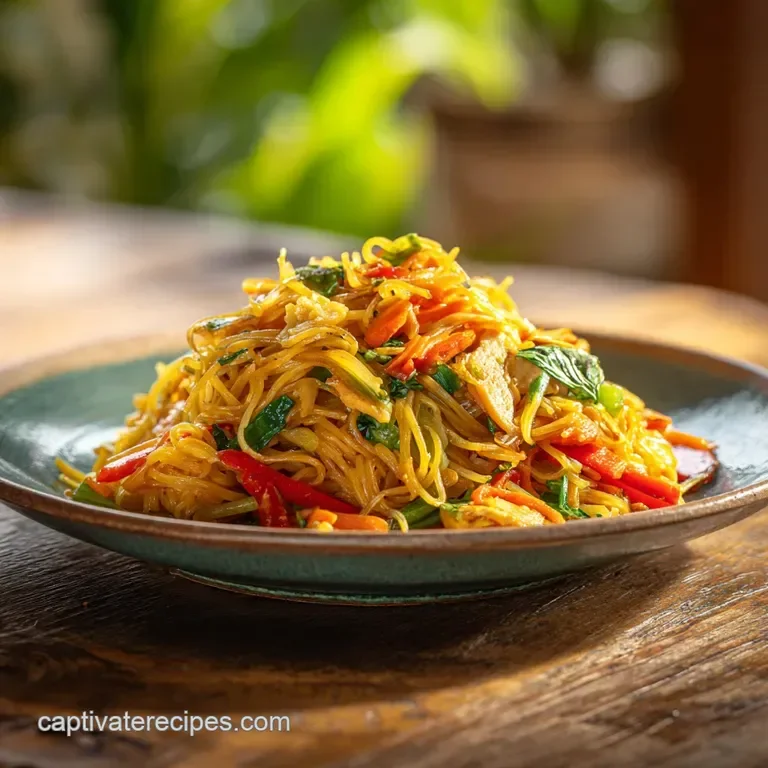
Singapore noodles are a colourful stir-fry of rice vermicelli, curry powder, chicken, shrimp, egg and crisp vegetables. Soaking the noodles rather than boiling them helps keep them springy, while a hot wok brings everything together in about 30 minutes.
Ingredients
- 200 gdried rice vermicelli
- 1.5 tbspMadras curry powder
- 2 tbsplight soy sauce
- 1 tspdark soy sauce
- 1 tsptoasted sesame oil
- 1 tspsugar
- 1 tbspShaoxing rice wine
- 150 gchicken breast, thinly sliced into batons
- 150 glarge shrimp, peeled and deveined
- 2 largeeggs, lightly beaten
- 3 clovesgarlic, minced
- 1 tspfresh ginger, grated
- 2 stalksspring onions, cut into 5 cm lengths
- 1 smallbell pepper, julienned
- 0.5 smallonion, thinly sliced
- about 100 g (1 cup)fresh mung bean sprouts
- 2 tbspneutral oil
Instructions
- 1
Soak the noodles
Put the dried rice vermicelli in a large bowl and cover with warm water. Soak for 8 minutes, until al dente, then drain thoroughly. Snip through the bundle twice with kitchen shears.
- 2
Cook the proteins
Heat 1 tablespoon of neutral oil in a wok over high heat. Add the chicken and shrimp and stir-fry for 2–3 minutes, until cooked through. Remove from the wok and set aside.
- 3
Scramble the eggs
Add a splash of oil to the same wok, then pour in the beaten eggs. Scramble quickly until just set, and set them aside with the chicken and shrimp.
- 4
Bloom the curry
Add the remaining oil to the wok. Sauté the onion, garlic and ginger, then add the Madras curry powder directly to the oil. Cook for 30 seconds, until fragrant.
- 5
Toss the noodles
Add the julienned bell pepper and drained noodles. Use tongs to toss them in the curry oil until coated.
- 6
Add the seasonings
Pour in the light soy sauce, dark soy sauce, sugar, sesame oil and Shaoxing wine. Toss vigorously over high heat to help prevent the noodles from sticking.
- 7
Finish the stir-fry
Return the chicken, shrimp and eggs to the wok. Add the mung bean sprouts and spring onions, then toss for 1 minute, until the sprouts are slightly wilted but still crunchy. Serve immediately.
What are Singapore noodles?
Despite the name, Singapore noodles are generally described as a Cantonese-style stir-fried rice vermicelli dish rather than a traditional Singaporean staple. Their familiar combination of curry seasoning, thin noodles and mixed toppings is often associated with restaurant menus.
This version relies on a quick soak and a hot wok. Chicken, shrimp and egg make it a substantial meal, while the vegetables and sprouts add colour and crunch.
Nutrition and macros by portion
The nutrition label shows one serving as written: 431 calories, 29g protein, 49g carbs, 12g fat.
| Portion | Adjustment | kcal | Protein | Carbs | Fat |
|---|---|---|---|---|---|
| Lighter | More sprouts, less oil | 302 kcal | 21g | 34g | 9g |
| This serving | As written | 431 kcal | 29g | 49g | 12g |
| Hungry | Larger noodle portion | 647 kcal | 44g | 73g | 18g |
The rice vermicelli supplies most of the carbohydrates, while the chicken, shrimp and eggs contribute protein. The oil, sesame oil and egg account for much of the fat; pair a serving with extra vegetables or a crisp salad if you want more produce on the plate.
Why soak the vermicelli?
Soak time: Eight minutes in warm water softens the dried vermicelli while leaving it al dente. Draining it thoroughly matters; excess water can dilute the seasoning and make the noodles harder to stir-fry.
Short strands: Snipping the drained bundle twice makes it easier to toss and serve. Use kitchen shears rather than chopping the noodles, which can turn them ragged.
Build flavour in the wok
Curry oil: Adding the Madras curry powder to the oil and cooking it for 30 seconds helps release its aroma. Keep it moving and take care not to let the spices scorch.
Sauce balance: Light soy sauce, a little dark soy sauce, sugar, sesame oil and Shaoxing wine season the noodles together. Measure them before cooking so they can go into the wok quickly.
Cook in quick stages
Proteins first: Stir-fry the chicken and shrimp until cooked through, then remove them so they do not spend the whole cooking time in the wok. Scramble the eggs separately until just set.
High heat: Once the noodles and seasonings are in, toss continuously. A hot wok and brisk movement help distribute the curry mixture and limit sticking.
Keep the texture lively
Noodle cue: The vermicelli should be flexible but still springy after soaking, then tender once stir-fried. Avoid soaking it well beyond the stated 8 minutes.
Vegetable cue: Add the bean sprouts and spring onions at the end and toss for just 1 minute. The sprouts should soften slightly while retaining a bit of crunch.
Serve straight from the wok
Timing: Have the vegetables sliced, the sauce ingredients measured and the proteins ready before heating the wok. The final stir-fry moves quickly, and the dish is best served immediately.
On the side: Serve the noodles on their own or with a simple cucumber salad or steamed greens. Both offer a fresh contrast to the savoury, curry-seasoned noodles.
Recipe notes & tips
- Slice the chicken into even batons so the pieces cook at a similar rate.
- Drain the soaked vermicelli very well before it goes into the wok.
- Prepare and measure the sauce ingredients before you start cooking.
- Keep the wok over high heat and keep the noodles moving once you add the sauce.
- Add the bean sprouts at the end to preserve their crunch.
Variations
- More vegetables: Add thinly sliced carrots with the bell pepper so they have time to cook.
- Vegetarian version: Replace the chicken and shrimp with firm tofu and use a vegetarian-friendly Shaoxing wine alternative.
- Extra heat: Add sliced fresh chilli to the wok with the onion, garlic and ginger.
- Different protein: Swap the chicken for thinly sliced pork and stir-fry it until cooked through.
- Milder curry: Use less Madras curry powder for a gentler flavour.
Common mistakes to avoid
- Over-soaking the noodles: They can turn soft and break; drain them after 8 minutes while still al dente.
- Leaving water on the noodles: Excess water can dilute the sauce; drain them thoroughly before stir-frying.
- Crowding the wok: The ingredients may steam rather than stir-fry; cook in batches if your wok is too small.
- Scorching the curry powder: Burnt spices taste bitter; stir the powder through the oil for only 30 seconds.
- Cooking the sprouts too long: They lose their crunch; add them at the end and toss for 1 minute.
How to store
Refrigerate leftovers in a sealed container for up to 2 days. Reheat in a wok or frying pan until piping hot, adding a small splash of water if the noodles have clumped.
Frequently asked questions
Can I boil the rice vermicelli instead?
This method uses a warm-water soak to keep the noodles springy. Boiling can soften them more quickly, so follow the packet instructions if you choose that method and avoid overcooking.
How do I stop the noodles sticking?
Drain them well, use a hot wok and toss continuously after adding the sauce. Having all the ingredients ready also helps keep the cooking brisk.
How can I tell when the chicken and shrimp are cooked?
The chicken should be cooked through with no raw centre, and the shrimp should be opaque and firm. The recipe gives a 2–3 minute stir-fry time, but piece size and heat can affect it.
Can I prepare anything ahead?
You can slice the chicken and vegetables and measure the sauce ingredients in advance. For the springiest texture, soak and stir-fry the noodles close to serving time.
What can I use instead of Shaoxing rice wine?
You can omit it if needed, though the flavour will be slightly different. A dry sherry can be used as a substitute if you have it.
Cook it from the original
This recipe comes from captivaterecipes.com. Their page has the author’s own photos, notes and tips — the best place to cook it from.
Open the recipe on captivaterecipes.com