
Chewy New York Style Bagels
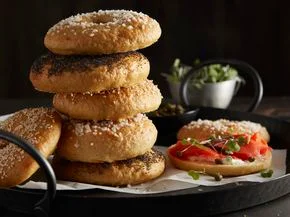
These homemade New York-style bagels have a firm, chewy crust and a dense, springy centre. An overnight rest and a short boil build their characteristic texture, while the recipe makes a batch of 12.
Ingredients
- 840–960 g (7–8 cups)bread flour
- 5 g (1½ teaspoons)fast-acting dried yeast
- 590 ml (2½ cups), very warm, 49–54°C (120–130°F)water
- 15 ml (1 tablespoon)kosher salt
- 12 g (1 tablespoon), packedlight brown sugar
- 15 g (1 tablespoon)bicarbonate of soda
- To tastecornmeal
- As neededcooking spray
- 1 tablespoon coarse sea salt or 60 ml (¼ cup) sesame seeds, if desiredcoarse sea salt or sesame seeds
Instructions
- 1
Mix the starter
Whisk 4 cups of the flour with 1 teaspoon of the yeast in a large bowl. Add the very warm water and whisk just until a sticky dough forms. Cover tightly with cling film and leave at room temperature for 1–2 hours, until bubbly.
- 2
Make the dough
Stir in the remaining ½ teaspoon yeast, 3 cups of flour, 1 tablespoon salt and the brown sugar with a wooden spoon, until a shaggy dough forms.
- 3
Knead until smooth
Turn the dough out onto a well-floured surface. Knead by hand for 15 minutes, adding only enough of the remaining flour to make a smooth, firm, satiny dough.
- 4
Shape the dough
Divide the dough into 12 equal pieces and shape each into a ball. Cover with a damp tea towel and leave to rest for 20 minutes. Meanwhile, line 2 large rimmed baking trays with baking parchment and spray them with cooking spray.
- 5
Form the bagels
Poke a hole through the centre of each ball with your thumb, then gently rotate the dough with your fingers until the hole is 1½ inches wide and the ring is even in thickness. Arrange the bagels 2 inches apart on the prepared trays.
- 6
Chill overnight
Lightly spray the bagels with cooking spray and cover the trays tightly with cling film. Leave at room temperature for 20 minutes, then refrigerate, still covered, for 8 hours.
- 7
Prepare the oven
Heat the oven to 260°C (500°F). Bring water to the boil in a saucepan of at least 4-quart capacity, then stir in the bicarbonate of soda.
- 8
Prepare the trays
While the water heats, line 2 large baking trays with baking parchment. Spray with cooking spray and scatter over a light layer of cornmeal.
- 9
Boil the bagels
Uncover the bagels and carefully lower them into the boiling water, one at a time, boiling no more than 3 at once. Boil for 2 minutes, turn each with a slotted spoon, then boil for another 2 minutes. Lift them out with the slotted spoon and place them on the prepared trays. Sprinkle each with ¼ teaspoon sea salt or 1 teaspoon sesame seeds.
- 10
Bake until golden
Bake for 10 minutes, rotate the trays, then bake for a further 3–5 minutes, until the bagels are golden brown. Transfer to a cooling rack and leave for 10 minutes before slicing.
- 11
Make mini bagels
For mini bagels, divide the dough into 24 pieces before shaping.
- 12
Reduce the chew
For less chewy bagels, boil them for only 1 minute on each side.
What are New York-style bagels?
Bagels are ring-shaped yeast breads associated with Jewish baking traditions in Central and Eastern Europe, and they became a defining food of New York through immigrant communities. Their familiar chew comes from shaping the dough, boiling it, then baking it.
This version uses a flour-and-water starter and an overnight chill before boiling. Those stages give the bagels time to develop flavour and make it easier to fit the baking into a home schedule.
Nutrition and macros by portion
The nutrition label shows one serving as written: 290 calories, 9g protein, 59g carbs, 1g fat.
| Portion | Adjustment | kcal | Protein | Carbs | Fat |
|---|---|---|---|---|---|
| Lighter | Use less topping | 203 kcal | 6g | 41g | 1g |
| This serving | As written | 290 kcal | 9g | 59g | 1g |
| Hungry | Serve with eggs | 435 kcal | 14g | 89g | 2g |
The bread flour supplies most of the carbohydrates and some of the protein, while the small amount of oil-free dough means the listed fat is low. Toppings such as sesame seeds or coarse salt can change the fat or sodium in a serving; balance a bagel with eggs or another protein-rich food and fruit or vegetables.
Why the starter matters
Flour and yeast: The first mixture uses part of the flour and yeast, then rests until bubbly. That visible activity is a useful cue that fermentation is under way before the remaining ingredients are added.
Warm water: The recipe calls for water at 49–54°C. Measure it if possible, as water that is much hotter can interfere with the yeast.
Kneading and shaping
Firm dough: Knead for the full 15 minutes, adding only enough extra flour to prevent sticking. A smooth, firm, satiny feel is the target; too much added flour can make the bagels overly dry.
Even rings: Make each hole about 1½ inches wide and keep the dough ring evenly thick. The opening will shrink as the bagels rest and bake.
The overnight rest
Room-temperature rest: The shaped bagels first sit for 20 minutes, then go into the fridge for 8 hours. Cover them tightly so their surfaces do not dry out.
Planning ahead: The total time includes this long refrigerated rest, so start the dough the day before you want to bake. Keep the bagels chilled until you are ready to boil them.
Boiling for a chewy crust
Bicarbonate of soda: It goes into the boiling water and helps the bagels develop their distinctive exterior. Lower the dough in gently with a slotted spoon to avoid splashing.
Small batches: Boil no more than 3 bagels at once, giving each room to move. Turn them after 2 minutes and boil for another 2 minutes before transferring them to the trays.
Baking and serving
Colour and timing: Bake at 260°C until golden brown, rotating the trays after the first 10 minutes. The final 3–5 minutes can vary with the oven, so use the colour as the cue.
Serving ideas: Cool the bagels for 10 minutes before slicing. Serve plain, toasted, or with cream cheese, and pair them with fruit or eggs for a fuller breakfast.
Recipe notes & tips
- Weigh the flour if you can, and add the final portion gradually so the dough stays firm rather than dry.
- Use a damp tea towel for the first rest to help prevent the dough balls from forming a dry skin.
- Keep the bagels covered during their overnight refrigeration to protect their surface.
- Boil in batches of no more than 3 so the bagels have space in the pan.
- Use parchment and a light coating of cornmeal to help the boiled bagels release from the trays.
- Let the bagels cool for 10 minutes before slicing so the centres can settle.
Variations
- Mini bagels: Divide the dough into 24 pieces before shaping, as the recipe suggests.
- Sesame topping: Sprinkle sesame seeds over the bagels after boiling for a nutty finish.
- Sea-salt topping: Use coarse sea salt instead of sesame seeds for a savoury crust.
- Less chewy texture: Boil each bagel for 1 minute per side rather than 2.
- Plain finish: Leave off the optional salt or sesame topping for an unadorned bagel.
Common mistakes to avoid
- Adding too much flour: The dough can turn dry and stiff; add only what is needed while kneading.
- Skipping the bubbly rest: The starter needs 1–2 hours at room temperature; wait until it looks bubbly before continuing.
- Making small holes: The openings shrink during resting and baking; shape them to about 1½ inches wide.
- Overloading the pan: Too many bagels make the boil crowded; limit each batch to 3.
- Guessing the bake: Ovens vary; rotate after 10 minutes and take the bagels out when golden brown.
- Slicing too soon: A very hot bagel is harder to cut cleanly; cool it on a rack for 10 minutes first.
How to store
Once completely cool, store the bagels in an airtight bag or container at room temperature for up to 2 days. For longer storage, freeze them; thaw and toast, or warm through in the oven before serving.
Frequently asked questions
Can I make the dough the night before?
Yes. After shaping, leave the bagels at room temperature for 20 minutes, then cover and refrigerate for 8 hours.
How do I know the starter is ready?
After 1–2 hours at room temperature, it should look bubbly. If it is not yet bubbly, give it more time before mixing in the remaining ingredients.
Can I make mini bagels?
Yes. Divide the dough into 24 pieces before shaping. The recipe does not specify a different boiling or baking time for the smaller size, so keep an eye on them as they bake.
Why are my bagels not very chewy?
The recipe's longer boil helps create a chewier result. Check that you boil them for 2 minutes on each side rather than using the 1-minute-per-side option for a softer texture.
Can I leave off the topping?
Yes. The sea salt or sesame seeds are optional; the bagels can be baked without either.
Cook it from the original
This recipe comes from goldmedalflour.com. Their page has the author’s own photos, notes and tips — the best place to cook it from.
Open the recipe on goldmedalflour.com