
Cherry Pie
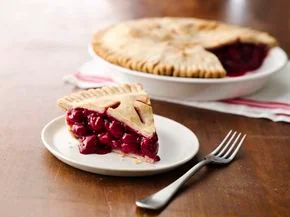
Cherry pie pairs tart sour cherries with a sweet filling inside a flaky pastry crust. It is a lovely make-ahead dessert: the filling needs time to cool and set before slicing.
Ingredients
- 250 g (2 cups)Gold Medal™ plain flour
- 1 teaspoonsalt
- 156 g (2/3 cup plus 2 tablespoons)shortening
- 60–90 ml (4–6 tablespoons)cold water
- 265 g (1 1/3 cups)sugar
- 63 g (1/2 cup)Gold Medal™ plain flour
- About 900 g (6 cups)pitted sour cherries
- 2 tablespoonsbutter or margarine, if desired
Instructions
- 1
Mix the pastry
Heat the oven to 220°C (425°F). In a medium bowl, combine 250 g (2 cups) of flour and the salt. Cut in the shortening with a pastry blender, or use two table knives drawn through the mixture in opposite directions, until the pieces are about the size of small peas. Add the cold water 1 tablespoon at a time, tossing with a fork until the flour is moistened and the pastry nearly comes away from the bowl. Add another 1–2 teaspoons of water if needed.
- 2
Chill the dough
Bring the pastry together into a ball and divide it in half. Shape each piece into a round, flatten them, wrap in plastic wrap and refrigerate for about 45 minutes, until firm and cold but still pliable.
- 3
Line the pie plate
On a lightly floured surface, roll one piece of pastry with a floured rolling pin into a circle about 5 cm (2 inches) wider than an upside-down 23 cm (9-inch) glass pie plate. Fold it into quarters and place it in the plate, or loosely roll it around the pin and transfer it. Unfold or unroll the pastry, easing it into the plate and pressing it against the base and sides without stretching it.
- 4
Fill the crust
In a large bowl, mix the sugar with 63 g (1/2 cup) of flour, then stir in the cherries. Spoon the filling into the pastry-lined plate. If using butter or margarine, cut it into small pieces and scatter them over the cherries. Cover with the second pastry round, cut slits in the top, then seal and flute the edges. Shield the edge with a 5–8 cm (2–3-inch) strip of foil to limit browning; remove the foil for the final 15 minutes of baking.
- 5
Bake the pie
Bake for 35–45 minutes, until the crust is golden and juice starts bubbling through the slits. Cool on a rack for at least 2 hours before serving.
What is cherry pie?
Cherry pie is a fruit pie made with cherries baked between two pastry layers. It is a familiar home-baking classic, with versions found in many places where cherries are grown.
This version uses sour cherries, whose tangy flavour balances the sweet filling. A top crust with slits lets steam escape and gives the bubbling fruit a way to show when the pie is baking.
Nutrition and macros by portion
The nutrition label shows one serving as written: 540 calories, 5g protein, 81g carbs, 22g fat.
| Portion | Adjustment | kcal | Protein | Carbs | Fat |
|---|---|---|---|---|---|
| Lighter | Skip the butter topping | 378 kcal | 4g | 57g | 15g |
| This serving | As written | 540 kcal | 5g | 81g | 22g |
| Hungry | Serve a larger slice | 810 kcal | 8g | 122g | 33g |
The pastry flour and sugar supply most of the carbohydrates, while shortening and the optional butter or margarine contribute most of the fat. Cherries add some carbohydrate, and the pie contains only a modest amount of protein. Balance a slice with plain yoghurt or serve it after a meal with fruit or another lighter accompaniment.
Choosing the cherries
Sour cherries: Also sold as tart or pie cherries, they bring a bright, sharp flavour that works well with the sugar in this filling. Sweet cherries are better suited to eating fresh and make a less tangy pie.
Frozen or tinned: The recipe also allows unsweetened frozen pitted red tart cherries, thawed and drained, or three 14.5 oz (about 411 g) cans of pitted red tart cherries, drained.
Making the pastry
Cold fat: Cut the shortening into the flour until the pieces resemble small peas. This leaves little pockets of fat in the dough, helping the baked crust turn flaky.
Cold water: Add it gradually and stop once the flour is moistened and the dough begins to hold together. Too much water can make the pastry harder to handle.
Rolling and lining
Gentle handling: Roll the pastry on a lightly floured surface and ease it into the pie plate rather than pulling it into place. Stretching can make it shrink during baking.
Top crust: Cut slits before placing the pastry over the filling, then seal and flute the edges. The vents allow steam to escape as the cherries cook.
Checking the bake
Visual cues: The crust should be golden, and cherry juice should bubble through the slits. If the rim is browning too quickly, keep it covered with foil until the final 15 minutes.
Cooling time: Leave the pie on a rack for at least 2 hours before cutting. This gives the hot filling time to settle so slices are easier to serve.
Serving the pie
For dessert: Serve a slice on its own or with a spoonful of cream, custard or ice cream. A little dairy makes a cooling contrast to the tart fruit.
For a gathering: Since the pie needs time to cool, bake it ahead and serve at room temperature. Cut with a sharp knife and wipe the blade between slices for neater portions.
Recipe notes & tips
- Keep the water cold and add it a tablespoon at a time.
- Chill the pastry until it is firm but still pliable before rolling.
- Flour the rolling surface and pin lightly to reduce sticking.
- Use foil around the crust edge if it browns before the pie is ready.
- Allow at least 2 hours of cooling before slicing.
Variations
- Use frozen cherries: Thaw and drain unsweetened pitted red tart cherries before mixing them into the filling.
- Use tinned cherries: Drain three 14.5 oz (about 411 g) cans of pitted red tart cherries before use.
- Choose margarine: Use it in place of butter for the optional topping.
- Add a lattice top: Cut the top pastry into strips and arrange them across the filling, keeping openings for steam.
Common mistakes to avoid
- Using sweet cherries: The filling will be less tart; choose sour or pie cherries for the flavour intended here.
- Adding too much water: The pastry may become difficult to handle; add it gradually and stop as soon as the flour is moistened.
- Stretching the pastry: It can shrink in the oven; ease it into the plate without pulling.
- Skipping the vents: Steam needs an exit; cut slits in the top crust before baking.
- Cutting too soon: The filling may run; let the pie cool for at least 2 hours.
How to store
Once completely cool, cover the pie and refrigerate it for up to 3–4 days. Reheat individual slices in a low oven until warmed through, or serve them chilled or at room temperature.
Frequently asked questions
Can I use frozen cherries?
Yes. Use unsweetened pitted red tart cherries, thawed and drained, as the recipe suggests.
Can I use tinned cherries?
Yes. Use three 14.5 oz (about 411 g) cans of pitted red tart cherries, drained.
Can I use sweet cherries instead?
You can, but the pie will be less tangy and more sweet. Sour cherries are the variety recommended for this filling.
Why does the pastry need chilling?
Chilling firms the dough so it is cold but pliable for rolling and lining the plate. The recipe calls for about 45 minutes.
How do I know the pie is baked?
Look for a golden crust and juice bubbling through the slits. The stated baking time is 35–45 minutes.
How long should the pie cool?
Cool it on a rack for at least 2 hours before serving so the filling can settle.
Cook it from the original
This recipe comes from goldmedalflour.com. Their page has the author’s own photos, notes and tips — the best place to cook it from.
Open the recipe on goldmedalflour.com