
Baked Salmon and Potatoes
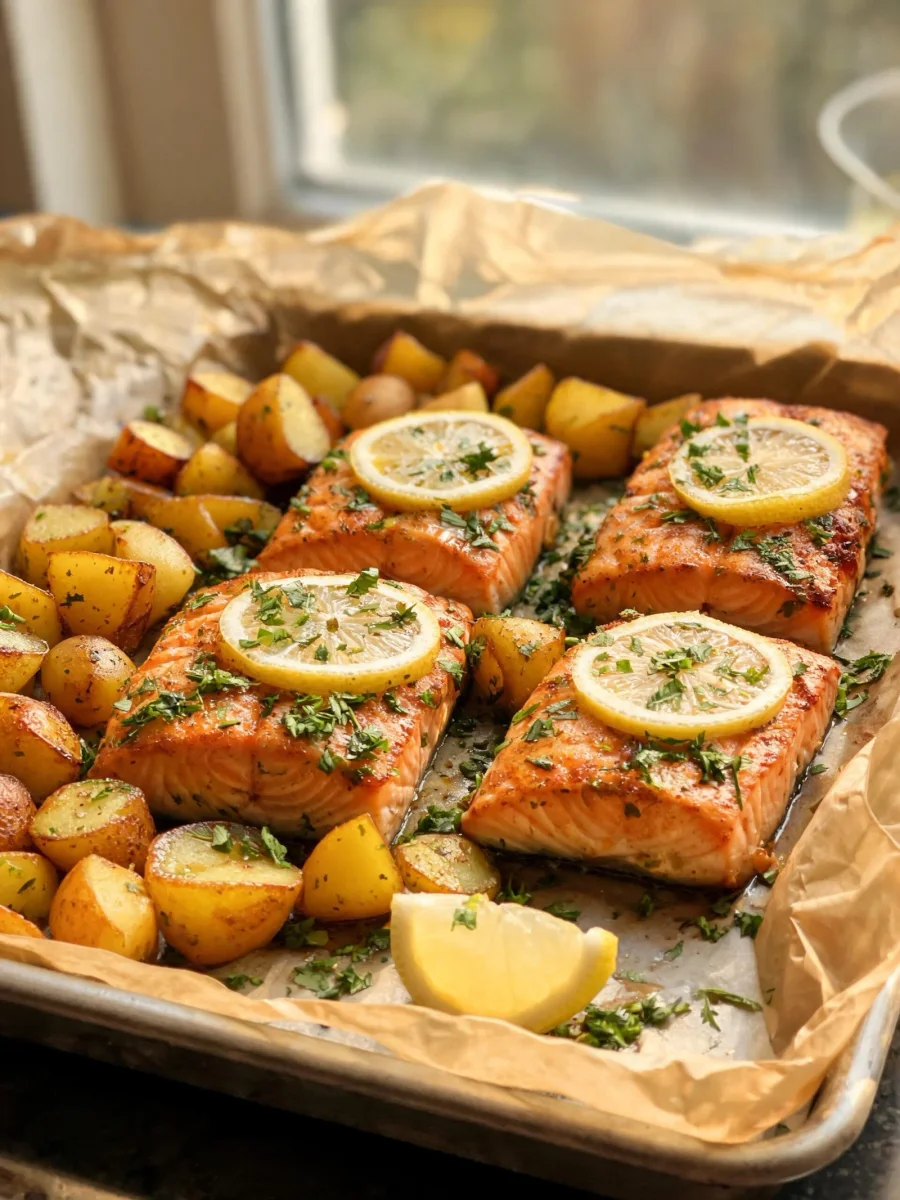
This American-style sheet-pan supper pairs tender salmon with golden baby potatoes, roasted in stages so both finish at their best. Garlic, dill and lemon add freshness with little extra fuss.
Ingredients
- 680 g (1.5 lb)baby Yukon Gold potatoes, halved or quartered into 2.5 cm (1-inch) pieces
- 45 ml (3 tbsp), dividedolive oil
- 5 ml (1 tsp)dried oregano
- 2.5 ml (1/2 tsp)garlic powder
- 5 ml (1 tsp), dividedkosher salt
- 2.5 ml (1/2 tsp), freshly ground, dividedblack pepper
- 4 (170 g / 6 oz each)centre-cut salmon fillets, about 2.5–4 cm (1–1.5 inches) thick
- 2 clovesfresh garlic, minced
- 5 ml (1 tsp)dried dill
- 1lemon, half thinly sliced and half cut into wedges
- 30 ml (2 tbsp)fresh parsley, chopped
Instructions
- 1
Heat the oven
Preheat the oven to 200°C (400°F), with a rack in the centre.
- 2
Season the potatoes
On a large rimmed baking tray, toss the potatoes with 30 ml (2 tbsp) olive oil, the oregano, garlic powder, 2.5 ml (1/2 tsp) salt and 1.25 ml (1/4 tsp) pepper. Arrange them in a single layer.
- 3
Roast the potatoes
Roast the potatoes on their own for 20 minutes, until they are beginning to soften.
- 4
Mix the salmon oil
While the potatoes roast, pat the salmon completely dry with kitchen paper. In a small bowl, combine the minced garlic, dried dill and the remaining 15 ml (1 tbsp) olive oil.
- 5
Add the salmon
Take the tray out of the oven. Move the potatoes towards the edges and place the salmon fillets in the centre.
- 6
Season and top
Brush the garlic-and-dill oil over the salmon. Season with the remaining 2.5 ml (1/2 tsp) salt and 1.25 ml (1/4 tsp) pepper, then place a thin lemon slice on each fillet.
- 7
Bake until done
Return the tray to the oven and bake for 12–15 minutes, until the salmon flakes easily or reaches 130–135°F on an instant-read thermometer.
- 8
Rest and serve
Leave the salmon to rest on the tray for 3–5 minutes. Finish with fresh parsley and serve with the lemon wedges.
What is baked salmon and potatoes?
This straightforward American-style meal brings fish and potatoes together on one baking tray. The approach is practical rather than tied to a single regional tradition: the potatoes start first, then the salmon joins them for a shorter bake.
That staggered timing gives the potatoes a head start while helping the salmon stay tender. Lemon, dill and parsley keep the rich fish tasting bright.
Nutrition and macros by portion
The nutrition label shows one serving as written: 570 calories, 34g protein, 31g carbs, 33g fat.
| Portion | Adjustment | kcal | Protein | Carbs | Fat |
|---|---|---|---|---|---|
| Lighter | Less oil, extra greens | 399 kcal | 24g | 22g | 23g |
| This serving | As written | 570 kcal | 34g | 31g | 33g |
| Hungry | Larger salmon fillet | 855 kcal | 51g | 47g | 50g |
The potatoes provide most of the carbohydrates, while olive oil and salmon contribute much of the fat; salmon is also the main source of protein. Pair a serving with a generous helping of green vegetables or salad to round out the plate.
Why the potatoes go in first
Cut size: Keep the potato pieces roughly 2.5 cm across so they have time to soften during the first 20 minutes and finish alongside the fish.
Space: A single layer gives the potatoes room to roast rather than steam. If they are crowded, spread them out as much as possible on the large tray.
Getting the salmon ready
Dry surface: Pat the fillets thoroughly with kitchen paper before adding the oil mixture. This helps the seasoning cling instead of being diluted by surface moisture.
Garlic and dill: Stir these into the remaining oil before brushing it over the fish. The thin lemon slices add flavour as the fillets bake, while the wedges provide extra sharpness at the table.
How to judge doneness
Texture: The salmon is ready when it flakes easily when tested gently with a fork. Begin checking at 12 minutes, as fillet thickness can affect the cooking time.
Thermometer: The method gives a target of 130–135°F; use an instant-read thermometer to check the thickest part. Leave the fish to rest on the tray for 3–5 minutes before serving.
The timing that makes it work
Potato head start: Roast the potatoes alone for 20 minutes before adding the salmon. This gives them a longer cooking window than the fish.
Final bake: The salmon then cooks for 12–15 minutes with the potatoes still on the tray. Keep the tray in the centre of the oven for the method’s stated 200°C (400°F) temperature.
What to serve alongside
A crisp green salad or a simple steamed green vegetable makes an easy accompaniment to the tray’s salmon and potatoes. Serve the lemon wedges alongside so everyone can add them to taste.
For a more substantial plate, add another vegetable rather than crowding the baking tray. Parsley scattered over the finished fish gives the meal a fresh, herby finish.
Recipe notes & tips
- Cut the potatoes into similar-sized pieces so they soften at roughly the same rate.
- Use a large rimmed tray and spread the potatoes out in one layer.
- Pat the salmon dry just before seasoning it.
- Check the salmon at 12 minutes, particularly if the fillets are thinner than stated.
- Rest the fish for 3–5 minutes before serving to let it settle.
- Add the parsley just before bringing the tray to the table.
Variations
- Fresh herbs: Swap the dried dill for an equal amount of chopped fresh dill.
- More lemon: Add extra lemon wedges at the table for a sharper finish.
- Green vegetables: Add a separate serving of steamed greens alongside the tray.
- Crispier potatoes: Cut the potatoes slightly smaller, keeping the pieces uniform.
- Herb finish: Mix a little extra chopped parsley with lemon zest to scatter over the salmon.
Common mistakes to avoid
- Uneven potato pieces: Large pieces may stay firm; cut them to a similar 2.5 cm size.
- Crowded tray: Potatoes can steam instead of roast; spread them in a single layer.
- Wet salmon: Excess moisture can dilute the seasoning; pat the fillets dry first.
- Overbaking the fish: Salmon can become dry; start checking at 12 minutes.
- Skipping the rest: The fish is easier to serve after a short pause; rest it for 3–5 minutes.
How to store
Refrigerate leftovers in an airtight container for up to 2 days. Reheat gently in a low oven until warmed through, taking care not to overcook the salmon; the potatoes can also be reheated separately.
Frequently asked questions
Can I use a different type of potato?
Yes. Choose a small, firm potato and cut it into similarly sized pieces so it follows the same roasting schedule.
Can I use salmon fillets that are thinner?
Yes, but start checking them before the 12-minute mark, as thinner fillets may cook sooner. Use the flaking cue or an instant-read thermometer.
Can I prepare the potatoes ahead?
You can cut them in advance and keep them covered in cold water in the refrigerator. Drain and dry them well before tossing with the oil and seasonings.
Do I need to turn the potatoes?
The method does not call for turning them. Keep them in a single layer for the initial roast, then move them aside to make room for the salmon.
How do I know when the salmon is done?
It should flake easily when tested gently, or reach the recipe’s stated 130–135°F on an instant-read thermometer.
Can I make this without a thermometer?
Yes. Check whether the salmon flakes easily with a fork, beginning at 12 minutes. A thermometer gives a more precise check.
Cook it from the original
This recipe comes from bluerecipes.com. Their page has the author’s own photos, notes and tips — the best place to cook it from.
Open the recipe on bluerecipes.com