
Gluten Free Soft Peanut Butter Cookies
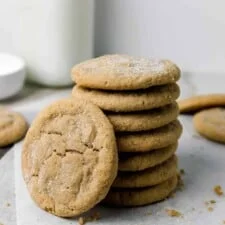
These soft gluten-free peanut butter cookies have creamy centres, set edges and a crunchy sugar coating. Chilling the dough helps make them easy to roll and bake into a tender, peanut-butter-rich treat.
Ingredients
- 113 g (½ cup)unsalted butter, softened (dairy-free butter works too)
- about 125 g (½ cup)creamy peanut butter
- 100 g (½ cup)granulated sugar
- 110 g (½ cup), packeddark brown sugar
- 1egg, at room temperature
- 15 ml (1 tablespoon)milk, at room temperature (any kind)
- 5 ml (1 teaspoon)pure vanilla extract
- about 225 g (1½ cups plus 2 tablespoons)gluten-free 1-to-1 baking flour
- 2.5 g (½ teaspoon)fine sea salt
- 2.5 g (½ teaspoon)bicarbonate of soda
- as neededgranulated sugar, for rolling
Instructions
- 1
Mix dry ingredients
Whisk the gluten-free flour, salt and bicarbonate of soda together in a medium bowl, then set aside.
- 2
Make the dough
Using a stand mixer fitted with a paddle attachment, mix the butter and peanut butter on medium speed until combined. Add both sugars and beat on medium until smooth and creamy, about 1 minute. Scrape down the bowl, then add the egg, milk and vanilla; mix on low until combined. Scrape the bowl again, add the flour mixture and mix on low just until incorporated.
- 3
Chill the dough
Cover the bowl with cling film and chill the dough in the fridge for at least 30 minutes. Meanwhile, put about 80–100 g (⅓–½ cup) granulated sugar in a small bowl for rolling.
- 4
Heat the oven
Once the dough has chilled, heat the oven to 180°C (350°F) and line a baking sheet with baking parchment.
- 5
Shape the cookies
Scoop the dough with a number 24 cookie scoop and roll each portion into a ball. Coat each ball in sugar and place on the prepared baking sheet, leaving about 5 cm (2 inches) between them.
- 6
Bake and cool
Bake for 11–12 minutes, until the cookies have puffed, their tops are slightly cracked and the edges are set. The centres may look a little underdone; they will continue cooking on the baking sheet. Leave the cookies there for 5 minutes, then transfer them to a wire rack to cool completely.
What are gluten-free peanut butter cookies?
Peanut butter cookies are a familiar home-baking classic, with peanut butter giving the dough its distinctive flavour and tender texture. This version uses a gluten-free 1-to-1 baking flour in place of ordinary wheat flour.
Creamy peanut butter and brown sugar keep the centres soft, while a coating of granulated sugar adds a lightly crisp exterior. The short chill makes the dough easier to portion and roll.
Nutrition and macros by portion
The nutrition label shows one serving as written: 200 calories, 5g protein, 25g carbs, 10g fat.
| Portion | Adjustment | kcal | Protein | Carbs | Fat |
|---|---|---|---|---|---|
| Lighter | One smaller cookie | 140 kcal | 3g | 18g | 7g |
| This serving | As written | 200 kcal | 5g | 25g | 10g |
| Hungry | Two cookies | 300 kcal | 7g | 38g | 15g |
The flour and sugars provide most of the carbohydrates, while butter and peanut butter contribute much of the fat; peanut butter and the egg also supply some protein. Pair a cookie with fruit and milk or yoghurt for a more balanced snack.
Choosing the ingredients
Flour blend: Use a gluten-free 1-to-1 baking flour intended to replace plain flour in recipes. Blends can vary, so weighing it helps you measure consistently.
Peanut butter: Choose a creamy, well-stirred peanut butter for an even dough. A very runny or oily one can make the mixture softer and harder to roll.
Butter and sugars: Softened butter mixes smoothly with the peanut butter, while brown sugar contributes moisture and a rounded flavour. Keep the granulated sugar separate for coating the dough balls.
Why the dough needs chilling
A minimum of 30 minutes in the fridge firms up the butter and peanut butter, so the portions are easier to roll without sticking as much. It also helps the cookies hold their shape as they bake.
If the dough still feels very soft after chilling, give it a little longer in the fridge before shaping.
Getting the texture right
Mix the flour mixture in on low speed and stop as soon as it is combined; overmixing is unnecessary. Scraping the bowl between additions helps avoid pockets of butter or flour.
Look for puffed cookies, lightly cracked tops and edges that have set. The centres should still look a touch soft when the tray comes out, as they finish cooking on the hot baking sheet.
Portioning and spacing
A number 24 cookie scoop portions the dough into evenly sized balls, helping the batch bake at a similar rate. Roll each portion in sugar just before arranging it on the lined tray.
Leave about 5 cm between cookies so they have room to spread. If your baking sheet is small, bake in batches rather than crowding the dough balls together.
Serving these cookies
Let the cookies cool fully on a wire rack for the neatest texture, or enjoy one while it is still slightly warm and tender. They pair well with a glass of milk, or with tea or coffee.
For a simple dessert plate, serve alongside fresh fruit such as apple slices or berries.
Recipe notes & tips
- Bring the egg and milk to room temperature so they blend more readily into the creamed mixture.
- Measure the flour carefully, preferably by weight, to avoid a dry or overly stiff dough.
- Scrape down the bowl before adding the flour and again after mixing it in.
- Chill the dough for at least 30 minutes before scooping and rolling.
- Use baking parchment to make it easier to lift the cookies off the tray.
- Allow the cookies to sit on the baking sheet for 5 minutes before moving them, as they are delicate while hot.
Variations
- Dairy-free: Use dairy-free butter and a plant-based milk in place of the dairy ingredients.
- Crunchy peanut butter: Swap in crunchy peanut butter for extra peanut pieces in the cookies.
- Chocolate chips: Fold a small handful of chocolate chips into the dough just before chilling.
- Cinnamon sugar: Mix a little ground cinnamon into the sugar used to coat the dough balls.
- Slightly smaller cookies: Make smaller dough balls and begin checking them earlier, as they may bake faster.
Common mistakes to avoid
- Skipping the chill: Soft dough is difficult to roll; refrigerate it for at least 30 minutes.
- Using a different flour blend: Some gluten-free blends behave differently; use a 1-to-1 baking flour for the intended texture.
- Overbaking: The centres should still look slightly underdone when removed, as they continue to cook on the tray.
- Moving them too soon: Hot cookies can break; leave them on the baking sheet for 5 minutes first.
- Crowding the tray: Cookies need about 5 cm of space; bake in batches if needed.
How to store
Once completely cool, keep the cookies in an airtight container at room temperature for up to 4 days. To soften them slightly, warm briefly in a low oven or microwave; avoid heating them for too long.
Frequently asked questions
Can I use dairy-free butter?
Yes. The ingredient notes allow dairy-free butter, and you can use a plant-based milk as well. Choose a dairy-free butter suitable for baking.
Why does the dough need to chill?
Chilling firms the dough so it is easier to shape and helps the cookies keep their form in the oven. Chill for at least 30 minutes.
How do I know when the cookies are baked?
Look for puffed cookies with slightly cracked tops and set edges. The centres can still look a little soft when you take them out.
Can I skip rolling the dough in sugar?
You can leave off the coating, but the cookies will miss the crunchy, sweet exterior. Roll each ball in granulated sugar just before baking for the stated finish.
Why are my cookies fragile after baking?
They are delicate while hot and continue to set on the baking sheet. Leave them there for 5 minutes before transferring them to a wire rack.
Can I make these with crunchy peanut butter?
Yes, although the texture will have peanut pieces rather than being uniformly smooth. The dough may also feel a little different to shape.
Cook it from the original
This recipe comes from glutenlessapron.com. Their page has the author’s own photos, notes and tips — the best place to cook it from.
Open the recipe on glutenlessapron.com