
Honey Glazed Baked Salmon Recipes
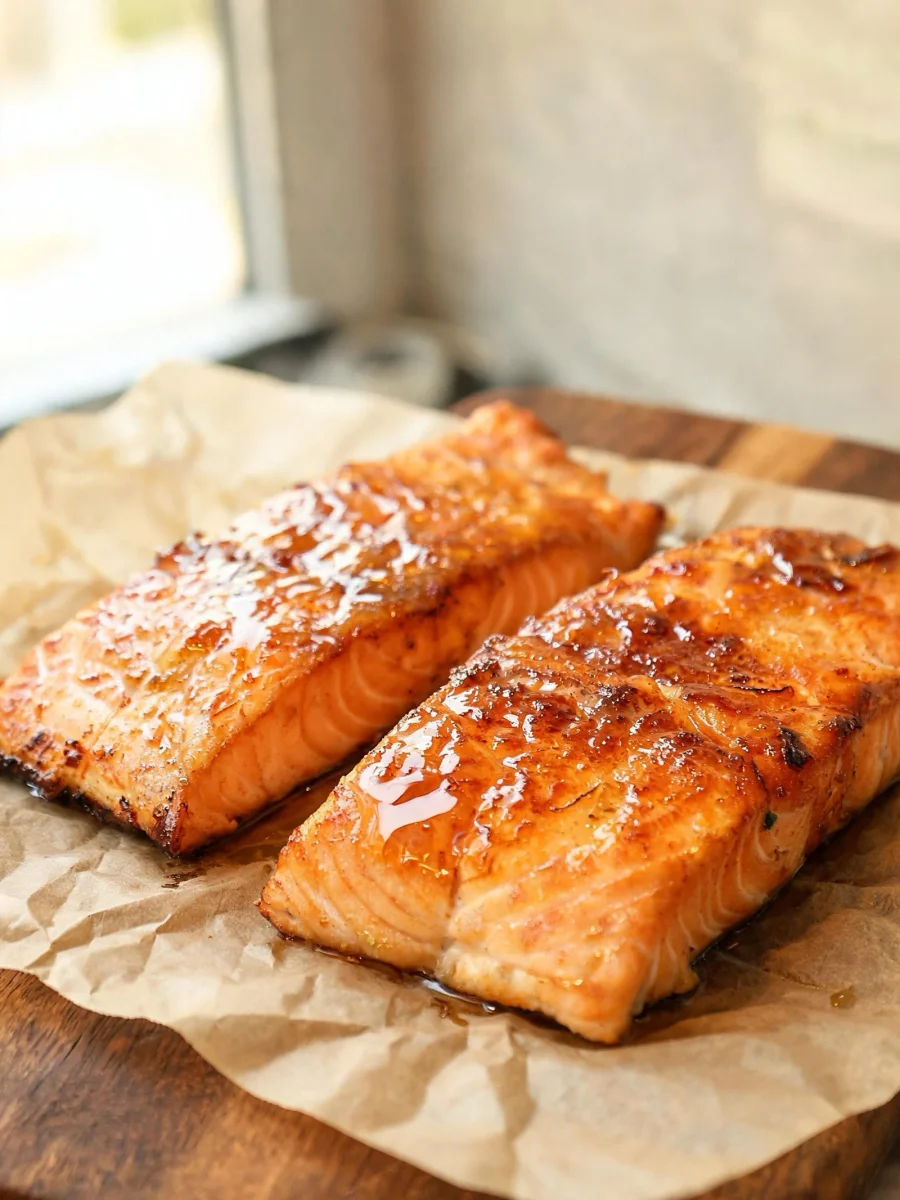
Salmon fillets are baked with a sweet-savoury honey, soy, mustard, garlic and ginger glaze, then briefly broiled until glossy and caramelised. It makes a quick centrepiece for a weeknight meal, with little hands-on preparation.
Ingredients
- 4 fillets, 170 g each (6 ounces each)salmon
- 15 ml (1 tablespoon)olive oil
- 2.5 ml (1/2 teaspoon)kosher salt
- 1.25 ml (1/4 teaspoon)freshly ground black pepper
- 60 ml (1/4 cup)honey
- 30 ml (2 tablespoons)low-sodium soy sauce
- 15 ml (1 tablespoon)Dijon mustard
- 2 clovesgarlic, minced
- 5 ml (1 teaspoon)fresh ginger, grated
Instructions
- 1
Heat the oven
Place an oven rack in the upper-middle position and heat the oven to 200°C (400°F). Line a baking sheet with parchment paper.
- 2
Prepare the salmon
Leave the salmon at room temperature for 15 minutes. Pat the fillets completely dry with kitchen paper, then arrange them skin-side down on the prepared baking sheet.
- 3
Season the fillets
Drizzle the salmon with olive oil and season with the kosher salt and black pepper.
- 4
Mix the glaze
Whisk the honey, low-sodium soy sauce, Dijon mustard, minced garlic and grated ginger together in a small bowl until smooth.
- 5
Bake the salmon
Bake for 10–12 minutes, until the salmon is mostly opaque.
- 6
Add the glaze
Take the salmon out of the oven and set the oven to high grill. Spoon most of the glaze over the fillets.
- 7
Caramelise the glaze
Return the salmon to the oven and grill for 2–4 minutes, keeping a close eye on it until the glaze is bubbling and caramelised.
- 8
Rest and serve
Remove the salmon from the oven and leave it to rest for 5 minutes. Drizzle over any remaining glaze before serving.
What is honey-glazed baked salmon?
This American-style preparation pairs oven-baked salmon with a sweet and savoury glaze. Honey brings sweetness, while soy sauce, Dijon, garlic and ginger add savoury depth and a gentle aromatic edge.
The two-stage cooking keeps the method straightforward: bake the fish until nearly cooked, then briefly grill it with the glaze to make the surface bubbly and caramelised.
Nutrition and macros by portion
The nutrition label shows one serving as written: 420 calories, 36g protein, 18g carbs, 22g fat.
| Portion | Adjustment | kcal | Protein | Carbs | Fat |
|---|---|---|---|---|---|
| Lighter | Serve with extra vegetables | 294 kcal | 25g | 13g | 15g |
| This serving | As written | 420 kcal | 36g | 18g | 22g |
| Hungry | Add a larger rice portion | 630 kcal | 54g | 27g | 33g |
Salmon supplies most of the protein and fat, while honey contributes much of the carbohydrates; the olive oil also adds fat. Serve a fillet with vegetables and a moderate portion of rice or potatoes for a balanced plate.
Choosing the salmon
Fillet size: The recipe uses four 170 g fillets, so similarly sized pieces are more likely to cook at the same rate. Keep the skin on and place each fillet skin-side down.
Dry surface: Pat the fish thoroughly before seasoning. A dry surface helps the oil and glaze sit on the fillets rather than being diluted by moisture.
Mixing the glaze
Sweet and savoury: Honey provides the sticky sweetness, and low-sodium soy sauce adds savoury saltiness. Dijon mustard, garlic and fresh ginger round out the flavour.
Smooth mixture: Whisk everything together before baking so the ingredients are evenly combined and ready to spoon over the fish.
Baking and grilling
First stage: Bake at 200°C (400°F) for 10–12 minutes, stopping when the salmon is mostly opaque. The exact timing can vary with the thickness of the fillets.
Final stage: After adding most of the glaze, grill on high for 2–4 minutes. Stay nearby: honey can darken quickly, so take the fish out once the glaze is bubbling and caramelised.
Checking doneness
Visual cue: The salmon should look mostly opaque after baking, as directed in the recipe. The brief grilling step finishes the surface and sets the glaze.
Resting: Leave the cooked fillets for 5 minutes before serving. This gives you time to add the remaining glaze without rushing the last step.
What to serve with it
Fresh sides: Serve with steamed green vegetables or a crisp salad to complement the rich fish and sweet glaze. A squeeze of lemon at the table can provide a bright contrast.
More substantial sides: Rice or potatoes make a filling accompaniment and can catch any extra glaze. Keep additional salty sauces to a minimum, as the glaze already includes soy sauce.
Recipe notes & tips
- Bring the fillets to room temperature for the full 15 minutes before baking.
- Pat the salmon thoroughly dry so excess surface moisture does not thin the glaze.
- Mix the glaze before the fish goes into the oven to make the finishing step quicker.
- Use a timer for the grilling stage, but watch the glaze closely throughout.
- Rest the salmon for 5 minutes before adding any remaining glaze and serving.
Variations
- Citrus lift: Add a little lemon zest to the glaze for a brighter flavour.
- Chilli heat: Add a pinch of chilli flakes to the honey mixture for gentle heat.
- Sesame finish: Sprinkle sesame seeds over the fillets just before serving.
- Herb topping: Finish with chopped spring onions or fresh herbs for a fresh garnish.
- Garlic adjustment: Use one clove instead of two for a milder garlic flavour.
Common mistakes to avoid
- Skipping the drying step: Wet fillets can dilute the seasoning; pat them thoroughly dry.
- Crowding the tray: Keep the fillets in a single layer so they bake evenly.
- Glazing too early: Add most of the glaze after baking, as directed, so it gets a short time under the grill.
- Walking away while grilling: Honey can caramelise quickly; watch closely and remove the fish once bubbly.
- Serving immediately: Rest the salmon for 5 minutes before serving so the final glaze can be added neatly.
How to store
Refrigerate leftovers in an airtight container and use within 2 days. Reheat gently in a low oven or microwave until warmed through, taking care not to overcook the salmon.
Frequently asked questions
Can I use salmon without the skin?
Yes. Arrange skinless fillets on the parchment-lined baking sheet and handle them gently, as they may be more delicate when cooked.
Can I prepare the glaze ahead?
Yes. Mix it ahead and keep it covered in the fridge; stir or whisk it again before using.
How do I know when the salmon is ready?
The recipe's cue is mostly opaque salmon after 10–12 minutes of baking, followed by 2–4 minutes under the grill until the glaze bubbles and caramelises. Thicker fillets may need more time.
Can I make this without the grill setting?
The grill gives the glaze its bubbling, caramelised finish. Without it, bake as directed and expect a less caramelised surface.
Can I use regular soy sauce?
Yes, but it may make the glaze saltier than the specified low-sodium soy sauce. Taste the glaze before adding any extra salt.
Cook it from the original
This recipe comes from bluerecipes.com. Their page has the author’s own photos, notes and tips — the best place to cook it from.
Open the recipe on bluerecipes.com