
Flourless Chocolate Lava Cake
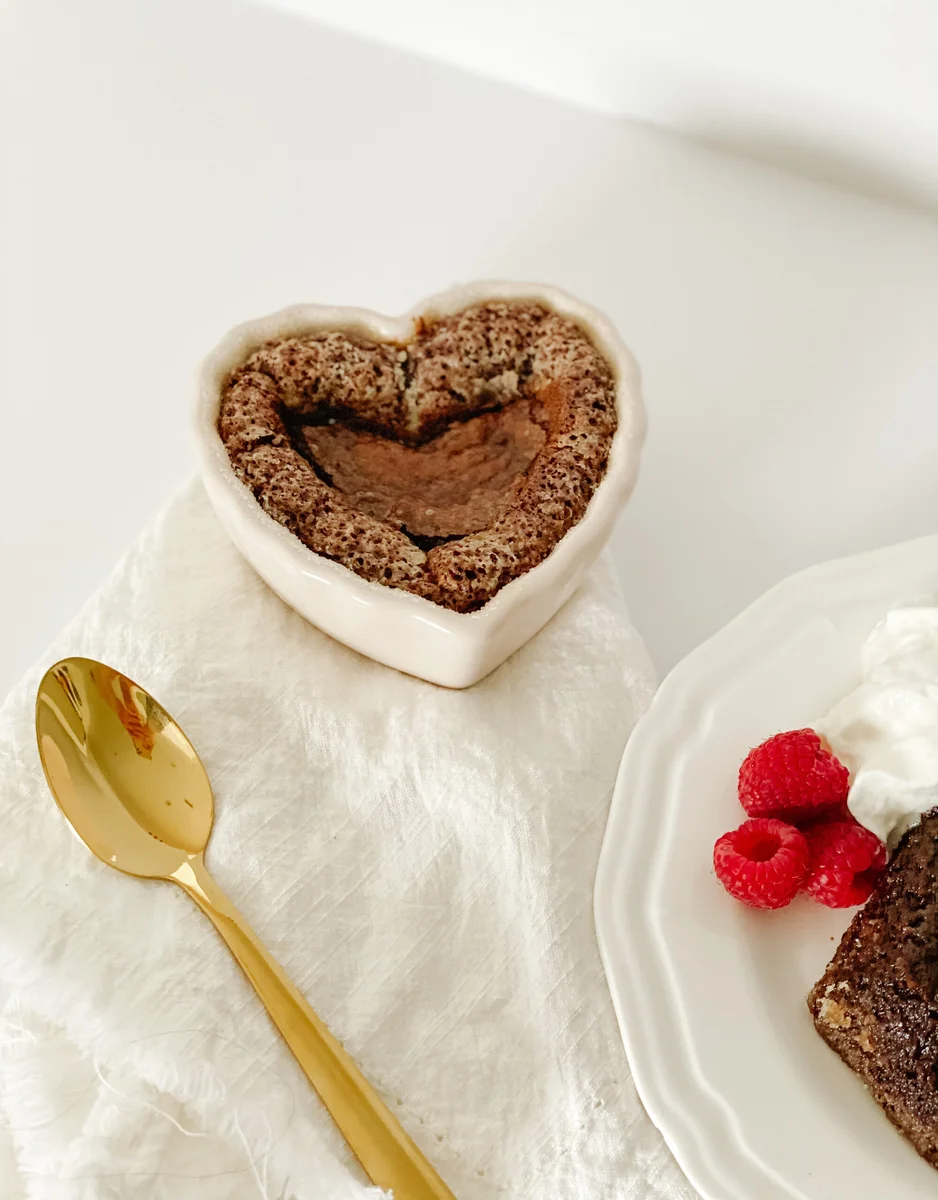
These flourless chocolate lava cakes have a thin, crisp edge and a soft, molten centre. They’re baked in individual ramekins and are especially good served warm with ice cream, whipped cream or berries.
Ingredients
- 150 g (¾ cup), plus extra for dustingsugar
- 170 g (12 tbsp), cold, plus extra for greasingunsalted butter
- 227 g (8 oz)semi-sweet chocolate
- 4eggs
- 1.25 ml (¼ tsp)salt
Instructions
- 1
Prepare ramekins
Preheat the oven to 196°C (385°F). Grease the inside of the ramekins with butter, then add a little sugar and roll it around so it coats the buttered surfaces in a thin layer.
- 2
Melt chocolate
Put the semi-sweet chocolate and cold unsalted butter, cut into cubes, in a medium microwave-safe glass measuring jug. Microwave for 30 seconds, then continue in 10-second intervals, stirring until melted and combined.
- 3
Mix the batter
Beat the eggs in a large glass measuring jug, then stir in the sugar and salt until combined. Fold in the chocolate and butter mixture a third at a time until the batter is smooth and fully combined.
- 4
Fill and bake
Divide the mixture evenly between the prepared ramekins, leaving about 1.25–2.5 cm (½–1 inch) of space at the top. Bake in the preheated oven for 17 minutes, until the tops have formed a slight crust.
- 5
Turn out cakes
Leave the cakes to cool for 2–5 minutes so the edges set while the centres stay loose. Run a knife around the edge of each cake to loosen it. Carefully place a plate upside down over a hot ramekin, flip it onto the plate and lift off the ramekin.
- 6
Serve immediately
Serve straight away with ice cream, whipped cream and berries.
What is flourless chocolate lava cake?
Lava cake is an individual chocolate dessert baked until its outside is set while the centre remains soft and flowing. It’s part of a wider family of molten chocolate cakes, popular in restaurant cooking and home kitchens alike.
This version gets its structure from eggs rather than flour. Butter, chocolate and sugar make a rich batter, while the sugared ramekins help create a delicate outer edge and make the cakes easier to turn out.
Nutrition and macros by portion
The nutrition label shows one serving as written: 725 calories, 10g protein, 63g carbs, 62g fat.
| Portion | Adjustment | kcal | Protein | Carbs | Fat |
|---|---|---|---|---|---|
| Lighter | Serve with berries | 507 kcal | 7g | 44g | 43g |
| This serving | As written | 725 kcal | 10g | 63g | 62g |
| Hungry | Add ice cream | 1088 kcal | 15g | 95g | 93g |
Most of the carbohydrates come from the sugar and chocolate, while butter and chocolate contribute much of the fat; the eggs and chocolate provide some protein. Serve a cake with berries and a modest scoop of ice cream for a plate with fruit alongside the rich dessert.
Why this ingredient balance works
Chocolate and butter: melting them together gives the batter its deep chocolate flavour and rich texture. Cutting the cold butter into cubes helps it melt evenly alongside the chocolate.
Eggs and sugar: the eggs provide structure, while the sugar sweetens the chocolate and helps the cakes develop their thin crust. Salt rounds out the flavour.
Coat the ramekins well
Butter first: grease the whole inside surface, including the sides. A thin, even coating gives the sugar something to cling to.
Sugar next: roll a little sugar around each ramekin and tip out any excess. This coating helps the cakes release and adds a fine crispness around the edges.
Fold without losing texture
Gradual mixing: fold the chocolate mixture into the eggs in three additions, as directed. Adding it in stages makes it easier to combine the two mixtures evenly.
Gentle handling: use a folding motion rather than beating once the chocolate goes in. Stop when no streaks remain; overmixing isn’t needed.
Check the bake
Top cue: the cakes are ready when the tops have formed a slight crust, after about 17 minutes in the specified oven. The centre is meant to stay soft, so don’t wait for it to look fully firm.
Short rest: cooling for 2–5 minutes lets the edges set enough to turn out while keeping the middle loose. Letting them sit much longer may make the centre less molten.
Turn out with care
Loosen first: run a knife around the inside edge before turning out each cake. This helps separate the set sides from the ramekin.
Protect your hands: the ramekins will be hot. Use an oven mitt or a thick, dry tea towel to hold one as you cover it with a plate and flip it.
What to serve alongside
Cool and creamy: vanilla ice cream or whipped cream contrasts with the warm, rich centre. Add them just before serving.
Fresh fruit: berries bring a fresh, tart note alongside the chocolate. Serve them on the side or scatter them over the plate.
Recipe notes & tips
- Cut the butter into cubes so it melts more evenly with the chocolate.
- Use microwave-safe glassware and stir between heating intervals.
- Fold the chocolate mixture in gradually to help it combine smoothly with the eggs.
- Leave space at the top of each ramekin as you divide the batter.
- Have the plates ready before turning out the hot cakes.
- Serve the cakes as soon as they are turned out for the loosest centres.
Variations
- Berry finish: serve with fresh raspberries or strawberries.
- Vanilla pairing: add a scoop of vanilla ice cream alongside each cake.
- Cream topping: serve with a spoonful of whipped cream instead of ice cream.
- Citrus lift: add a little finely grated orange zest to the batter.
- Extra crunch: scatter a few toasted chopped nuts over the finished cakes.
Common mistakes to avoid
- Patchy greasing: coat the sides and base of each ramekin so the cakes release more easily.
- Overheating chocolate: use 30-second bursts at first, then 10-second intervals, stirring each time.
- Mixing too quickly: fold the chocolate in a third at a time to avoid uneven streaks.
- Overbaking: remove the cakes when the tops have a slight crust so the centres remain soft.
- Skipping the rest: wait 2–5 minutes before turning out to let the edges set.
- Handling hot ramekins bare-handed: use an oven mitt or thick, dry tea towel when flipping.
How to store
These cakes are best eaten immediately, while the centres are still molten. If needed, cover and refrigerate leftovers for up to 2 days; warm gently in the microwave, bearing in mind that the centre may become more set.
Frequently asked questions
Can I prepare the batter ahead?
The method is written for baking straight after mixing. For the best molten centre, bake and serve the cakes promptly.
How do I know when the cakes are ready?
Look for a slight crust on top after about 17 minutes. The centre should remain loose rather than looking fully set.
Can I use a different size ramekin?
The recipe does not specify a ramekin size, so using a different size may change the baking time. Keep the batter below the rim and use the slight crust on top as the visual cue.
Why did my cake stick to the ramekin?
The inside may not have been fully greased or coated with sugar, or the edge may not have been loosened before turning out. Run a knife around the cake while it is still in the ramekin.
Can I serve these without turning them out?
Yes. You can serve the cakes in their ramekins if you prefer, taking care because the dishes will be hot.
Cook it from the original
This recipe comes from glutenfreetreatsandeats.com. Their page has the author’s own photos, notes and tips — the best place to cook it from.
Open the recipe on glutenfreetreatsandeats.com