
creme brulee
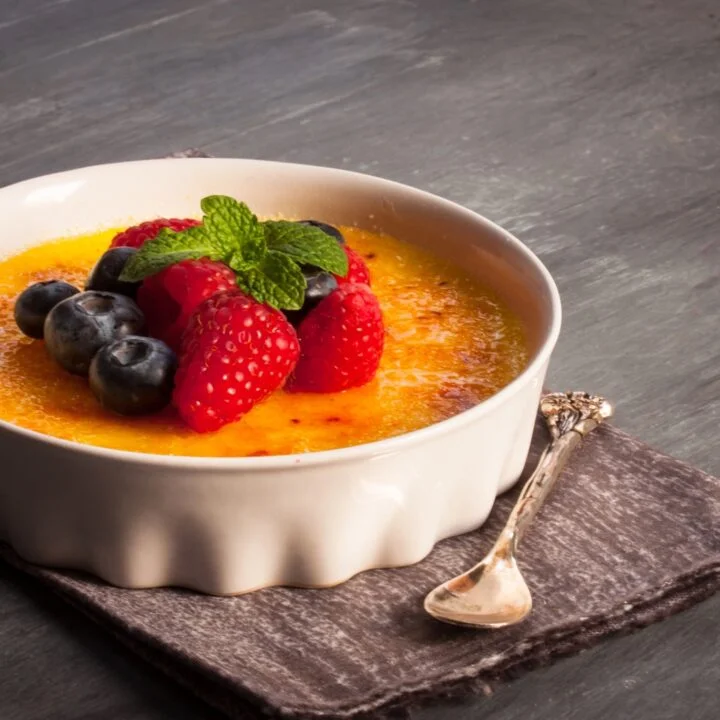
Crème brûlée is a classic French baked custard topped with a thin, crisp layer of caramelised sugar. Make it when you want a make-ahead dessert with a silky centre and a satisfying crack at the table.
Ingredients
- 6 largeegg yolks
- 100 g, plus extra for caramelisinggranulated sugar
- 480 mldouble cream
- 1 teaspoonpure vanilla extract
- A pinchsalt
- To tastetoppings of your choice, such as fresh berries, mint leaves, cocoa powder or matcha powder
Instructions
- 1
Prepare the oven
Heat the oven to 165°C. Set six ramekins in a baking dish or roasting tin, leaving space between them.
- 2
Whisk yolks
Whisk the egg yolks and sugar in a mixing bowl until pale and creamy.
- 3
Warm the cream
Pour the double cream into a saucepan over medium heat and add the vanilla extract and salt. Bring it to a gentle simmer, stirring occasionally so it does not catch.
- 4
Temper the yolks
Pour the hot cream slowly into the yolk mixture, whisking continuously so the eggs warm gradually without scrambling.
- 5
Strain the custard
Pass the combined mixture through a fine-mesh sieve to remove any lumps.
- 6
Fill the ramekins
Divide the custard evenly among the ramekins, filling each about three-quarters full.
- 7
Make a water bath
Set the baking dish on the oven rack. Carefully pour hot water into the dish until it comes about halfway up the sides of the ramekins.
- 8
Bake the custards
Bake for 30–35 minutes, until the edges are set but the centres still wobble slightly. Cooking time can vary, so check them as they bake.
- 9
Cool the ramekins
Take the dish out of the oven and carefully lift the ramekins out of the water bath. Leave them to cool to room temperature.
- 10
Chill the custard
Cover each cooled ramekin with cling film and refrigerate for at least 2 hours or overnight, until fully set.
- 11
Add the sugar
Just before serving, scatter a thin, even layer of granulated sugar over each custard.
- 12
Caramelise the tops
Use a culinary torch, holding the flame about 5–8 cm from the sugar and moving it steadily until the surface melts and caramelises. Alternatively, put the ramekins on a baking sheet under the grill and watch closely; rotate the sheet if needed for even browning.
- 13
Set the caramel
Leave the caramelised sugar for a few minutes to cool and harden.
- 14
Add toppings
Just before serving, decorate with toppings if you like, such as fresh berries, cocoa powder or mint leaves.
- 15
Serve immediately
Serve the crème brûlée straight away.
What is crème brûlée?
Crème brûlée, meaning “burnt cream”, is a French dessert of baked custard finished with a thin sheet of caramelised sugar. Its appeal is the contrast between a cool, soft centre and a crisp top.
This version uses vanilla for a familiar flavour and a water bath to cook the custard gently. The custards can be chilled ahead, then topped with sugar shortly before serving.
Nutrition and macros by portion
The nutrition label shows one serving as written: 570 calories, 7g protein, 29g carbs, 48g fat.
| Portion | Adjustment | kcal | Protein | Carbs | Fat |
|---|---|---|---|---|---|
| Lighter | Use smaller ramekins | 399 kcal | 5g | 20g | 34g |
| This serving | As written | 570 kcal | 7g | 29g | 48g |
| Hungry | Serve a larger ramekin | 855 kcal | 11g | 44g | 72g |
Most of the carbohydrates come from the sugar, while double cream and egg yolks provide most of the fat; the yolks also contribute some protein. Pair a ramekin with fresh berries and a lighter main meal if you want a more balanced plate.
The custard ingredients
Egg yolks: they give the custard its richness and help it set. Whisk them with the sugar until pale before adding the cream.
Double cream: its high fat content makes the finished custard smooth and rich. Warm it gently rather than letting it boil hard.
Vanilla and salt: vanilla provides the main flavour, while a pinch of salt rounds it out without making the dessert taste salty.
Temper the eggs gently
Slowly pouring the hot cream into the yolks while whisking brings the ingredients closer in temperature without scrambling the eggs. Keep whisking as you pour, especially at the start.
Straining the mixture afterwards catches small cooked bits or lumps. It helps the custard bake with an even texture.
Why use a water bath?
The hot water around the ramekins buffers the heat from the oven and helps the custard cook evenly. Pour it carefully once the dish is on the oven rack to avoid splashing water into the custards.
The custards are ready when the edges look set and the centres still jiggle a little. They will firm up further as they cool and chill.
Get the caramel top right
Add a thin, even coating of sugar just before serving so it can melt into a crisp layer. Too much sugar can make a thick, hard top.
With a torch, keep the flame moving across the surface. Under a grill, watch continuously because the sugar can caramelise quickly.
Make ahead and serve
The baked custards need at least 2 hours in the fridge, or can chill overnight, making this a useful dessert to prepare in advance. Leave the caramelising until just before serving for the best crunch.
Serve the ramekins on their own or with fresh berries. Add mint, cocoa or matcha only if you want an extra garnish; the crisp sugar top is the defining finish.
Recipe notes & tips
- Use ramekins that fit comfortably in the baking dish without touching.
- Pour the cream into the yolks gradually and keep whisking to avoid scrambling.
- Strain the custard for a smoother result.
- Pour the water bath carefully so water does not splash into the ramekins.
- Chill the custards fully before adding the sugar topping.
- Keep the torch moving, or watch the ramekins closely under the grill.
Variations
- Citrus: add finely grated citrus zest to the warm cream for a fresh note.
- Coffee: infuse the cream with coffee, then strain it before combining with the yolks.
- Chocolate: serve with a light dusting of cocoa powder just before serving.
- Berry: add a few fresh berries beside each ramekin.
- Matcha: sift a little matcha powder over the custard as a garnish.
Common mistakes to avoid
- Boiling the cream: a hard boil can make it more difficult to combine smoothly; heat only to a gentle simmer.
- Pouring too quickly: the yolks may scramble; add the cream gradually while whisking continuously.
- Skipping the sieve: lumps can remain in the custard; strain it before filling the ramekins.
- Overbaking: the centres can turn firm rather than silky; take the custards out while they still wobble slightly.
- Caramelising too early: the top can lose its crispness; add and caramelise the sugar just before serving.
- Leaving the flame in one place: the sugar can burn; move the torch steadily over the surface.
How to store
Cover and refrigerate the uncaramelised custards for up to 2 days. Add and caramelise the sugar just before serving; once topped, the crust will soften as it sits. Serve chilled rather than reheating.
Frequently asked questions
Can I make crème brûlée ahead?
Yes. Bake and chill the custards for at least 2 hours or overnight, then caramelise the sugar just before serving.
How do I know when the custards are baked?
The edges should be set while the centres still wobble slightly when the dish is nudged. They will become firmer as they cool and chill.
Can I caramelise the sugar without a torch?
Yes. Put the ramekins on a baking sheet under the grill and watch closely, rotating the sheet if necessary for even browning.
Why is my custard lumpy?
The eggs may have scrambled if the hot cream was added too quickly, or the mixture may not have been strained. Pour slowly while whisking, then pass the mixture through a fine-mesh sieve.
Can I freeze crème brûlée?
Freezing can affect the custard's smooth texture, so refrigeration is preferable. Make only what you plan to serve within a couple of days.
What toppings work well?
Fresh berries, mint, cocoa powder and matcha are suggested options. Keep toppings light so they do not cover the caramelised sugar.
Cook it from the original
This recipe comes from gluttodigest.com. Their page has the author’s own photos, notes and tips — the best place to cook it from.
Open the recipe on gluttodigest.com