
creme brulee donuts
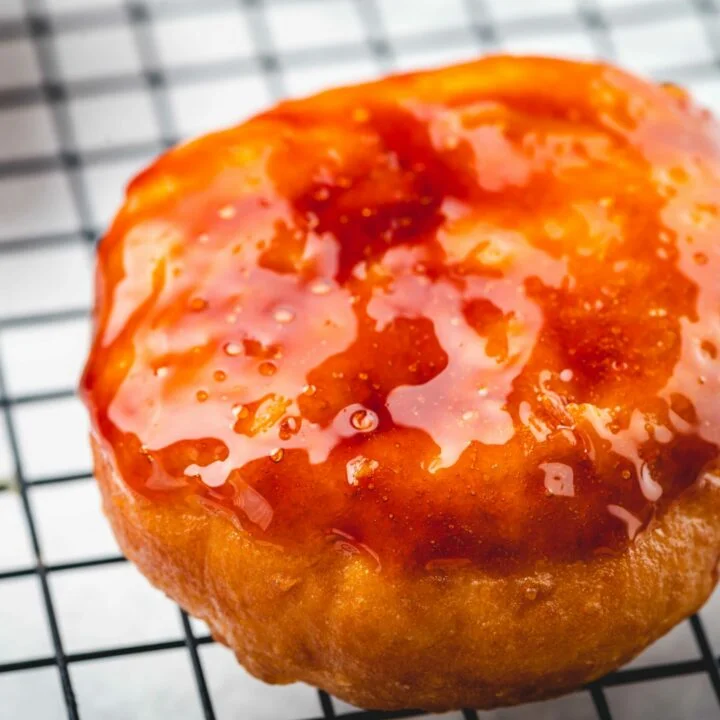
These crème brûlée doughnuts pair soft, freshly fried dough with vanilla custard and a crisp caramelised sugar top. Make them from scratch for a special treat, or use fresh glazed doughnuts to save time.
Ingredients
- 280 gplain flour
- 50 ggranulated sugar
- 7 gactive dried yeast
- 2.5 gsalt
- 120 ml, warmedwhole milk
- 2 largeeggs
- 42 g, softenedunsalted butter
- as neededvegetable oil, for frying
- Optionalfresh glazed doughnuts; use instead and skip steps 1–5 and 8–11
- 360 mldouble cream
- 4 largeegg yolks
- 100 ggranulated sugar
- 5 mlvanilla extract
- 50 ggranulated sugar, for topping
Instructions
- 1
Mix dry ingredients
In a large bowl, combine the flour, sugar, yeast and salt, then make a well in the centre.
- 2
Add milk mixture
Whisk the warm milk and eggs together in a separate bowl. Pour this into the well in the dry ingredients.
- 3
Form the dough
Add the softened butter and mix until the ingredients come together as a dough.
- 4
Knead the dough
Turn the dough onto a floured surface and knead for about 5–7 minutes, until smooth and elastic.
- 5
Let dough rise
Put the dough in a greased bowl, cover with a clean tea towel and leave in a warm place for about 1 hour, or until doubled in size.
- 6
Make the custard
While the dough rises, heat the cream in a saucepan over medium heat until it just begins to simmer. In a separate bowl, whisk the egg yolks, sugar and vanilla until combined.
- 7
Thicken the custard
Gradually whisk the hot cream into the egg mixture. Return it to the saucepan and cook over low heat, stirring constantly, until thick enough to coat the back of a spoon. Remove from the heat and leave to cool.
- 8
Roll the dough
When the dough has risen, press it down to release the air. Roll it out on a floured surface to about 1.3 cm thick.
- 9
Cut and prove
Cut circles from the dough with a round cutter or glass. Arrange them on a baking sheet lined with baking parchment, cover with a tea towel and leave to rise for another 30 minutes.
- 10
Heat the oil
Heat vegetable oil in a deep pan or fryer to 175°C.
- 11
Fry the doughnuts
Fry a few doughnuts at a time for about 2–3 minutes on each side, until golden brown. Lift them out with a slotted spoon and drain on a plate lined with kitchen paper.
- 12
Fill with custard
Once the doughnuts have cooled slightly, fill a piping bag fitted with a long, narrow nozzle with the cooled custard. Insert the nozzle into the side of each doughnut and squeeze gently until it feels slightly heavier and the filling is visible.
- 13
Caramelise the tops
Sprinkle a thin layer of sugar over each filled doughnut. Carefully use a kitchen torch to melt and caramelise the sugar into a crisp topping.
- 14
Cool the topping
Leave the caramelised sugar to cool and harden for a few minutes before serving.
- 15
Serve the doughnuts
Serve and enjoy.
What are crème brûlée doughnuts?
Crème brûlée is a French dessert of smooth custard beneath a brittle, caramelised sugar crust. These doughnuts borrow that contrast, putting vanilla custard inside fried dough and torching sugar on top.
The combination is an indulgent twist rather than a traditional French doughnut. The recipe works by keeping the custard cool before filling and caramelising the topping just before serving.
Nutrition and macros by portion
The nutrition label shows one serving as written: 1050 calories, 17g protein, 135g carbs, 51g fat.
| Portion | Adjustment | kcal | Protein | Carbs | Fat |
|---|---|---|---|---|---|
| Lighter | Use a smaller doughnut | 735 kcal | 12g | 95g | 36g |
| This serving | As written | 1050 kcal | 17g | 135g | 51g |
| Hungry | Serve an extra doughnut | 1575 kcal | 26g | 203g | 77g |
The flour, dough sugar and custard sugar supply most of the carbohydrates, while cream, butter and frying oil contribute much of the fat. Eggs and egg yolks provide protein as well as additional fat. For a more balanced plate, serve one doughnut with fresh fruit rather than adding another rich dessert.
The dough and its rise
Yeast: active dried yeast gives the dough its lift, while the warm milk helps bring the mixture together. The milk should be warm, not hot, when it meets the yeast.
Kneading: work the dough for the full 5–7 minutes so it becomes smooth and elastic. Give it the hour-long first rise in a warm spot, then allow the cut rounds their separate 30-minute rise.
Getting the custard right
Tempering: whisk the hot cream into the yolks gradually, rather than adding it all at once. This helps the mixture heat evenly.
Doneness: cook the custard gently and keep stirring until it coats the back of a spoon. Take it off the heat at that point, then let it cool before piping.
Frying for a tender centre
Oil temperature: heat the oil to 175°C before frying. Fry a few doughnuts at a time so they have room to cook evenly.
Colour: the recipe gives about 2–3 minutes per side as a guide; look for a golden-brown surface. Drain the fried doughnuts on kitchen paper before filling.
Filling and brûléeing
Filling: wait until the doughnuts have cooled slightly and the custard is cool. Insert the narrow piping tip through the side and squeeze gently, stopping when the doughnut feels a little heavier and filling appears at the opening.
Sugar crust: use a thin, even layer of sugar and move the kitchen torch carefully across it until it melts and caramelises. Let the crust harden for a few minutes before serving.
What to serve alongside
These doughnuts are rich and sweet, so serve them on their own as a dessert or with unsweetened coffee or tea. Fresh berries can add a tart contrast without competing with the crisp sugar top.
Recipe notes & tips
- Measure the oil temperature with a thermometer before adding the first doughnut.
- Keep the custard over low heat and stir continuously as it thickens.
- Let the custard cool fully so it is easier to pipe into the doughnuts.
- Fry in small batches to avoid crowding the pan.
- Torch the sugar shortly before serving for the crispest topping.
- Use fresh glazed doughnuts if you want to skip making and frying the dough.
Variations
- Citrus custard: Stir a little finely grated lemon or orange zest into the custard while it cooks.
- Coffee custard: Add a small amount of strong coffee to the cream for a coffee-flavoured filling.
- Chocolate finish: Dust the finished doughnuts lightly with cocoa instead of adding another sugar layer.
- Cinnamon sugar: Add a pinch of cinnamon to the topping sugar before sprinkling it over the doughnuts.
- Berry side: Serve with fresh raspberries or sliced strawberries for a tart contrast.
Common mistakes to avoid
- Milk too hot: Very hot milk can affect the yeast; use warm milk rather than steaming milk.
- Rushed proving: Dough that has not doubled during the first rise may make dense doughnuts; allow the full rise in a warm place.
- Custard cooked too quickly: High heat can make the egg mixture lumpy; cook over low heat and stir constantly.
- Oil too cool: Doughnuts can absorb excess oil; bring the oil to 175°C before frying.
- Overfilling: Too much custard can split the doughnut; squeeze slowly and stop when it feels slightly heavier.
- Thick sugar layer: A heavy topping can be hard to crack; sprinkle on a thin, even layer.
How to store
Store leftover filled doughnuts in a covered container in the refrigerator and eat within 2 days. The sugar crust softens in storage, so they are best served soon after caramelising; avoid reheating filled doughnuts, as the custard may become too hot.
Frequently asked questions
Can I use shop-bought doughnuts?
Yes. The recipe suggests fresh glazed doughnuts as a shortcut; skip the dough-making and frying steps, then fill and top them as directed.
Can I make the custard ahead?
Yes. Prepare it while the dough rises, as directed, and let it cool before using it to fill the doughnuts. Keep it covered in the refrigerator if making it earlier.
How do I know when the custard is thick enough?
It should coat the back of a spoon after cooking over low heat with constant stirring. Remove it from the heat then and let it cool.
Do I need a kitchen torch?
The method uses a kitchen torch to caramelise the sugar topping. Without one, you will not get the same brûléed finish from this method.
Can I fill the doughnuts while they are hot?
Let them cool slightly first, and make sure the custard has cooled too. This makes filling easier and helps prevent the custard from becoming hot inside the doughnut.
Cook it from the original
This recipe comes from gluttodigest.com. Their page has the author’s own photos, notes and tips — the best place to cook it from.
Open the recipe on gluttodigest.com