
creme brulee French toast
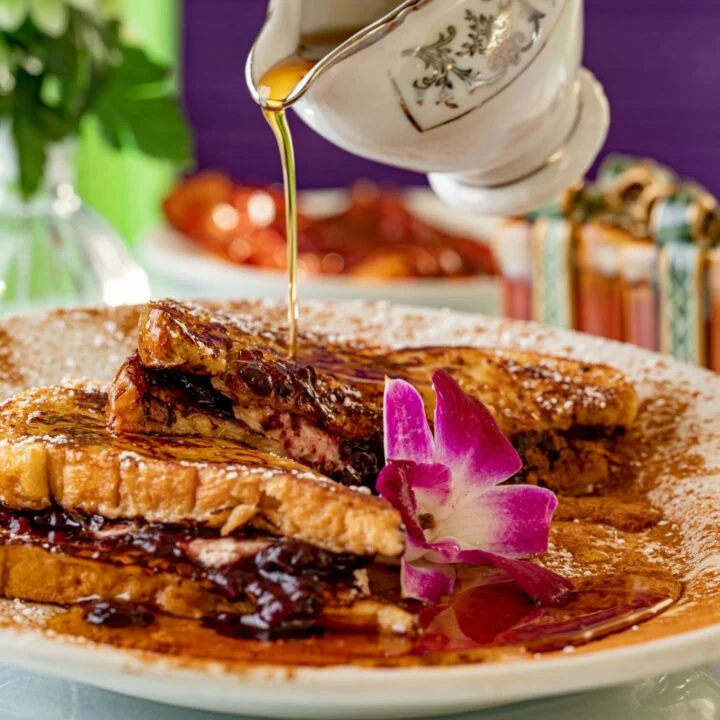
Thick slices of brioche or challah are soaked in a vanilla-rich egg custard, cooked until golden, then topped with a crisp layer of caramelised sugar. It brings the flavours of crème brûlée to a special-occasion French toast.
Ingredients
- 4 largeeggs
- 240 mlheavy cream
- 120 mlwhole milk
- 50 ggranulated sugar
- 5 mlvanilla extract
- 8 slices, about 2.5 cm thickbrioche or challah bread
- 28 gunsalted butter
- 50 ggranulated sugar, for caramelising
- Optional: 5 mlGrand Marnier or Amaretto
Instructions
- 1
Mix the custard
Whisk the eggs, cream, milk, 50 g granulated sugar and vanilla in a mixing bowl until combined. Add the Grand Marnier or Amaretto if using, then set the mixture aside.
- 2
Heat the pan
Preheat a griddle or large frying pan over medium heat.
- 3
Dip the bread
Dip each slice into the custard for a few seconds on each side. Coat the bread evenly without letting it become overly saturated.
- 4
Cook the slices
Melt 15 g of butter on the preheated griddle or in the pan. Cook the soaked bread for about 3–4 minutes per side, until golden brown and crisp. Cook the remaining slices in the same way, adding more butter as needed.
- 5
Plate the toast
Transfer all the cooked French toast slices to serving plates.
- 6
Add the sugar
Sprinkle a thin, even layer of the remaining 50 g granulated sugar over the cooked side of each slice.
- 7
Caramelise the top
Carefully move a culinary torch in circles over the sugared surface until the sugar melts and turns golden brown. Take care while using the torch and keep a safe distance from the flame.
- 8
Let it harden
Leave the caramelised sugar to cool and harden for a minute or two before serving.
- 9
Serve the toast
Enjoy!
What is crème brûlée French toast?
This is a French toast variation that borrows the vanilla custard and brittle caramel top associated with crème brûlée. The recipe uses thick brioche or challah slices, which soak up the egg-and-cream mixture while holding their shape.
Custard-soaked bread and griddled preparations have a long history across many cuisines; this version is a modern brunch-style pairing rather than a traditional French dish. Its contrast of soft, rich toast and crisp caramel is what makes it feel celebratory.
Nutrition and macros by portion
The nutrition label shows one serving as written: 650 calories, 16g protein, 65g carbs, 36g fat.
| Portion | Adjustment | kcal | Protein | Carbs | Fat |
|---|---|---|---|---|---|
| Lighter | Use less caramel sugar | 455 kcal | 11g | 46g | 25g |
| This serving | As written | 650 kcal | 16g | 65g | 36g |
| Hungry | Add another slice | 975 kcal | 24g | 98g | 54g |
The bread and added sugars provide most of the carbohydrates, while the cream, butter and brioche or challah contribute much of the fat. Eggs and dairy supply protein, though the dish is also rich in saturated fat. Balance the plate with fresh fruit, or serve a smaller portion alongside fruit.
Choosing the bread
Thick slices: Brioche and challah are tender, enriched breads that suit a creamy custard. Slices about 2.5 cm thick give the centre time to soften while the outside browns.
Bread condition: The method is written for slices that can be dipped without falling apart. Handle fresh, soft bread gently and avoid leaving it in the custard for too long.
Getting the custard right
Even mixing: Whisk the eggs, cream, milk, sugar and vanilla until they are well combined. This helps each slice receive a consistent coating.
Brief soak: Dip the bread for a few seconds on each side, as directed. It should be coated throughout but not overly saturated, which can make it harder to turn and cook evenly.
Cooking for a golden finish
Steady heat: Medium heat gives the custard time to cook as the bread browns. Keep an eye on the slices as they cook for about 3–4 minutes per side.
Batch cooking: Cook the remaining bread after the first batch, adding butter as needed. Transfer the cooked slices to plates before adding the sugar for the torching step.
Making the crisp sugar top
Even layer: Sprinkle a thin, even coating of sugar over the cooked side of each slice. A level coating helps the surface caramelise more uniformly.
Torch control: Move the flame in a circular motion until the sugar has melted and turned golden brown. Let it stand for a minute or two so the topping can cool and harden.
What to serve alongside
Fresh fruit: Berries or sliced fruit offer a bright contrast to the creamy toast and sweet topping. Serve them alongside rather than piling them over the caramelised surface.
A simple drink: Coffee or tea works well with this rich brunch dish. Serve the French toast soon after the sugar hardens to enjoy its crisp texture.
Recipe notes & tips
- Measure the sugar for the custard and the caramel topping separately before you begin.
- Dip each slice only for a few seconds on each side, as the method specifies.
- Cook the toast in batches if needed, adding butter as you cook the remaining slices.
- Use a thin, even layer of sugar for the torching step.
- Move the culinary torch continuously rather than holding it over one spot.
- Allow the topping to cool for a minute or two before serving.
Variations
- Add liqueur: Stir 5 ml Grand Marnier or Amaretto into the custard.
- Choose challah: Use challah instead of brioche for a different enriched-bread flavour.
- Choose brioche: Use brioche for a soft, buttery result.
- Serve with berries: Add fresh berries on the side for a fruity contrast.
- Use a griddle: Cook the slices on a griddle instead of a large frying pan.
Common mistakes to avoid
- Over-soaking the bread: Dip it for only a few seconds on each side so it stays manageable.
- Uneven coating: Turn each slice in the custard to coat both sides.
- Crowding the pan: Cook the slices in batches so each can brown on the griddle or in the pan.
- Cooking too quickly: Keep the heat at medium and cook for about 3–4 minutes per side.
- Piling on sugar: Use a thin, even layer so it can caramelise across the surface.
- Holding the torch still: Keep it moving in circles and maintain a safe distance from the flame.
How to store
For the best contrast between soft toast and crisp topping, serve this French toast soon after caramelising the sugar. Refrigerate leftovers in a covered container and reheat gently in a frying pan or oven; the sugar top may lose its crispness.
Frequently asked questions
Can I make this without a culinary torch?
The method uses a culinary torch to caramelise the sugar. Without one, the recipe does not specify an alternative method for creating the same topping.
How long should I soak each slice?
Dip each side for a few seconds, just long enough to coat the bread. Avoid leaving the slices in the custard until they become overly saturated.
How do I know when the toast is cooked?
Cook each side for about 3–4 minutes, until the bread is golden brown and crisp.
Can I leave out the Grand Marnier or Amaretto?
Yes. The liqueur is optional, so you can make the custard without it.
When should I serve the French toast?
Let the caramelised sugar harden for a minute or two, then serve. This gives the topping time to set.
Cook it from the original
This recipe comes from gluttodigest.com. Their page has the author’s own photos, notes and tips — the best place to cook it from.
Open the recipe on gluttodigest.com