
Garlic Butter Chicken Ramen - Cozy, Flavor-Packed Noodles for Busy Nights
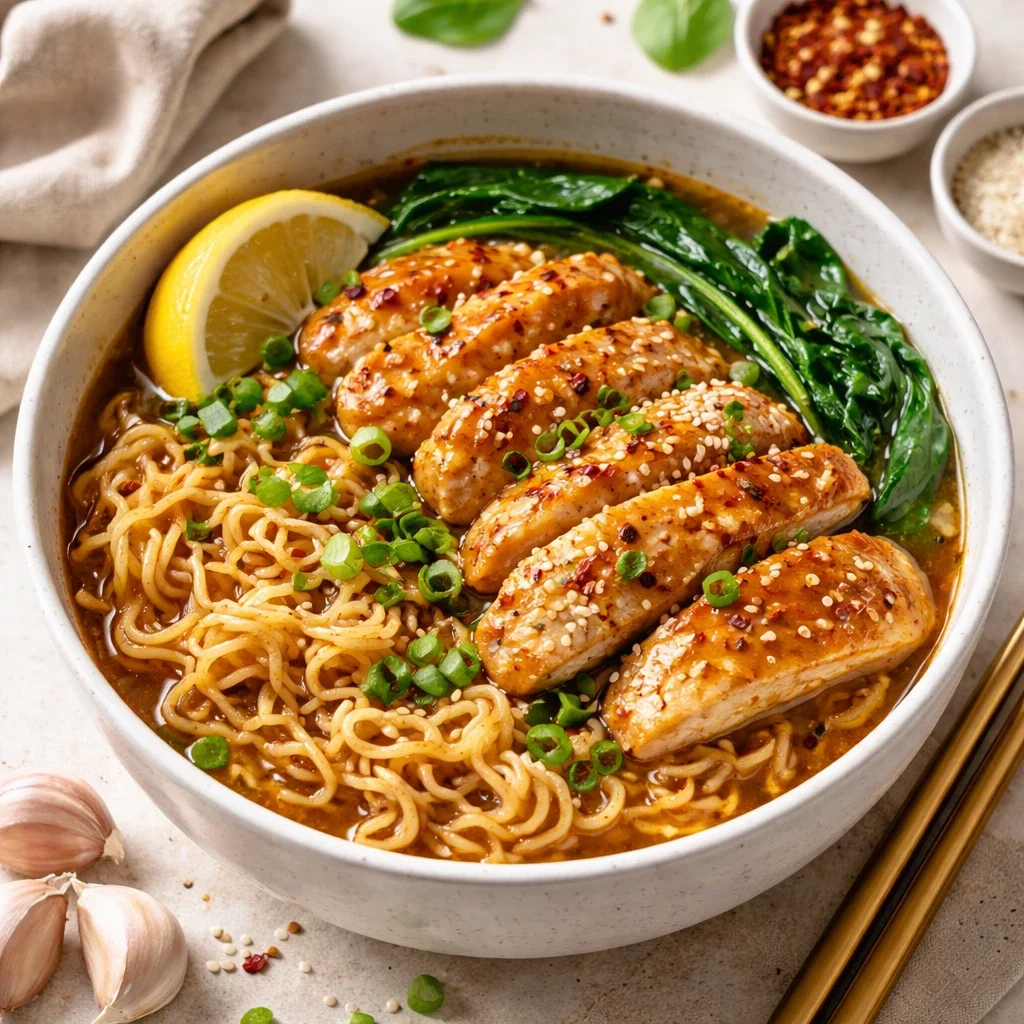
A quick skillet dinner of tender chicken and instant ramen tossed in a savoury garlic-butter broth. It comes together in about 30 minutes and is easy to customise with vegetables or an egg.
Ingredients
- 454 gboneless, skinless chicken thighs or breasts, cut into bite-sized pieces
- 2 packsinstant ramen, seasoning packets discarded
- 57 g, dividedbutter
- 15 mlolive oil
- 5 clovesgarlic, minced
- 5 mlgrated ginger (optional)
- 45 mlsoy sauce (low-sodium recommended)
- 360 mlchicken broth
- 15 mlrice vinegar or lemon juice
- 5 mlbrown sugar or honey
- 2.5 ml, or to tastered pepper flakes
- 3green onions, sliced
- 5 mlsesame oil
- to tastesalt and pepper
- Optionalbaby spinach, mushrooms, corn or a soft-boiled egg
Instructions
- 1
Season the chicken
Pat the chicken dry, then toss it with salt, pepper and a pinch of the red pepper flakes.
- 2
Sear the chicken
Heat the olive oil and 15 g of the butter in a large skillet over medium-high heat. Arrange the chicken in a single layer and cook for 5–7 minutes, stirring once, until browned and cooked through. Transfer it to a plate.
- 3
Make garlic butter
Reduce the heat to medium and add the remaining 42 g butter. Stir in the garlic and, if using, the ginger; cook for 30–60 seconds until fragrant, without letting the garlic brown.
- 4
Build the sauce
Add the soy sauce, chicken broth, rice vinegar or lemon juice, and brown sugar or honey. Simmer for 2–3 minutes to bring the flavours together.
- 5
Cook the ramen
Add the ramen bricks to the skillet and simmer for 2–3 minutes, turning them gently, until just tender and beginning to loosen. Add a splash of water if needed.
- 6
Combine everything
Return the chicken and any juices to the pan, then toss with the noodles. Stir in the sesame oil and half the green onions. Taste and adjust the salt, pepper or heat.
- 7
Finish and serve
Take the pan off the heat while the noodles are still saucy, as they will continue to absorb liquid. Top with the remaining green onions and any optional add-ins, then serve hot.
What is garlic butter chicken ramen?
Ramen is a Japanese noodle dish, while instant ramen makes a convenient shortcut for a speedy home-cooked version. This recipe pairs the noodles with chicken and a buttery, garlicky broth rather than the packet seasoning.
The balance of soy sauce, a little sweetness and vinegar or lemon gives the rich butter a savoury, bright edge. Chicken thighs stay juicy, while the quick skillet method keeps the meal to about 30 minutes.
Nutrition and macros by portion
The nutrition label shows one serving as written: 585 calories, 28g protein, 28g carbs, 28g fat.
| Portion | Adjustment | kcal | Protein | Carbs | Fat |
|---|---|---|---|---|---|
| Lighter | Use less butter | 410 kcal | 20g | 20g | 20g |
| This serving | As written | 585 kcal | 28g | 28g | 28g |
| Hungry | Add an extra ramen pack | 878 kcal | 42g | 42g | 42g |
The noodles and small amount of sugar provide most of the carbohydrates; chicken contributes most of the protein. Butter, olive oil and sesame oil account for much of the fat, while the broth and soy sauce contribute sodium. For a more balanced plate, add spinach or another vegetable and keep the added salt modest.
Choosing the chicken and noodles
Chicken pieces: Thighs are forgiving and remain tender, while breast meat works too if you avoid overcooking it. Cut the pieces to a similar size so they cook at roughly the same rate.
Ramen: Use the plain noodle blocks and discard their seasoning sachets, which would change the sauce's saltiness. Since pack sizes vary, add water only if the noodles need more liquid to soften.
Build the garlic butter base
Garlic first: Cook it gently in the remaining butter until fragrant, not browned. Browning can make the garlic taste bitter, so keep the heat at medium and stir as it cooks.
Aromatics: Ginger is optional but adds a warm, fresh note. Add it with the garlic so it has a brief moment to release its flavour into the butter.
Keep the sauce balanced
Savoury: Soy sauce and chicken broth form the backbone of the sauce, so low-sodium soy sauce is useful if you want more control over seasoning. Taste before adding extra salt.
Bright and sweet: Rice vinegar or lemon juice cuts through the butter, while a small amount of brown sugar or honey rounds out the savoury flavours. Use either option listed; there is no need to use both.
Watch the noodles closely
Tenderness: Start checking after 2 minutes of simmering and turn the noodle bricks gently as they loosen. Stop when they are just tender; they will soften further in the hot sauce.
Sauce level: The finished noodles should look glossy and saucy, not dry. If the pan gets too tight before the noodles are tender, add a small splash of water.
Add-ins and serving ideas
Vegetables: Baby spinach can be stirred in near the end, while mushrooms or corn can be added as the noodles cook. Keep additions modest so the pan still has room to toss everything together.
To serve: A soft-boiled egg makes a classic-feeling topping, and extra sliced green onion adds freshness. The noodles are filling on their own, but a simple vegetable side also works well.
Recipe notes & tips
- Dry the chicken well before seasoning so it browns more readily in the skillet.
- Leave space between the chicken pieces; sear in batches if the pan is crowded.
- Use low-sodium soy sauce if you want to adjust the salt to taste at the end.
- Keep the garlic moving in the butter and take care not to brown it.
- Add the noodles once the sauce is simmering so they soften evenly.
- Serve promptly because the noodles continue absorbing the sauce as they stand.
Variations
- Add spinach: Stir baby spinach through the hot noodles at the end until wilted.
- Use mushrooms: Slice and cook them in the pan before adding the sauce ingredients.
- Add corn: Stir corn into the simmering sauce as the ramen cooks.
- Top with egg: Add a halved soft-boiled egg just before serving.
- Adjust the heat: Increase or reduce the red pepper flakes to suit your preference.
Common mistakes to avoid
- Crowding the chicken: It can steam instead of browning; cook it in batches if needed.
- Browning the garlic: It can turn bitter; lower the heat and stir for just 30–60 seconds.
- Overcooking the noodles: They keep softening in the pan; remove the skillet from the heat when they are just tender.
- Adding too much water: The sauce can become thin; use only a splash if the noodles need extra liquid.
- Oversalting early: Soy sauce and broth are already savoury; taste the finished sauce before adding more salt.
How to store
Refrigerate leftovers in an airtight container for up to 3 days. Reheat gently in a pan or microwave with a splash of water, stirring until hot; the noodles may be softer after storage.
Frequently asked questions
Can I use chicken breast instead of thighs?
Yes. Cut it into bite-sized pieces and cook just until done, as breast meat can dry out if left in the pan too long.
Should I use the ramen seasoning packets?
No, discard them for this recipe. The sauce is seasoned with soy sauce, broth and the other listed ingredients.
Can I make this without ginger?
Yes. Ginger is optional, so leave it out if you do not have any or prefer a simpler garlic flavour.
How do I stop the noodles from becoming too soft?
Begin checking them after 2 minutes and take the pan off the heat as soon as they are just tender. Serve straight away, since they continue absorbing liquid.
Can I prepare this ahead?
It is best served freshly cooked because the noodles keep soaking up the sauce. You can cut the chicken and prepare the garlic and green onions in advance.
Cook it from the original
This recipe comes from bentorecipes.com. Their page has the author’s own photos, notes and tips — the best place to cook it from.
Open the recipe on bentorecipes.com