
Lemon Herb Baked Salmon
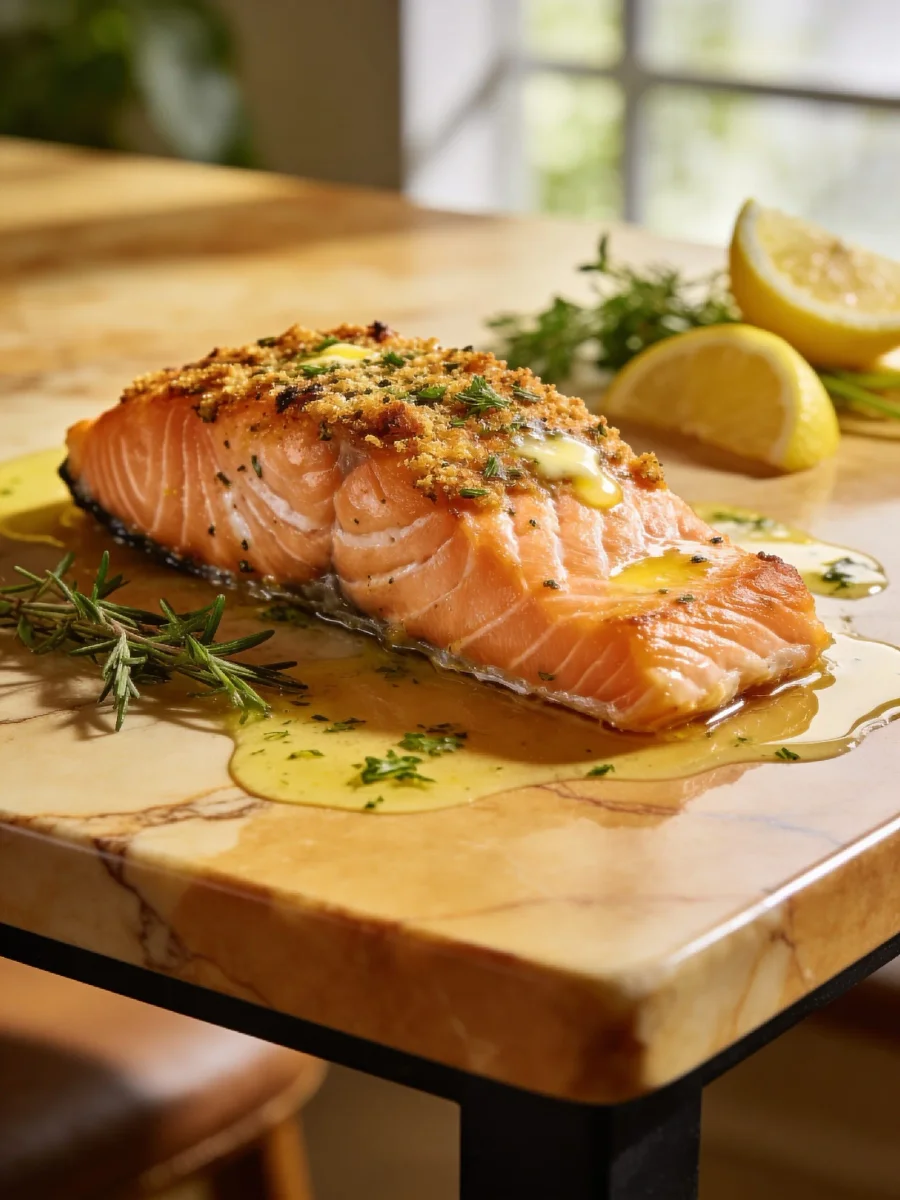
This American-style baked salmon is topped with a buttery mixture of lemon, garlic and fresh herbs. It is a straightforward oven dinner, with a bright, savoury finish and little hands-on cooking.
Ingredients
- 4 (170 g) fillets, 2.5–3.8 cm thicksalmon
- 2 teaspoonsextra virgin olive oil
- ¾ teaspoonkosher salt
- ½ teaspoonfreshly ground black pepper
- 4 tablespoonsunsalted butter, softened
- 2 clovesgarlic, minced
- 2 tablespoonsfresh dill, finely chopped
- 2 tablespoonsfresh parsley, finely chopped
- 1 mediumlemon, zested and sliced/juiced
- ¼ teaspoon (optional)red pepper flakes
Instructions
- 1
Heat the oven
Set a rack in the middle of the oven and heat it to 200°C (400°F). Line a baking sheet with parchment paper.
- 2
Dry the salmon
Leave the salmon at room temperature for 15 minutes, then pat each fillet completely dry with a paper towel.
- 3
Season the fillets
Arrange the salmon on the prepared baking sheet. Drizzle with olive oil, then season with the kosher salt and black pepper.
- 4
Mix the herb butter
In a small bowl, combine the softened butter, minced garlic, dill, parsley, lemon zest and, if using, the red pepper flakes. Stir until evenly mixed.
- 5
Top with lemon
Spread the lemon herb butter over the top of each fillet. Place 1–2 thin lemon slices on each one.
- 6
Bake the salmon
Bake for 12–18 minutes, until the salmon flakes easily with a fork or reaches 54–57°C (130–135°F) in its thickest part on an instant-read thermometer.
- 7
Rest and serve
Take the salmon out of the oven, squeeze the remaining lemon juice over the top and leave it to rest for 3–5 minutes before serving.
What is lemon herb baked salmon?
This is a simple American-style preparation of salmon baked with a seasoned butter topping. Lemon and fresh herbs bring a bright, aromatic contrast to the rich fish.
The method keeps the fillets whole and seasons them before baking, while the butter melts over the surface. It makes a quick centrepiece that needs little more than a vegetable or grain alongside it.
Nutrition and macros by portion
The nutrition label shows one serving as written: 476 calories, 38g protein, 2g carbs, 35g fat.
| Portion | Adjustment | kcal | Protein | Carbs | Fat |
|---|---|---|---|---|---|
| Lighter | Use less herb butter | 333 kcal | 27g | 1g | 25g |
| This serving | As written | 476 kcal | 38g | 2g | 35g |
| Hungry | Add potatoes or grains | 714 kcal | 57g | 3g | 53g |
The salmon provides most of the protein, while the butter and olive oil contribute most of the fat; the lemon and herbs add very little carbohydrate. Pair a fillet with a generous serving of vegetables and a moderate portion of potatoes or grains for a balanced plate.
Why the butter topping works
Herb butter: Softened butter is easy to mix with the garlic, dill, parsley and zest, then spread across the fillets. It melts as the fish cooks, carrying the herbs and garlic over the top.
Fresh herbs: Dill has a particularly classic affinity with salmon, while parsley adds a clean, green note. Chop both finely so they distribute evenly through the butter.
Prepare the salmon well
Room-temperature rest: The 15-minute rest takes the chill off the fillets before they go into the oven. Patting them dry afterwards helps the seasoning and butter sit on the surface.
Even thickness: Fillets around 2.5–3.8 cm thick are specified here. If yours vary noticeably, check the thinner pieces earlier, as they may finish first.
Watch for doneness
Temperature: Check the thickest part with an instant-read thermometer, aiming for 54–57°C (130–135°F), as directed in the method. Insert the probe into the centre of the flesh rather than touching the baking sheet.
Texture: Without a thermometer, the salmon should separate into flakes when gently tested with a fork. Begin checking at 12 minutes; the full baking time depends on the thickness of the fillets and your oven.
Finish with lemon
Lemon slices: A thin slice or two on each fillet adds a gentle citrus aroma while the salmon bakes. Keep them thin so they sit neatly on top.
Fresh juice: Squeezing the remaining juice over the fish after baking gives the finished dish a sharper, fresher lemon flavour. Rest the fillets for 3–5 minutes before serving.
What to serve alongside it
Vegetables: Serve with roasted asparagus, green beans or a simple salad for a fresh contrast to the buttery topping. Choose a side that can be prepared while the salmon bakes.
Grains: Rice, couscous or boiled potatoes make a useful base for the lemony butter that gathers on the tray. Spoon any pan juices over the fish and sides.
Recipe notes & tips
- Soften the butter enough to mix easily, but keep it cool enough to spread rather than pour.
- Chop the herbs finely so they combine evenly with the butter.
- Use a thermometer at the thickest point if you want a more precise doneness check.
- Start checking the fish at 12 minutes, especially if the fillets are thinner than specified.
- Squeeze the lemon juice over the salmon after baking to keep its flavour bright.
- Prepare any side dishes before the salmon goes into the oven so they are ready at serving time.
Variations
- Add capers: Scatter a few over the salmon after baking for a briny accent.
- Use tarragon: Replace some or all of the dill with finely chopped tarragon for a different herbal note.
- Make it spicier: Increase the red pepper flakes in the butter to suit your preference.
- Add Dijon: Mix a small spoonful of Dijon mustard into the herb butter for extra tang.
- Try lime: Use lime zest and juice instead of lemon for a sharper citrus variation.
Common mistakes to avoid
- Skipping the drying step: Wet fillets can make the topping slide; pat the salmon dry before seasoning.
- Using cold butter: It is harder to mix and spread; soften it before combining with the herbs.
- Overbaking: Salmon can become dry if left in too long; start checking at 12 minutes.
- Guessing by time alone: Fillet thickness affects cooking; check the thickest part for doneness.
- Crowding the tray: Leave a little space between fillets so they bake evenly.
- Adding all the lemon juice before baking: Reserve it for the finish, as instructed, to retain a fresh citrus lift.
How to store
Refrigerate leftovers in an airtight container within 2 hours and eat within 3 days. Reheat gently in a low oven or microwave until just warmed through; avoid prolonged heating, which can dry the fish.
Frequently asked questions
Can I use frozen salmon?
Yes, but thaw it completely in the fridge first, then pat it dry before seasoning. The baking time may vary with the fillets' thickness.
Can I make the herb butter ahead?
Yes. Mix it ahead and refrigerate it in a covered container, then let it soften enough to spread before topping the salmon.
How do I know when the salmon is done?
Use an instant-read thermometer in the thickest part and follow the recipe's 54–57°C (130–135°F) range, or check that it flakes easily with a fork.
Can I leave out the red pepper flakes?
Yes. They are optional, so you can omit them without changing the rest of the method.
Can I bake the fillets without parchment paper?
Yes, but line the tray as directed if you want easier clean-up. If using an unlined tray, ensure it is suitable for baking and take care when lifting the fish off.
Cook it from the original
This recipe comes from bluerecipes.com. Their page has the author’s own photos, notes and tips — the best place to cook it from.
Open the recipe on bluerecipes.com