
Garlic Butter Baked Salmon
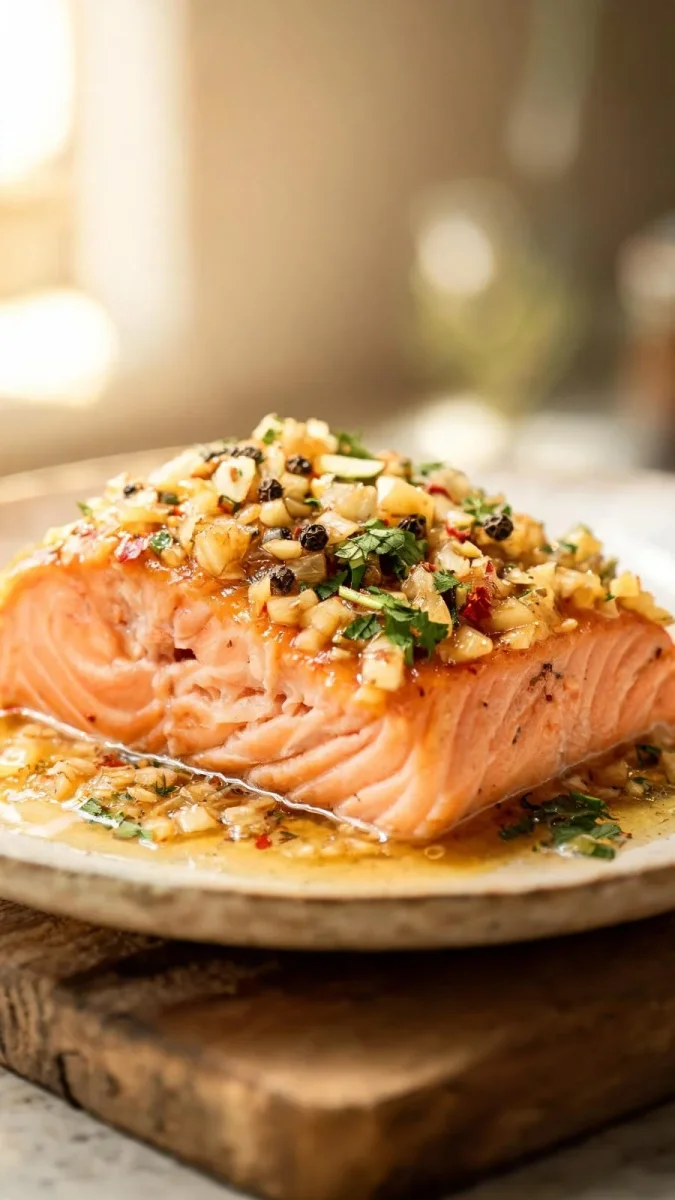
Salmon fillets bake under a buttery garlic, lemon and parsley sauce for a simple American-style main. It takes about 30 minutes and pairs easily with vegetables, potatoes or grains.
Ingredients
- 4 (170 g each; 6 oz each)salmon fillets
- 113 g (½ cup)unsalted butter, melted
- 4 cloves, finely mincedgarlic
- 30 ml (2 tablespoons)fresh lemon juice
- 8 g (2 tablespoons), finely choppedfresh parsley
- ¾ teaspoonkosher salt
- ½ teaspoonfreshly ground black pepper
- To taste (optional)lemon slices for garnish
Instructions
- 1
Prepare the oven
Heat the oven to 200°C (400°F) and line a baking sheet with parchment paper.
- 2
Dry the salmon
Blot the salmon fillets thoroughly with paper towels, then arrange them on the prepared baking sheet.
- 3
Mix the sauce
Whisk the melted butter, minced garlic, lemon juice, chopped parsley, kosher salt and black pepper together in a small bowl.
- 4
Coat the fillets
Spoon or brush the garlic butter evenly over the top and sides of each fillet.
- 5
Bake until flaky
Bake for 12–15 minutes, adjusting for the thickness of the fillets. The salmon is ready when it flakes easily with a fork.
- 6
Rest and serve
Take the tray out of the oven and leave the salmon to rest for 2–3 minutes. Serve straight away, spooning any extra pan sauce over the fillets.
What is garlic butter baked salmon?
This is a straightforward baked salmon dish in which the fish cooks beneath a rich garlic butter sauce brightened with lemon and parsley. Salmon is a familiar choice in American home cooking, and baking it on a tray keeps the preparation simple.
Drying the fillets first helps the sauce cling to their surfaces. The short bake preserves the fish’s tender texture while the butter carries the garlic and herbs.
Nutrition and macros by portion
The nutrition label shows one serving as written: 556 calories, 34g protein, 1g carbs, 46g fat.
| Portion | Adjustment | kcal | Protein | Carbs | Fat |
|---|---|---|---|---|---|
| Lighter | Use less garlic butter | 389 kcal | 24g | 1g | 32g |
| This serving | As written | 556 kcal | 34g | 1g | 46g |
| Hungry | Add potatoes or rice | 834 kcal | 51g | 2g | 69g |
Salmon provides most of the protein, while the fish and butter contribute much of the fat; the butter is the main source of saturated fat. The small amount of carbohydrate comes chiefly from the lemon juice and seasonings. Balance the plate with vegetables and, if wanted, a moderate serving of potatoes or rice.
Choosing the salmon
Fillet size: The recipe uses four portions of about 170 g each. Similar-sized pieces are more likely to finish cooking at the same time.
Thickness: The stated 12–15 minutes is a guide, since thicker pieces need longer than thinner ones. Check the fish for easy flaking rather than relying on time alone.
Making the garlic butter
Butter first: Melt the butter before whisking in the other ingredients so the sauce is easy to mix and spread. Use unsalted butter as specified, then season with the measured kosher salt.
Fresh additions: Finely minced garlic and chopped parsley distribute through the sauce, while lemon juice cuts through its richness. Whisk until the ingredients are combined before coating the fish.
Getting the texture right
Dry surface: Pat the salmon thoroughly before it goes on the tray. This helps the butter sauce stay in place rather than mixing with moisture on the fish.
Doneness: The recipe’s cue is salmon that flakes easily when tested with a fork. Begin checking at the shorter end of the baking window, especially for thinner fillets.
Timing the bake
Oven heat: Wait for the oven to reach 200°C before baking so the cooking time is more predictable. Line the tray with parchment for easier serving and clean-up.
Resting: Give the fillets 2–3 minutes after baking. This brief pause also makes it easier to spoon the remaining pan sauce over the fish.
What to serve alongside
Vegetables: Serve with green beans, broccoli or a leafy salad for a fresh contrast to the buttery sauce. A squeeze of lemon at the table works well with these sides.
Starches: Potatoes, rice or bread can make the meal more substantial and give you something to serve with the extra sauce. Add lemon slices as an optional garnish.
Recipe notes & tips
- Use fillets of similar thickness so they are more likely to finish together.
- Pat the fish dry on all sides before adding the sauce.
- Mix the sauce immediately before coating the salmon so the garlic and herbs are evenly distributed.
- Check thinner fillets after 12 minutes to avoid overbaking.
- Spoon the pan sauce over the fish just before serving.
- Add the optional lemon slices at the end for a bright garnish.
Variations
- Add dill: Swap some or all of the parsley for chopped fresh dill.
- Use lime: Replace the lemon juice with fresh lime juice for a different citrus note.
- Add chilli: Mix a little chilli flakes into the butter sauce for gentle heat.
- Include vegetables: Arrange quick-cooking vegetables around the fillets, keeping in mind they may need a different cooking time.
- Use skin-on fillets: Bake them skin-side down and serve the fish from the skin.
Common mistakes to avoid
- Wet fillets: The sauce can slide off; pat the salmon dry before arranging it on the tray.
- Uneven portions: Fillets of very different thicknesses cook at different rates; group similar-sized pieces together.
- Overbaking: Salmon can become dry; start checking at 12 minutes and use the flaking cue.
- Uneven coating: Bare patches miss the garlic butter; spread it over both the top and sides.
- Skipping the rest: Serving straight from the oven misses the suggested pause; rest the fillets for 2–3 minutes.
How to store
Refrigerate leftover salmon in a covered container and eat within 3 days. Reheat gently in a low oven or microwave just until warmed through, taking care not to overcook it.
Frequently asked questions
Can I use frozen salmon?
Yes, but thaw it completely in the refrigerator first and pat it dry before adding the sauce. The recipe’s timing is for thawed fillets.
How do I tell when the salmon is done?
The recipe’s cue is that it flakes easily with a fork. Check the thickest part, as fillet thickness affects how quickly it cooks.
Can I prepare the garlic butter ahead?
You can mix the sauce shortly before cooking and keep it covered in the refrigerator. Let it soften enough to spoon or brush over the fillets.
Can I use salted butter?
You can, but it will make the dish saltier. Reduce the added kosher salt to suit the butter and your taste.
What sides go well with this salmon?
Green vegetables or salad provide a fresh contrast, while potatoes, rice or bread make the meal more filling and work well with the pan sauce.
Cook it from the original
This recipe comes from bluerecipes.com. Their page has the author’s own photos, notes and tips — the best place to cook it from.
Open the recipe on bluerecipes.com