
Poached Cod With Fennel and Orange: A Flavorful Delight!
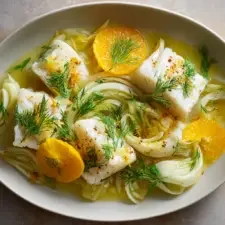
Cod is gently poached with softened fennel and a broth brightened by orange. This Mediterranean-inspired meal comes together in about 25 minutes and keeps the fish tender without needing a complicated sauce.
Ingredients
- 4cod fillets
- 1 bulbfennel, sliced
- 1orange, juiced and zested
- 480 ml (2 cups)vegetable broth
- 15 ml (1 tablespoon)olive oil
- to tastesalt and pepper
- to garnishfresh dill
Instructions
- 1
Heat the oil
Warm the olive oil in a large frying pan over a medium heat.
- 2
Soften the fennel
Add the sliced fennel and sauté until softened.
- 3
Add the liquid
Pour in the vegetable broth, orange juice and orange zest.
- 4
Bring to simmer
Bring the mixture to a simmer.
- 5
Poach the cod
Add the cod fillets, cover the pan and poach for about 10 minutes, or until the fish is cooked through.
- 6
Season the dish
Season with salt and pepper to taste.
- 7
Garnish and serve
Serve the cod garnished with fresh dill.
What is poached cod with fennel and orange?
Poached cod with fennel and orange is a light fish dish built around gentle cooking and a fragrant broth. Fennel and citrus are often found in Mediterranean-style cooking, where their aromatic, sweet and fresh flavours complement seafood.
Here, the fennel softens in olive oil before the broth and orange go in, giving the cod a flavourful cooking liquid. The method is simple, and the fish cooks directly in the same pan.
Nutrition and macros by portion
The nutrition label shows one serving as written: 220 calories, 30g protein, 6g carbs, 8g fat.
| Portion | Adjustment | kcal | Protein | Carbs | Fat |
|---|---|---|---|---|---|
| Lighter | Use less olive oil | 154 kcal | 21g | 4g | 6g |
| This serving | As written | 220 kcal | 30g | 6g | 8g |
| Hungry | Add potatoes or bread | 330 kcal | 45g | 9g | 12g |
Cod provides most of the protein, while the orange and fennel contribute some of the carbohydrates. Olive oil supplies most of the fat. To make the meal more balanced, serve it with a portion of vegetables and, if you want a more filling plate, potatoes or wholegrain bread.
Why these ingredients work
Fennel: Sliced fennel becomes tender as it sautés and adds a mild, anise-like aroma to the broth.
Orange: Juice brings sweetness and acidity, while zest adds a more concentrated citrus fragrance.
Cod: Its mild flavour suits the citrusy broth, and the fillets can be poached gently without browning.
Build the poaching broth
Start with softened fennel so it has time to release its aroma into the oil. Add the broth, juice and zest, then bring the liquid to a simmer before adding the fish.
A simmer means small, gentle bubbles rather than a vigorous boil. Keeping the liquid calm helps the cod cook evenly and makes the fillets less likely to break apart.
Check the fish for doneness
The recipe gives about 10 minutes as a guide, but the exact time depends on the thickness of the fillets. Keep the pan covered while the fish poaches, and check that the flesh is opaque and flakes easily.
Try not to handle the fillets more than needed: cod can separate into flakes as it cooks. Lift them carefully when serving.
Season and garnish
Salt and pepper go in after poaching, so you can season the fish and broth to taste. Start modestly, especially if your vegetable broth is already salty.
Fresh dill is added at the end as a garnish. Its herbal flavour gives the orange and fennel a fresh finishing note.
What to serve alongside
Serve the cod with some of the fennel and broth spooned over it. Boiled potatoes, rice or crusty bread can make the meal more substantial and soak up the citrusy liquid.
For a lighter accompaniment, add a green salad or simply cooked green vegetables. Keep the sides mild so they do not overwhelm the delicate fish.
Recipe notes & tips
- Slice the fennel evenly so the pieces soften at a similar rate.
- Zest the orange before juicing it to make the fruit easier to handle.
- Bring the broth to a gentle simmer rather than a rolling boil.
- Choose a pan large enough to hold the cod fillets in a single layer.
- Season gradually, tasting the broth before adding more salt.
- Use a fish slice to lift the cooked fillets without breaking them.
Variations
- Add lemon: Replace some of the orange juice with lemon juice for a sharper citrus flavour.
- Use parsley: Swap the dill garnish for fresh parsley.
- Add olives: Stir a few sliced olives into the broth for a savoury note.
- Include tomatoes: Add chopped tomatoes with the broth for a fruitier poaching liquid.
- Try another fish: Use another firm white fish and check it regularly for doneness.
Common mistakes to avoid
- Boiling the broth hard: A vigorous boil can break up the fish; keep it at a gentle simmer.
- Overcooking the cod: Start checking around 10 minutes, as thinner fillets may cook sooner.
- Crowding the pan: Fillets stacked on top of one another cook unevenly; arrange them in a single layer.
- Adding too much salt early: Broth can already be salty; taste before seasoning the finished dish.
- Skipping the orange zest: The zest adds a fragrant citrus note that juice alone may not provide.
How to store
Refrigerate leftovers promptly in a covered container and use within 1–2 days. Reheat gently in a covered pan over a low heat with a little broth, just until warmed through; avoid boiling, which can toughen the cod.
Frequently asked questions
How can I tell when the cod is cooked?
The flesh should be opaque and flake easily when gently tested with a fork. Check the thickest part, since fillets can vary in thickness.
Can I use frozen cod?
Yes, but thaw it fully and pat it dry before adding it to the pan. This helps it cook more evenly in the poaching liquid.
Can I make this dish ahead?
It is best cooked just before serving, as cod can become dry when reheated. You can slice the fennel and prepare the orange in advance.
What can I use instead of vegetable broth?
Fish stock or a mild chicken broth can work, though each will change the flavour. Choose a broth that is not too salty so you can season the dish to taste.
Can I use dried dill?
Yes, but use a small amount because dried dill is more concentrated and will not have the same fresh finish. Add it sparingly to the broth rather than using it as a fresh garnish.
Cook it from the original
This recipe comes from brooklynrecipes.com. Their page has the author’s own photos, notes and tips — the best place to cook it from.
Open the recipe on brooklynrecipes.com