
Butterfly Chicken
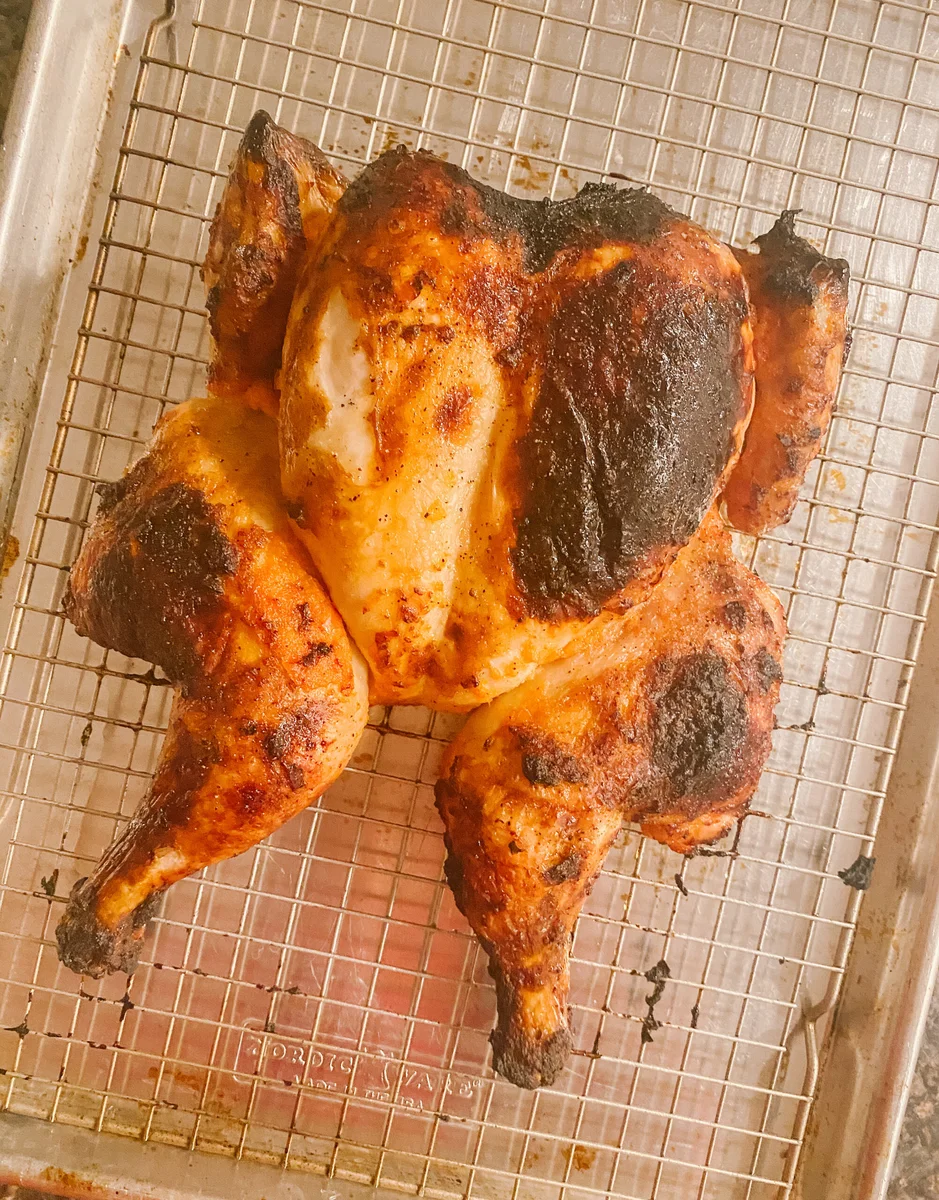
Butterflied whole chicken is coated in a smooth red pepper, garlic and honey marinade, then roasted until juicy and tender. Flattening the bird helps it cook more evenly, while the colourful marinade brings a sweet, savoury flavour.
Ingredients
- 1 wholechicken
- 1 largered pepper
- 4 clovesgarlic
- ½ largewhite onion
- 15 ml (1 tbsp)salt
- 2.5 ml (½ tsp)black pepper
- 15 ml (1 tbsp)white vinegar
- 30 ml (2 tbsp)honey
- 240 ml (1 cup)water
Instructions
- 1
Blend the marinade
Wash and dry the produce. Peel the onion and garlic, cut the onion into 4–6 pieces, and deseed and chop the red pepper into medium-sized pieces. Put everything except the chicken in a food processor and blend until smooth. Set the marinade aside.
- 2
Remove the backbone
Place the washed chicken breast-side down on a cutting board. Using sharp kitchen scissors, cut down both sides of the backbone, which runs along the centre of the bird, and remove it.
- 3
Flatten the chicken
Turn the chicken over and press it down firmly. Press across the joints as well to flatten the bird.
- 4
Marinate the chicken
Put the chicken in a large freezer bag and pour in the red pepper marinade. Seal the bag and move the marinade around so the chicken is coated all over. Refrigerate for at least 1 hour or overnight.
- 5
Prepare for roasting
After marinating, heat the oven to 190°C (375°F). Lift the chicken out of the bag and let excess marinade drip off, then pat the chicken dry.
- 6
Roast the chicken
Set the chicken on a wire rack over a baking sheet or roasting tin. Roast for 1 hour, or until the internal temperature reaches 71°C (160°F).
- 7
Rest and serve
Leave the cooked chicken to rest for 10 minutes. Cut it into portions, ideally along the joints, and serve.
What is butterfly chicken?
Butterfly chicken, also called spatchcocked chicken, has its backbone removed so the bird can be opened out and flattened. The technique is used in many cuisines for roasting or grilling a whole bird more evenly.
Here, a blended red pepper, garlic, onion, vinegar and honey marinade coats the chicken before roasting. Flattening gives the bird a more even shape, and resting after cooking helps keep the meat juicy.
Nutrition and macros by portion
The nutrition label shows one serving as written: 600 calories, 64g protein, 16g carbs, 30g fat.
| Portion | Adjustment | kcal | Protein | Carbs | Fat |
|---|---|---|---|---|---|
| Lighter | More vegetables, less chicken | 420 kcal | 45g | 11g | 21g |
| This serving | As written | 600 kcal | 64g | 16g | 30g |
| Hungry | Larger chicken portion | 900 kcal | 96g | 24g | 45g |
Most of the protein and fat come from the chicken, while the honey, onion and pepper contribute most of the carbohydrates. The salt contributes a substantial share of the sodium. Serve a chicken portion with plenty of vegetables and a moderate serving of potatoes, rice or bread to round out the plate.
Making the marinade
Smooth blend: process the pepper, garlic, onion, salt, pepper, vinegar, honey and water until no large pieces remain. This makes it easier to spread the marinade across the chicken.
Flavour balance: the pepper and onion give the sauce body, while vinegar adds sharpness and honey brings sweetness. The salt seasons both the surface and, during marinating, the meat just beneath it.
Butterflying the bird
Safe cutting: use sturdy, sharp kitchen scissors and cut alongside both sides of the backbone. Keep the chicken steady on a board, and take care around the joints.
Even shape: press the breastbone and joints until the chicken lies flatter. A flatter bird is easier to arrange on the rack and less likely to have thin sections finish long before thicker ones.
Marinating and drying
Marinating time: refrigerate the coated chicken for at least 1 hour, or leave it overnight for a longer rest. Keep it in a sealed bag or covered container so it does not touch other food.
Roasting surface: let excess marinade drip off and pat the chicken dry before it goes into the oven. This helps the outside roast rather than sitting under a wet coating.
Checking doneness
Temperature check: the recipe gives 71°C (160°F) as its target internal temperature. Check the thickest part of the breast and thigh with a food thermometer, avoiding the bone; follow local food-safety guidance if it specifies a higher temperature.
Resting: leave the chicken for 10 minutes before carving. The rest also makes it easier to portion neatly along the joints.
What to serve with it
Fresh sides: serve with a crisp green salad, steamed green vegetables or slaw to balance the rich roasted chicken and sweet marinade.
Heartier plate: potatoes, rice or crusty bread can soak up the juices and make the meal more substantial. Add a vegetable side for colour and contrast.
Recipe notes & tips
- Use kitchen scissors designed for poultry to make cutting out the backbone easier.
- Save the removed backbone for stock if you like.
- Blend the marinade until smooth so it coats the chicken evenly.
- Turn the chicken in the sealed bag once during marinating if convenient.
- Use a wire rack over a tray to let hot air circulate beneath the bird.
- Check the temperature in more than one thick section, without touching bone.
Variations
- Add smoked paprika: blend a little into the marinade for a smoky note.
- Use lemon: replace some of the vinegar with lemon juice for a brighter flavour.
- Add chilli: blend in fresh chilli or chilli flakes for heat.
- Use fresh herbs: add thyme or rosemary leaves to the marinade.
- Grill outdoors: cook the flattened chicken over indirect heat, checking its temperature as it cooks.
Common mistakes to avoid
- Cutting through the backbone: cut along both sides of it so it can be removed cleanly.
- Leaving the chicken uneven: press the joints and breastbone until the bird lies flat.
- Marinating at room temperature: keep the chicken refrigerated throughout the marinating time.
- Roasting with a wet surface: let excess sauce drip off and pat the chicken dry first.
- Guessing doneness: check the thickest meat with a thermometer rather than relying only on the clock.
- Carving straight away: rest the chicken for 10 minutes before cutting.
How to store
Refrigerate leftover chicken in a covered container within 2 hours and use within 3–4 days. Reheat portions until steaming hot throughout, or enjoy the cold meat in salads or sandwiches.
Frequently asked questions
Can I marinate the chicken overnight?
Yes. Keep it covered or sealed in a bag in the fridge overnight, as the method allows.
Can I make the marinade without a food processor?
A blender can also make the mixture smooth. If using a stick blender, chop the pepper and onion into smaller pieces first.
How can I tell when the chicken is done?
Use a food thermometer in the thickest part of the breast and thigh, avoiding bone. The method specifies 71°C (160°F); follow local food-safety guidance if it calls for a higher temperature.
Can I cook it without removing the backbone?
Yes, but it will no longer be butterflied and the cooking time may differ. Check the temperature in the thickest parts rather than relying on the stated hour.
Why pat the chicken dry before roasting?
Removing excess surface moisture helps the outside roast rather than steam. Letting excess marinade drip away also reduces the amount of sauce on the roasting tray.
Can I use the leftover marinade as a sauce?
Do not serve marinade that has touched raw chicken unless it is thoroughly cooked first. The safest approach is to discard it after marinating.
Cook it from the original
This recipe comes from glutenfreetreatsandeats.com. Their page has the author’s own photos, notes and tips — the best place to cook it from.
Open the recipe on glutenfreetreatsandeats.com