
Gluten Free Buns
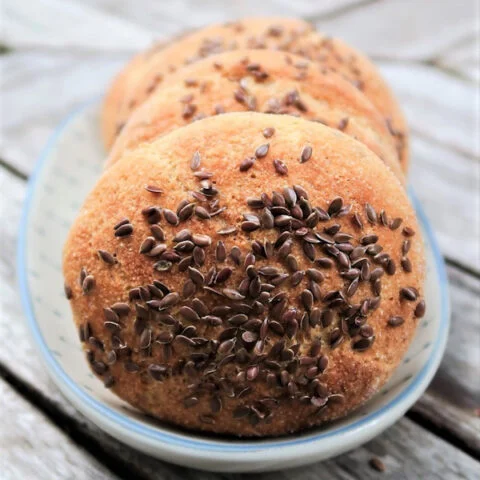
These soft gluten-free buns combine rice, chickpea and coconut flours with tapioca starch and psyllium for a dough that can be shaped by hand. Make them when you want freshly baked rolls for the table, with a simple seeded finish.
Ingredients
- 110 grice flour
- 70 gchickpea flour
- 40 gtapioca starch
- 25 gcoconut flour
- 10 gpsyllium husk
- 4 gdried yeast
- 1/2 teaspoonsalt
- 1 teaspoonhoney
- 1egg
- 1 1/2 tablespoons (22.5 ml)olive oil
- 1 teaspoonapple cider vinegar
- 240 ml (1 cup)warm plant milk
- 2 tablespoonsflax seeds or other seeds, for decoration
- 2 tablespoons (30 ml)milk, for brushing
- 3 tablespoonsoat flour or rice flour, for flouring the surface and shaping
Instructions
- 1
Mix the dough
Combine all the dry ingredients in a large bowl. Add the olive oil, honey, egg, warm milk and apple cider vinegar, then mix with a spatula until combined. Cover the bowl with a tea towel and leave the dough to rise at room temperature for about 40 minutes.
- 2
Shape the buns
Turn the dough out onto a well-floured surface and knead until smooth, adding flour as needed to make it less sticky. Roll the dough and divide it into 4–5 pieces, shape each into a ball and place them on a baking tray. Cover with a tea towel and leave to rest for about 30 minutes.
- 3
Heat the oven
Meanwhile, preheat the oven to 190°C.
- 4
Brush and bake
Carefully brush the top of each bun with milk and sprinkle over the flax seeds. Bake at 190°C for about 20–25 minutes. Remove the buns from the oven and transfer them to a wire rack to cool.
What are gluten-free buns?
These are small, yeast-raised rolls made without wheat flour. Gluten-free baking draws on a range of flour and starch combinations rather than relying on wheat’s gluten for structure.
Here, rice and chickpea flours provide the base, while tapioca starch and psyllium help the dough hold together. The result is a hand-shaped bun finished with seeds.
Nutrition and macros by portion
The nutrition label shows one serving as written: 380 calories, 9g protein, 61g carbs, 12g fat.
| Portion | Adjustment | kcal | Protein | Carbs | Fat |
|---|---|---|---|---|---|
| Lighter | Smaller bun, extra vegetables | 266 kcal | 6g | 43g | 8g |
| This serving | As written | 380 kcal | 9g | 61g | 12g |
| Hungry | Larger bun portion | 570 kcal | 14g | 92g | 18g |
The flours and honey provide most of the carbohydrates, while the olive oil and seeds contribute much of the fat; the egg and chickpea flour supply some protein. Serve a bun with vegetables and a protein-rich accompaniment for a more balanced plate.
The flour blend
Rice flour: this makes up the largest share of the blend and keeps the flavour fairly mild. Chickpea and coconut flours add their own character, so measure each carefully.
Tapioca and psyllium: tapioca starch contributes to the dough’s structure, while psyllium helps bind the mixture. Distribute them evenly through the dry ingredients before adding the liquids.
Getting the dough ready
Warm milk: use milk that feels warm rather than hot when you touch it. The method calls for it alongside the yeast, honey, egg, oil and vinegar.
First rise: cover the bowl and leave it at room temperature for about 40 minutes. The dough may not behave like a wheat dough, so follow the stated rest time rather than waiting for a particular rise in size.
Shaping without sticking
Floured surface: use the reserved oat or rice flour as you knead and shape. Add it as needed to make the dough smoother and less sticky, rather than tipping it all in at once.
Even pieces: divide the dough into 4–5 portions and shape each into a ball. Leave space between them on the baking tray, then cover for the 30-minute rest.
Baking cues
Oven temperature: bake at 190°C for about 20–25 minutes. The recipe gives a time range, so check the buns as they approach the shorter end.
Cooling: transfer the baked buns to a wire rack. Letting them cool there keeps air moving around them instead of trapping steam underneath.
Serving ideas
Serve the buns alongside soup, a salad or a main meal, or split them for sandwiches once cool. Their mild flavour works with both savoury fillings and simple spreads.
The flax or other seeds on top add a little crunch and make the buns easy to distinguish when serving.
Recipe notes & tips
- Mix the dry ingredients thoroughly so the psyllium and yeast are spread through the flour blend.
- Keep the milk warm, not hot, when adding it to the dough.
- Dust the work surface and your hands with the reserved flour to make shaping easier.
- Add the reserved flour gradually while kneading, stopping when the dough is smooth and less sticky.
- Brush the tops gently so the shaped buns keep their form.
- Cool the buns on a wire rack before storing or slicing.
Variations
- Change the topping: use another type of seed in place of flax seeds.
- Choose the dusting flour: use oat flour or rice flour for the surface and shaping.
- Try another plant milk: use a different warm vegetable milk in the same quantity.
- Serve as sandwich rolls: split cooled buns and fill just before serving.
Common mistakes to avoid
- Adding all the flour at once: work in the reserved flour as needed so the dough does not become unnecessarily dry.
- Using hot milk: use warm milk so it is not too hot for the yeast.
- Skipping the rests: allow about 40 minutes for the first rise and about 30 minutes after shaping.
- Overworking the shape: form the portions into balls gently to keep them neat.
- Brushing roughly: coat the tops carefully so the buns do not lose their shape.
- Leaving buns on the hot tray: transfer them to a wire rack after baking so they can cool.
How to store
Once completely cool, store the buns in an airtight container at room temperature and use within 2 days. Warm them briefly in the oven before serving; avoid sealing them away while still warm.
Frequently asked questions
Can I use a different milk?
The ingredient list specifies warm vegetable milk for the dough and milk for brushing. Another plant milk can be used, though its flavour may vary.
Can I use a different flour for dusting?
Yes. The recipe allows either oat flour or rice flour for flouring the surface and shaping the rolls.
How many buns does the recipe make?
The method divides the dough into 4–5 pieces. The recipe is listed as four servings.
How do I know when the buns are baked?
Bake them at 190°C for about 20–25 minutes, following the recipe’s time range. Transfer them to a wire rack when done.
Can I leave off the seeds?
Yes. The seeds are used as a topping, so you can omit them or choose another seed for decoration.
Cook it from the original
This recipe comes from glutenlessyes.com. Their page has the author’s own photos, notes and tips — the best place to cook it from.
Open the recipe on glutenlessyes.com