
Egg Makhani (Egg Butter Masala)
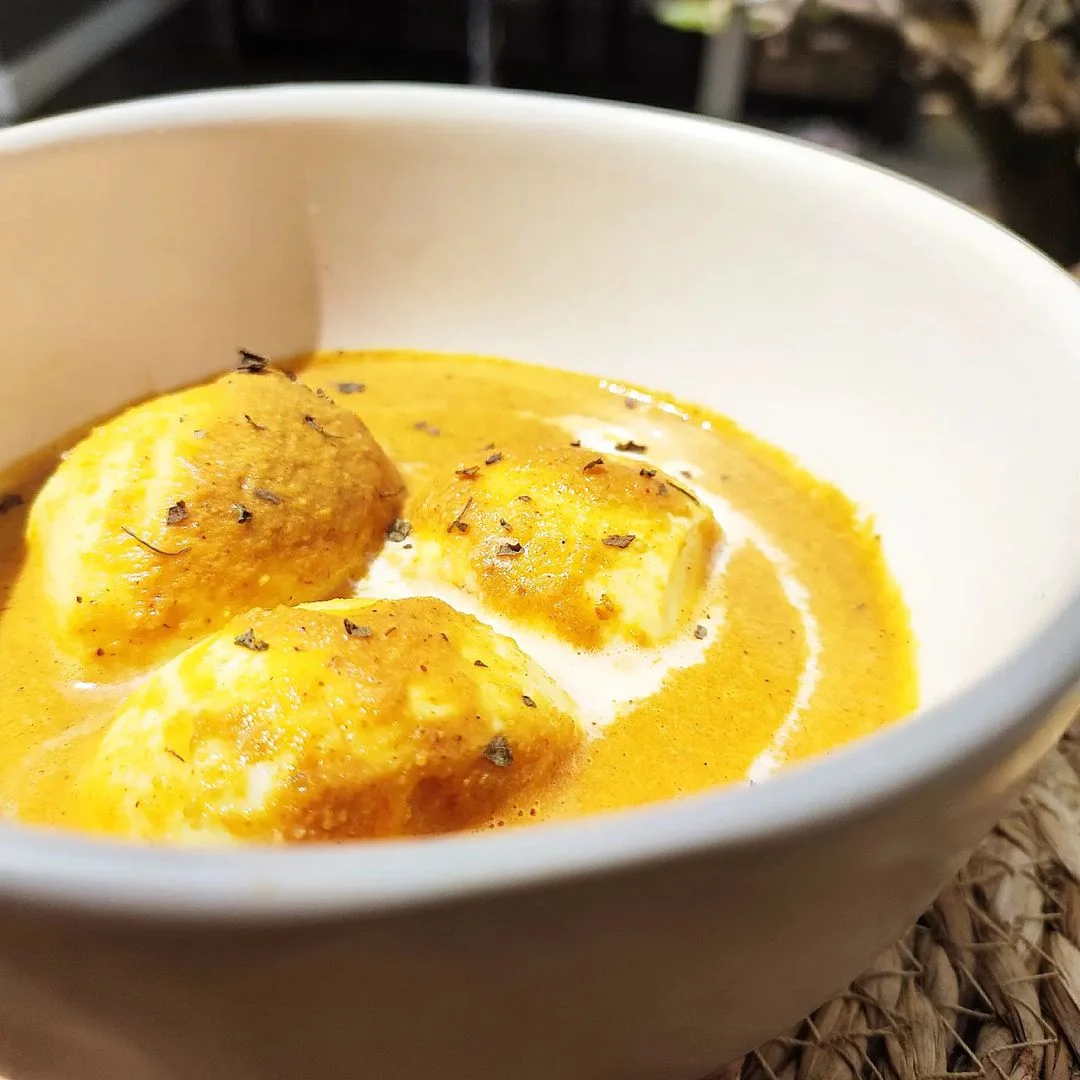
Egg Makhani is a rich, gently spiced curry of boiled eggs in a smooth tomato, onion and cashew gravy. It makes a comforting main meal, with browned eggs and a final swirl of cream adding extra richness.
Ingredients
- 4–6eggs, hard-boiled, peeled and pricked
- 42 g (3 tbsp), dividedbutter
- 150 g (1 cup), dicedonion
- 225 g (1½ cups), dicedtomatoes
- 65 g (½ cup)cashews
- 5 g (1 tsp), divided, or to tastesalt
- 2.5 ml (½ tsp)Kashmiri chilli powder
- 2.5 ml (½ tsp)turmeric powder
- 120 ml (½ cup), coldwater
- 3cloves
- 3cardamom pods
- 1cinnamon stick
- 2.5 ml (½ tsp), gratedginger
- 2.5 ml (½ tsp), gratedgarlic
- 2.5 ml (½ tsp)garam masala
- 5 ml (1 tsp)coriander powder
- 1.25 ml (¼ tsp)kasuri methi (dried fenugreek leaves), plus extra optional for garnish
- 15 ml (1 tbsp)cream
Instructions
- 1
Brown the eggs
Heat 2 tbsp of the butter in a pan over medium-high heat. Add the pricked eggs and turn them frequently until golden, then set aside.
- 2
Cook the vegetables
In the same pan, add the onion, tomatoes, cashews and ½ tsp salt. Cook until the tomatoes begin to break down.
- 3
Add the spices
Stir in the chilli powder and turmeric, then cook for 2 minutes.
- 4
Blend the sauce
Pour the cold water into a blender. Add the tomato mixture once it has cooled slightly, then blend until smooth.
- 5
Melt the butter
Use the same pan to melt the remaining 1 tbsp butter over medium-low heat.
- 6
Fry whole spices
Add the cloves, cardamom and cinnamon stick, and fry for 30 seconds.
- 7
Simmer the gravy
Add the ginger and garlic and cook for 1 minute. Stir in the blended purée, the remaining ½ tsp salt, garam masala and coriander powder.
- 8
Finish with eggs
Cook until the gravy reaches your preferred thickness, then return the eggs to the pan. Taste and adjust the seasoning.
- 9
Add fenugreek
During the final 1 minute of cooking, add the kasuri methi and stir it through.
- 10
Garnish and serve
Take the pan off the heat. Add extra kasuri methi if you like, and drizzle the cream over the curry just before serving.
What is Egg Makhani?
Egg Makhani, also called egg butter masala, brings hard-boiled eggs together with a spiced, tomato-based gravy enriched with butter and cashews. It draws on the makhani style of North Indian cooking, known for its smooth, buttery sauces.
Here, the sauce is built from cooked onion, tomato and cashews, then blended before whole spices are fried separately. That order gives the curry a silky base with fragrant spice notes.
Nutrition and macros by portion
The nutrition label shows one serving as written: 305 calories, 11g protein, 18g carbs, 22g fat.
| Portion | Adjustment | kcal | Protein | Carbs | Fat |
|---|---|---|---|---|---|
| Lighter | Use less butter and cream | 214 kcal | 8g | 13g | 15g |
| This serving | As written | 305 kcal | 11g | 18g | 22g |
| Hungry | Add an extra egg | 458 kcal | 17g | 27g | 33g |
The eggs contribute most of the protein, while cashews and butter provide much of the fat; the tomatoes and onion supply most of the carbohydrates. Serve it with a generous vegetable side, and choose a moderate portion of rice or bread to round out the plate.
Why the cashews matter
Cashews add body and a mild, creamy flavour to the tomato mixture once it is blended. Blend until the sauce is smooth, since any remaining pieces can make the gravy feel grainy.
Cold water goes into the blender with the slightly cooled mixture. Letting it cool briefly helps make blending easier and less messy.
Get colour on the eggs
Pricking the peeled eggs gives them small openings before they go into the pan. Turn them often as they cook in butter so they brown evenly rather than catching on one side.
Set them aside once golden; they return to the gravy later, so there is no need to cook them further at this stage.
Build the spice base
Whole spices: fry the cloves, cardamom and cinnamon in the remaining butter for 30 seconds, just until fragrant.
Ginger and garlic: cook these for 1 minute before adding the purée. This brief step softens their raw edge without letting them brown too much.
Adjust the gravy
Simmer the blended sauce until it reaches the thickness you like, stirring as needed to stop it sticking. It should coat a spoon while remaining loose enough to serve with rice or bread.
If it thickens more than you want, stir in a small splash of water. Add the eggs back once the gravy is ready so they heat through without being overcooked.
Finish with kasuri methi
Dried fenugreek leaves bring a distinctive savoury aroma, so add them during the final minute rather than simmering them for a long time. Crumble them lightly between your fingers as you add them to release their fragrance.
The cream is added off the heat, just before serving. This keeps the finish smooth and lets you control how much richness goes into each portion.
What to serve alongside
Plain rice, naan or another flatbread works well for scooping up the thick gravy. A simple vegetable side or a crisp salad can balance the buttery sauce.
Serve the curry as soon as it is ready, while the eggs are warm and the sauce is smooth.
Recipe notes & tips
- Prick the eggs gently so they do not split while browning.
- Turn the eggs frequently for even colour.
- Cool the tomato mixture slightly before blending it.
- Stir the gravy as it thickens to prevent it catching on the pan.
- Taste after adding the eggs, then adjust the salt if needed.
Variations
- More heat: Add extra Kashmiri chilli powder to the tomato mixture.
- Milder curry: Reduce the chilli powder while keeping the other spices as listed.
- Extra creamy: Add a little more cream just before serving.
- No cashews: Leave them out, noting that the gravy will be less rich and thick.
- More fenugreek: Crumble a little extra kasuri methi over the finished curry.
Common mistakes to avoid
- Crowding the pan: Brown the eggs in batches if they do not have room to turn easily.
- Blending while very hot: Let the tomato mixture cool slightly before transferring it to the blender.
- Scorching the whole spices: Keep them to a 30-second fry over medium-low heat.
- Over-reducing the sauce: Stop cooking when the gravy reaches your preferred consistency, or loosen it with a splash of water.
- Adding fenugreek too early: Stir it in during the final minute so its aroma stays noticeable.
How to store
Refrigerate leftovers in an airtight container for up to 3 days. Reheat gently in a pan until piping hot, adding a little water if the gravy has thickened; avoid boiling it hard.
Frequently asked questions
Can I make the gravy ahead?
Yes. Prepare and blend the tomato-cashew mixture ahead, then refrigerate it and finish the sauce with the whole spices, seasonings and eggs when you are ready to serve.
Why are the eggs pricked?
The recipe pricks the peeled eggs before frying. Do this gently so the shells are already removed and the eggs remain intact.
How can I tell when the gravy is thick enough?
It should coat the eggs and a spoon while still being easy to serve. Cook it to your preference, then loosen it with a splash of water if needed.
Can I use fresh fenugreek instead of kasuri methi?
This recipe is written for dried fenugreek leaves, which have a concentrated aroma. Fresh leaves will give a different result, so use them as a separate variation rather than a direct measured swap.
What should I serve with egg butter masala?
Serve it with rice, naan or another flatbread. A simple vegetable side or salad makes a good accompaniment.
Can I freeze leftovers?
The sauce can be frozen, but boiled eggs may become rubbery after freezing and reheating. For the best texture, refrigerate leftovers and eat them within 3 days.
Cook it from the original
This recipe comes from fooooods.com. Their page has the author’s own photos, notes and tips — the best place to cook it from.
Open the recipe on fooooods.com