
Swirled Garlic Herb Cheese Bread with Sharp Cheddar
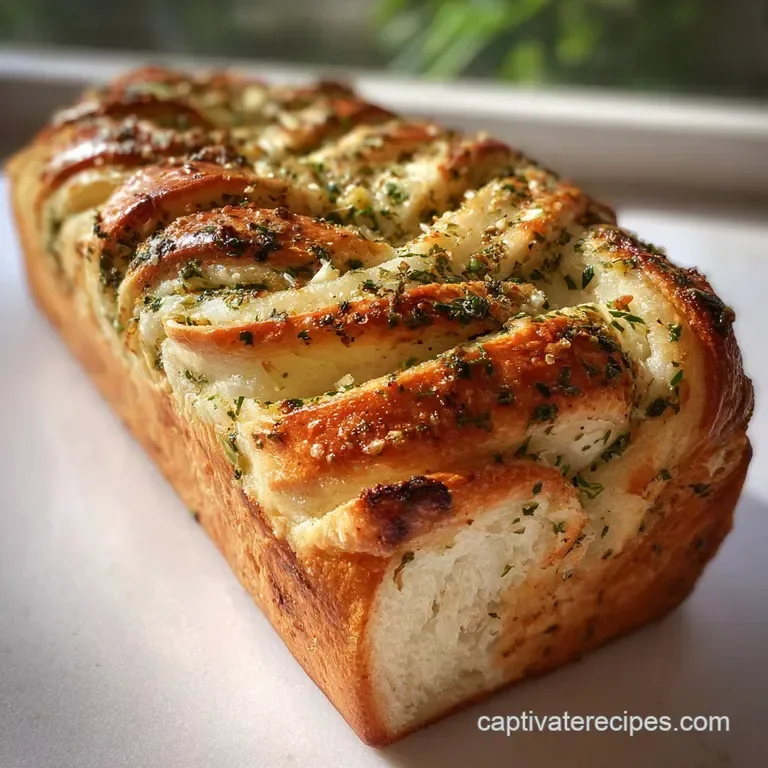
This American-style braided loaf wraps sharp cheddar in a soft, olive-oil dough swirled with garlic, parsley and rosemary. It makes a savoury centrepiece for sharing, with crisp golden edges and cheese in every slice.
Ingredients
- 500 gbread flour
- 300 ml at 40.5°C (105°F)warm water
- 7 ginstant yeast
- 15 ghoney
- 10 gfine sea salt
- 30 mlextra virgin olive oil, for the dough
- 45 mlextra virgin olive oil, for the filling
- 4 clovesfresh garlic, minced
- 15 gfresh parsley, finely chopped
- 1 tspfresh rosemary, minced
- 150 gaged sharp cheddar cheese, freshly grated
- 0.5 tspred pepper flakes
- 1 largeegg
- 1 tspwater
- 1 tspflaky sea salt
Instructions
- 1
Wake the yeast
In a large mixing bowl or stand mixer bowl, stir together the warm water, honey and instant yeast. Leave for 5–10 minutes, until foamy.
- 2
Knead the dough
Add the bread flour, fine sea salt and 30 ml olive oil to the yeast mixture. Knead with a dough hook on medium-low for 8–10 minutes, until smooth, elastic and slightly tacky.
- 3
Let it rise
Transfer the dough to a lightly greased bowl and cover with a damp cloth. Leave in a warm, draught-free place for 1 hour 15 minutes, or until doubled in size.
- 4
Mix the filling
While the dough rises, combine 45 ml olive oil with the minced garlic, chopped parsley, rosemary and red pepper flakes in a small bowl.
- 5
Roll the dough
Punch down the risen dough and turn it onto a lightly floured surface. Roll it into a rectangle about 30 × 45 cm (12 × 18 inches).
- 6
Fill and shape
Spread the garlic herb oil evenly over the dough and scatter the grated cheddar on top. Roll it tightly into a log, starting from a short side.
- 7
Braid the loaf
With a sharp knife or bench scraper, cut the log in half lengthways to reveal the layers. Twist the two pieces together into a braid and place it in a parchment-lined 23 × 13 cm (9 × 5 inch) loaf pan.
- 8
Brush and season
Whisk the egg with 1 teaspoon water. Brush the top of the loaf generously with the egg wash, then sprinkle with flaky sea salt.
- 9
Bake and cool
Bake in an oven preheated to 190°C (375°F) for 30 minutes, or until the internal temperature reaches 88°C (190°F) and the crust is deep golden brown. Cool for at least 20 minutes before slicing.
What is swirled garlic herb cheese bread?
This savoury yeast loaf takes the soft, enriched texture of homemade bread and layers it with garlic oil, herbs and sharp cheddar. The braid exposes the filling as it bakes, giving the loaf its distinctive swirled appearance.
Its style fits the American tradition of generous, shareable breads, while the simple dough keeps the focus on the savoury filling. Sharp, aged cheddar brings enough flavour to stand up to the garlic and herbs.
Nutrition and macros by portion
The nutrition label shows one serving as written: 318 calories, 11g protein, 39g carbs, 13g fat.
| Portion | Adjustment | kcal | Protein | Carbs | Fat |
|---|---|---|---|---|---|
| Lighter | Smaller bread slice | 223 kcal | 8g | 28g | 9g |
| This serving | As written | 318 kcal | 11g | 39g | 13g |
| Hungry | Larger bread portion | 477 kcal | 17g | 59g | 19g |
The flour supplies most of the carbohydrates, while olive oil and cheddar contribute much of the fat; the cheddar also provides most of the protein. Pair a slice with a generous salad or vegetable soup for a more balanced plate.
Why the dough needs kneading
Flour and salt: adding these with the oil after the yeast mixture starts foaming gives the dough its structure and seasoning. Bread flour is suited to a loaf that needs to stretch into a long rectangle and hold its braid.
Kneading: work the dough for the full 8–10 minutes, until it feels elastic and just slightly tacky. If it sticks heavily to the bowl, resist adding lots of extra flour; a lightly floured work surface is enough for shaping.
Building the garlic herb filling
Herb oil: mixing the garlic, parsley, rosemary and pepper flakes into the olive oil helps spread the flavour across the dough. Keep the layer even so the loaf can be rolled without large pockets of filling slipping out.
Cheddar: freshly grate the aged cheese so it scatters readily over the oil. Sharp cheddar gives the bread a pronounced savoury flavour, while the braid distributes it through the slices.
How to shape the braid
The cut: after rolling the dough around its filling, slice the log lengthways to expose the layers. Use a sharp knife or bench scraper and cut cleanly so the strands remain easy to handle.
The twist: turn the two strands together with their cut sides facing upwards as much as possible. Some filling may show or escape, but the loaf pan will help hold the shape as it bakes.
Checking the rise and bake
First rise: judge the dough by its size rather than the clock alone; it should double during the 1 hour 15 minute rise in a warm, draught-free place. A cool room can slow the process.
Doneness: the loaf should have a deep golden crust, and the centre should reach 88°C (190°F). Let it cool for at least 20 minutes so the crumb can settle before you slice it.
Serving the bread
Serve slices warm or at room temperature alongside soup, a leafy salad or a simple tomato dish. Its garlic, herbs and cheddar also make it a natural addition to a savoury sharing board.
For neater slices, use a serrated bread knife and let the loaf cool for the full recommended time. If serving warm, cut only what you need and keep the rest loosely covered.
Recipe notes & tips
- Use water at about 40.5°C (105°F) so it is warm without being excessively hot.
- Give the dough enough time to double during its first rise rather than relying only on the stated time.
- Grate the cheddar just before assembling so it is easy to scatter evenly.
- Keep the dough rectangle lightly floured to make rolling and shaping easier.
- Use a thermometer to check the centre of the loaf for 88°C (190°F).
- Allow at least 20 minutes of cooling before cutting to help the slices hold their shape.
Variations
- More herbs: Increase the parsley or rosemary in the filling for a more pronounced herbal flavour.
- Extra heat: Add a little more red pepper flakes to the oil mixture for a spicier loaf.
- Different cheese: Replace the cheddar with another aged, firm cheese that can be grated.
- Milder filling: Reduce the red pepper flakes for a gentler savoury flavour.
- Seeded top: Scatter seeds over the egg wash before baking for added crunch.
Common mistakes to avoid
- Water too hot: Excess heat can harm the yeast; use water at about 40.5°C (105°F).
- Rushed rising: The dough may be difficult to shape if it has not doubled; give it more time in a warm, draught-free place.
- Uneven filling: Thick patches can make rolling awkward; spread the herb oil and cheese across the dough evenly.
- Loose roll: A slack log can separate while you cut and twist it; roll it tightly from the short side.
- Cutting too soon: The crumb may compress when the loaf is hot; wait at least 20 minutes before slicing.
- Guessing doneness: A browned crust alone may not show whether the centre is ready; check for 88°C (190°F) inside.
How to store
Once completely cool, store the bread in an airtight container at room temperature and eat within 2 days. Rewarm slices briefly in a low oven, or freeze well-wrapped portions for up to 2 months and thaw before reheating.
Frequently asked questions
Can I knead the dough by hand?
Yes. Knead it on a lightly floured surface until it is smooth, elastic and slightly tacky, using the mixer’s 8–10 minute kneading time as a guide.
How can I tell when the dough has doubled?
Look for a clear increase in volume, roughly twice its starting size. If it has not reached that point after 1 hour 15 minutes, let it continue rising.
Can I prepare the loaf ahead?
The recipe gives a single rise and does not specify an overnight method. For best results, follow the stated rise, shape and bake sequence.
Why is the log cut lengthways?
Cutting it lengthways reveals the layers of herb oil and cheese. Twisting the two exposed strands together creates the braided, swirled look.
What temperature should the loaf reach inside?
The recipe calls for an internal temperature of 88°C (190°F), along with a deep golden-brown crust.
Can I freeze the bread?
Yes. Cool it completely, wrap it well and freeze for up to 2 months. Thaw before warming or slicing.
Cook it from the original
This recipe comes from captivaterecipes.com. Their page has the author’s own photos, notes and tips — the best place to cook it from.
Open the recipe on captivaterecipes.com