
Gluten Free Funfetti Cookies
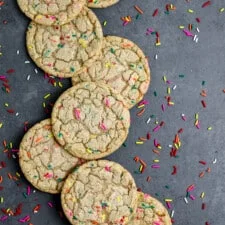
These gluten-free funfetti cookies are soft and chewy, with buttery dough, a hint of almond and plenty of rainbow sprinkles. They’re easy to bake for a celebration or whenever you fancy a colourful homemade treat.
Ingredients
- 113 g (1/2 cup)unsalted butter, at room temperature
- 150 g (3/4 cup)granulated sugar
- 110 g (1/2 cup, packed)dark brown sugar
- 1egg, at room temperature
- 6 ml (1 1/4 teaspoons)pure vanilla extract
- 0.6 ml (1/8 teaspoon)almond extract
- 210 g (1 3/4 cups)gluten-free 1:1 flour
- 5 g (2 teaspoons)cornflour
- 4 g (1 teaspoon)baking powder
- 2.5 g (1/2 teaspoon)bicarbonate of soda
- 3 g (1/2 teaspoon)fine sea salt
- 40 g (1/4 cup)rainbow jimmies sprinkles
Instructions
- 1
Heat the oven
Preheat the oven to 175°C (350°F). Line a baking sheet with parchment paper and set it aside.
- 2
Cream the sugars
Using a stand mixer with the paddle attachment, beat the butter, granulated sugar and brown sugar on medium-high for 2 to 3 minutes, until light and fluffy. Add the egg, vanilla and almond extract, then mix on low until combined.
- 3
Mix the dry ingredients
In a medium bowl, whisk together the gluten-free flour, cornflour, baking powder, bicarbonate of soda and salt.
- 4
Bring the dough together
With the mixer on low, add the flour mixture and mix just until the dough starts to come together. Add the sprinkles and pulse until evenly combined.
- 5
Scoop the cookies
Use a number 24 cookie scoop to portion the dough onto the prepared baking sheet, leaving about 5 cm (2 inches) between portions. Arrange 6 cookies on each sheet.
- 6
Bake and cool
Bake for 11 to 13 minutes, until the edges are just lightly golden. Leave the cookies on the baking sheet for 5 minutes, then transfer them to a wire rack to cool completely.
What are funfetti cookies?
Funfetti cookies take their cue from the colourful sprinkle-studded cake popular in the United States. This version turns that party-cake idea into a chewy biscuit, with vanilla and a little almond extract in the dough.
A gluten-free 1:1 flour blend makes the recipe straightforward to mix and bake. Brown sugar adds moisture and a deeper flavour, while the sprinkles bring colour throughout.
Nutrition and macros by portion
The nutrition label shows one serving as written: 205 calories, 2g protein, 35g carbs, 8g fat.
| Portion | Adjustment | kcal | Protein | Carbs | Fat |
|---|---|---|---|---|---|
| Lighter | Make smaller cookies | 144 kcal | 1g | 25g | 6g |
| This serving | As written | 205 kcal | 2g | 35g | 8g |
| Hungry | Serve two cookies | 308 kcal | 3g | 53g | 12g |
The sugars and gluten-free flour provide most of the carbohydrates, while butter supplies most of the fat; the egg contributes a little protein. Pair a cookie with fruit or yoghurt for a more varied snack.
Choosing the ingredients
Flour blend: use a gluten-free 1:1 blend intended to replace plain flour in baking. Different blends can absorb moisture differently, so measure it carefully rather than packing it into the cup.
Sprinkles: rainbow jimmies hold their shape better in cookie dough than very fine decorative sugar. Check the packet if you need the sprinkles themselves to be gluten-free.
Creaming the butter and sugars
Room-temperature butter: it should give slightly when pressed but still feel cool, which helps it beat smoothly with the sugars. The 2 to 3 minutes of creaming adds air and gives the cookies a lighter texture.
Egg: adding it after creaming helps the wet ingredients combine evenly. Mix on low once it goes in, rather than continuing at high speed.
Mixing without overworking
Dry ingredients: whisking the flour, cornflour, raising agents and salt first distributes them through the dough. This helps avoid pockets of bicarbonate of soda or salt.
Sprinkles: mix them in only until distributed. Once the flour is added, stop as soon as the dough comes together so the cookies stay tender.
Getting the bake right
Spacing: leave about 5 cm between scoops so the cookies have room to spread. The recipe makes about 13 cookies, so bake in batches if needed rather than crowding the tray.
Doneness: look for edges that are just lightly golden; the centres may still look soft. The cookies firm up as they cool, so give them the full 5 minutes on the baking sheet before moving them.
Serving and timing
These cookies are especially good once fully cooled, when their edges have set and their centres remain chewy. They work well on a party platter or alongside tea, coffee or a glass of milk.
The method gives a baking time of 11 to 13 minutes per tray, plus 5 minutes of cooling on the sheet. Allow extra time if you need to bake more than one batch.
Recipe notes & tips
- Bring the butter and egg to room temperature before mixing for a smoother dough.
- Use a kitchen scale for the flour, since cup measurements can vary with how it is filled.
- Scrape down the mixer bowl if butter or sugar remains stuck to its sides.
- Bake one test cookie first if you are unsure how your flour blend spreads.
- Let the tray cool before using it for another batch so the dough does not start softening prematurely.
Variations
- More vanilla: replace the almond extract with an equal amount of vanilla extract for a simpler flavour.
- Different sprinkles: use another colour mix of jimmies to suit the occasion.
- Chocolate chips: swap some of the sprinkles for chocolate chips while keeping the total add-ins similar.
- Citrus note: add a little finely grated lemon zest to the butter and sugars.
- Larger cookies: use a bigger scoop and allow extra baking time, checking for lightly golden edges.
Common mistakes to avoid
- Cold butter: it will not cream readily with the sugars; let it soften at room temperature first.
- Too much flour: excess flour can make the cookies dry; weigh the amount rather than pressing it into a cup.
- Overmixing the dough: prolonged mixing after adding flour can make the cookies less tender; stop when it comes together.
- Crowded tray: cookies may run into one another; keep about 5 cm between portions and bake in batches.
- Moving them too soon: warm cookies can break; leave them on the baking sheet for 5 minutes before transferring.
How to store
Once completely cool, store the cookies in an airtight container at room temperature for up to 4 days. To refresh one, warm it briefly in a low oven and let it cool slightly before eating.
Frequently asked questions
Can I make the dough without a stand mixer?
Yes. Use a hand mixer to cream the butter and sugars, then mix in the egg and extracts. Stir in the flour mixture and sprinkles by hand until just combined.
Do I need to chill the dough?
The method does not call for chilling, so you can scoop and bake the dough straight away. If it becomes very soft while handling, a short chill can make it easier to portion.
How can I tell when the cookies are done?
The edges should be just lightly golden after 11 to 13 minutes. The centres can still look soft; they will set further as the cookies cool.
Can I use a different gluten-free flour?
The recipe is written for a gluten-free 1:1 blend, which is designed for direct substitution. Other blends may behave differently, especially if they have a different starch or binder mix.
Are these cookies suitable for someone with coeliac disease?
Use a flour blend and sprinkles labelled gluten-free, and check all ingredient labels for possible gluten sources. Avoid cross-contamination from work surfaces, utensils and baking trays.
Cook it from the original
This recipe comes from glutenlessapron.com. Their page has the author’s own photos, notes and tips — the best place to cook it from.
Open the recipe on glutenlessapron.com