
Indian Style Coconut Curry Salmon Recipe | Creamy
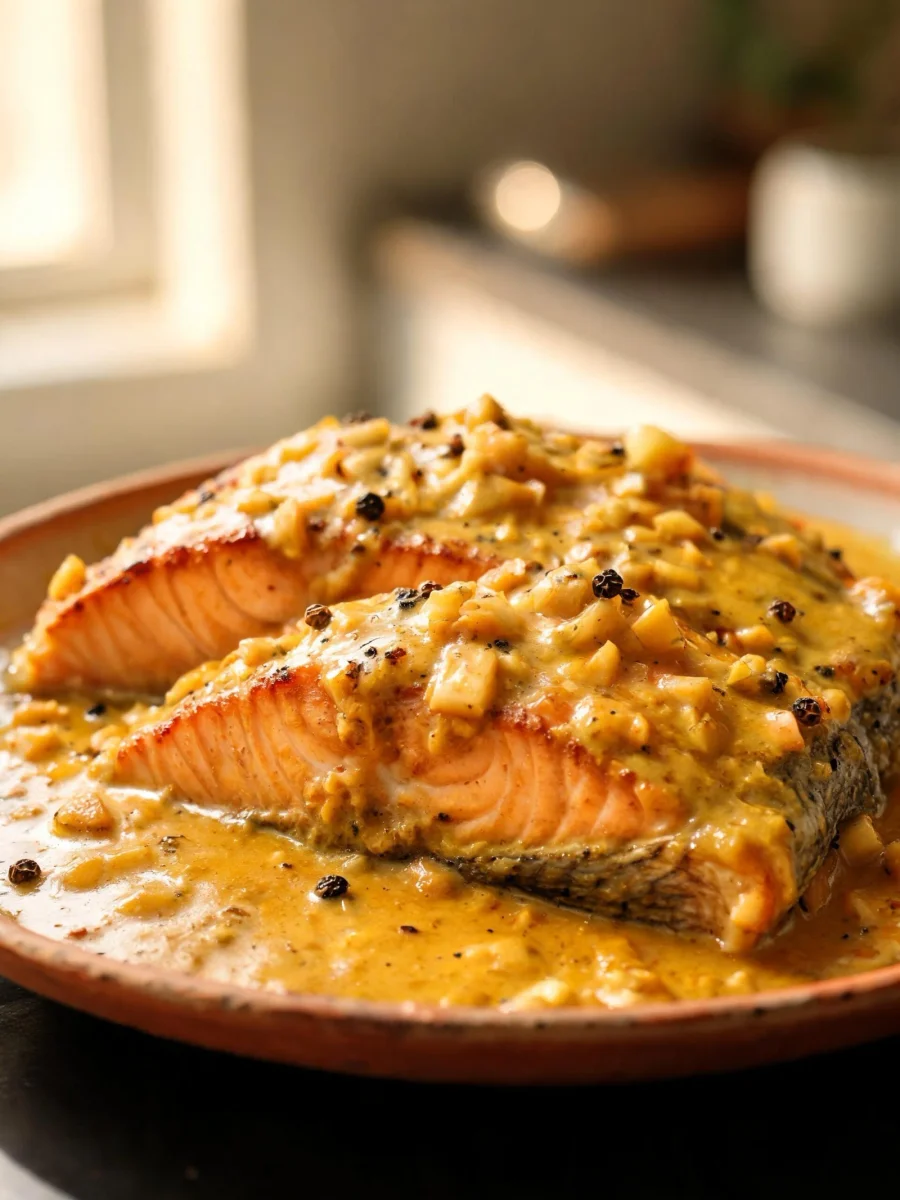
Pan-seared salmon is finished in a creamy coconut, tomato and spice sauce, with lime and fresh coriander to brighten it. It makes a warming one-pan dinner in about 35 minutes, with rice or flatbreads ready to catch the sauce.
Ingredients
- 4 (170 g each)salmon fillets, skin-on
- 15 ml (1 tbsp)avocado oil
- 2.5 ml (1/2 tsp)kosher salt
- 1.25 ml (1/4 tsp)freshly cracked black pepper
- 15 ml (1 tbsp)coconut oil
- 1 mediumyellow onion, finely chopped
- 4 clovesfresh garlic, minced
- 15 ml (1 tbsp)fresh ginger, grated
- 1serrano pepper, finely minced (optional)
- 5 ml (1 tsp)ground turmeric
- 7.5 ml (1 1/2 tsp)garam masala
- 5 ml (1 tsp)ground cumin
- 5 ml (1 tsp)ground coriander
- 425 g (15 oz)crushed tomatoes
- 383 g (13.5 oz)unsweetened full-fat coconut milk
- 1lime, juiced
- 15 g (1/2 cup)fresh coriander, chopped
Instructions
- 1
Dry and season
Pat the salmon completely dry with kitchen paper, then season both sides with the salt and black pepper.
- 2
Sear the salmon
Heat 15 ml (1 tbsp) avocado oil in a large frying pan over medium-high heat. Add the salmon skin-side down and sear for 4–5 minutes, until the skin is crisp. Turn and cook for another 1–2 minutes, then lift the fillets out and set aside.
- 3
Soften the aromatics
Lower the heat to medium and add 15 ml (1 tbsp) coconut oil. Cook the onion for 5–6 minutes, until softened. Add the garlic, ginger and optional serrano pepper, then cook for 1 minute, until fragrant.
- 4
Bloom the spices
Add the turmeric, garam masala, cumin and coriander. Stir continuously for 30–45 seconds.
- 5
Simmer the sauce
Add the crushed tomatoes and simmer for 2 minutes. Stir in the coconut milk, bring the sauce to a gentle simmer and cook for 5 minutes. Season with salt.
- 6
Finish the salmon
Return the salmon to the pan, skin-side up, and spoon some sauce over the flesh. Cover, turn the heat to low and cook for 3–5 minutes, until cooked through.
- 7
Add lime and coriander
Take the pan off the heat. Squeeze over the lime juice and scatter with fresh coriander before serving.
What is coconut curry salmon?
This is a skillet supper built around salmon cooked in a spiced tomato and coconut sauce. Its American recipe framing brings together ingredients and flavours associated with South Asian-style curries; it is not a single traditional regional curry.
The method sears the fish first, then simmers the sauce in the same pan. That gives the salmon a crisp start while the coconut milk softens the tomatoes and spices into a creamy finish.
Nutrition and macros by portion
The nutrition label shows one serving as written: 610 calories, 39g protein, 15g carbs, 44g fat.
| Portion | Adjustment | kcal | Protein | Carbs | Fat |
|---|---|---|---|---|---|
| Lighter | Use less coconut milk | 427 kcal | 27g | 11g | 31g |
| This serving | As written | 610 kcal | 39g | 15g | 44g |
| Hungry | Add rice or flatbread | 915 kcal | 59g | 23g | 66g |
Salmon supplies most of the protein, while the coconut milk and cooking oils contribute much of the fat, including saturated fat. The tomatoes and onion provide most of the carbohydrates; serve with rice or flatbread for more, or add greens and a modest portion of rice to balance the plate.
The ingredients that shape the sauce
Spice blend: turmeric, garam masala, cumin and coriander provide warmth and depth. Stirring them briefly in the oil helps release their aroma before the wet ingredients go in.
Tomato and coconut: crushed tomatoes bring tang, while full-fat coconut milk makes the sauce rich and smooth. Use unsweetened coconut milk so the sauce stays savoury.
Fresh finish: lime juice lifts the creamy sauce, and coriander adds a fresh herbal note. Add the serrano if you want extra heat.
How to sear the salmon
Dry fish: patting the fillets thoroughly dry helps the skin brown rather than steam. Season both sides before they go into the pan.
Skin first: lay the fish skin-side down in the hot oil and leave it undisturbed for 4–5 minutes. Turn it only once the skin is crisp and releases readily from the pan.
Getting the sauce right
Aromatics: let the onion soften for 5–6 minutes, then cook the garlic, ginger and optional pepper for just 1 minute. This gives them time to become fragrant without letting the garlic scorch.
Gentle simmer: stir the spices for 30–45 seconds, simmer the tomatoes for 2 minutes, then cook the coconut milk sauce for 5 minutes. Keep it at a gentle simmer rather than a vigorous boil.
How to tell when it is done
Salmon: after returning the fillets to the pan, cook them covered over low heat for 3–5 minutes. The flesh should be opaque and flake easily; thicker fillets may need the longer end of the stated time.
Sauce: it should coat the back of a spoon and look creamy, not split or rapidly bubbling. The lime and coriander go on after the pan comes off the heat.
What to serve alongside
Rice: plain basmati or another fluffy rice is an easy way to serve the extra sauce. Spoon the curry over the rice just before eating.
Something fresh: add a crisp salad or steamed green vegetables to contrast with the rich sauce. Flatbreads also work well for scooping it up.
Recipe notes & tips
- Use a wide frying pan so the salmon fits in a single layer.
- Shake or stir the coconut milk well before measuring it into the pan.
- Keep the spice mixture moving so it does not catch on the bottom of the pan.
- If the sauce thickens too much, loosen it with a small splash of water.
- Add the lime juice at the end to keep its flavour fresh.
Variations
- More heat: leave the serrano seeds in, or add a little extra finely chopped pepper.
- Milder sauce: omit the serrano for a gentler curry.
- Extra vegetables: stir in spinach near the end and cook until wilted.
- Fresh tomato note: use chopped fresh tomatoes in place of crushed tomatoes, allowing for a less uniform sauce.
- Herb swap: finish with chopped flat-leaf parsley if coriander is not to your taste.
Common mistakes to avoid
- Wet salmon: it will struggle to crisp; pat the fillets thoroughly dry before seasoning.
- Moving the fish too soon: the skin can tear; let it sear undisturbed until crisp before turning.
- Burning the spices: they can turn bitter; stir constantly and add the tomatoes after 30–45 seconds.
- Boiling the coconut milk hard: the sauce may lose its smooth texture; keep it at a gentle simmer.
- Overcooking the fish: it can become dry; start checking after 3 minutes in the covered pan.
How to store
Refrigerate leftovers in an airtight container for up to 2 days. Reheat gently in a covered pan over low heat until hot throughout, adding a splash of water if the sauce has thickened; avoid prolonged heating, which can dry out the salmon.
Frequently asked questions
Can I use salmon without the skin?
Yes. Sear it carefully and turn it gently, as skinless fillets can be more delicate. The skin will not become crisp, but the fish will still cook in the sauce.
Can I make the curry less spicy?
Omit the optional serrano pepper. The recipe’s ground spices add warmth and fragrance, but the pepper is the main adjustable source of chilli heat.
Can I use light coconut milk?
You can, though the sauce will be thinner and less rich than when made with full-fat coconut milk. Simmer it gently and check the consistency before adding the salmon.
How do I know the salmon is cooked through?
The flesh should turn opaque and flake easily when pressed with a fork. Begin checking after 3 minutes in the covered pan, since fillet thickness affects the cooking time.
What can I serve with coconut curry salmon?
Serve it with basmati rice or flatbreads to soak up the sauce. A simple salad or green vegetables make a fresh accompaniment.
Can I prepare the sauce ahead?
Yes. Make the tomato and coconut sauce ahead, refrigerate it, then reheat it gently before adding freshly seared salmon and finishing the cooking.
Cook it from the original
This recipe comes from bluerecipes.com. Their page has the author’s own photos, notes and tips — the best place to cook it from.
Open the recipe on bluerecipes.com