
Gluten Free Ginger Molasses Cookies
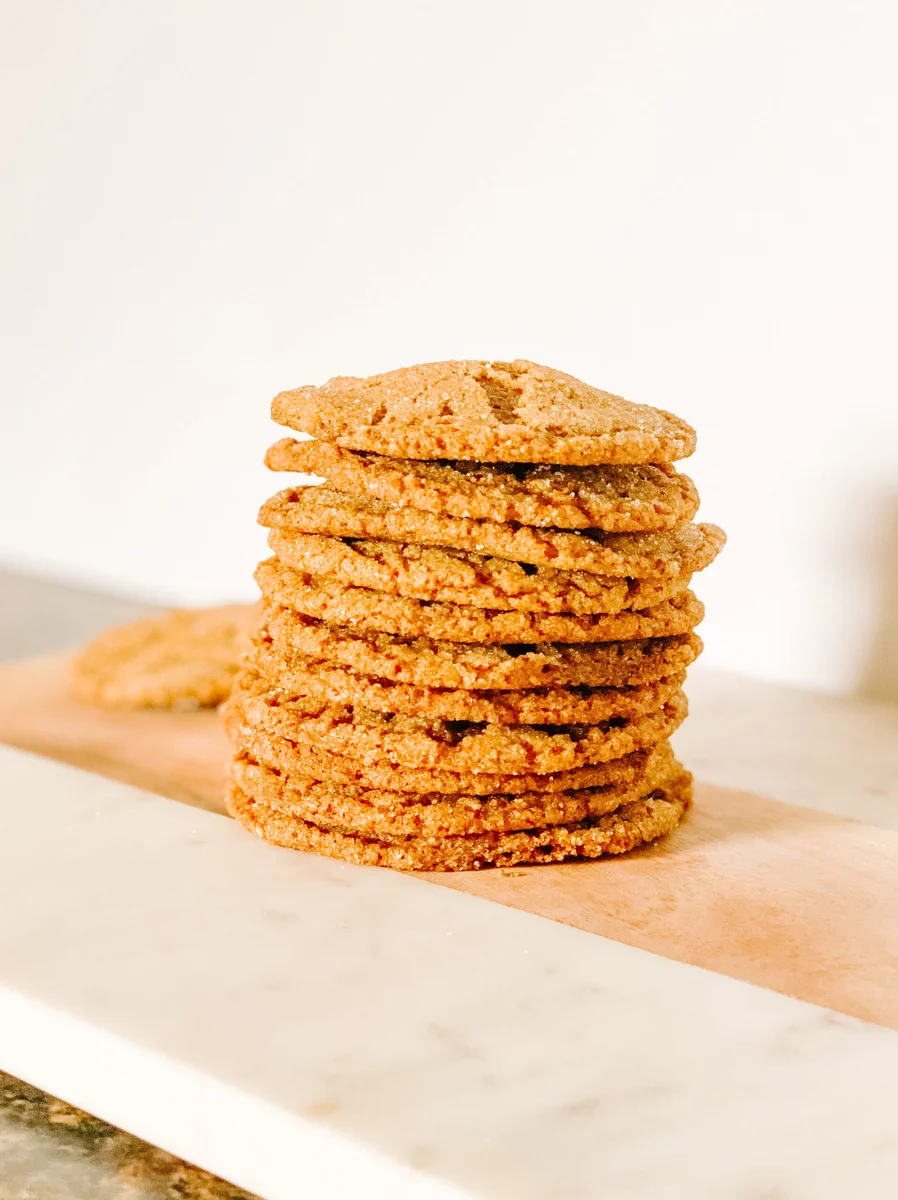
These gluten-free ginger molasses cookies pair warm spices with a soft, chewy centre and a sugar-crackled top. Chilling the dough helps make it easier to shape and gives the flavours time to meld.
Ingredients
- 145 g (1 1/2 cups)almond flour
- 28 g (4 tablespoons)coconut flour
- 24 g (3 tablespoons)arrowroot flour
- 10 g (2 teaspoons)bicarbonate of soda
- 4 g (2 teaspoons)ground ginger
- 2.5 g (1 teaspoon)ground cinnamon
- 1 g (1/2 teaspoon)ground cloves
- 3 g (1/2 teaspoon)salt
- 170 g (3/4 cup), at room temperatureunsalted butter
- 100 g (1/2 cup), packedbrown sugar
- 200 g (1 cup), divided in halfgranulated sugar
- 1egg
- 80 ml (1/4 cup)unsulphured molasses
Instructions
- 1
Mix dry ingredients
In a medium bowl, mix the almond flour, coconut flour, arrowroot flour, bicarbonate of soda, ginger, cinnamon, cloves and salt. Set the mixture aside.
- 2
Cream butter and sugar
Using a hand mixer or stand mixer on medium-high, beat the room-temperature butter with the brown sugar and half of the granulated sugar for about 2 minutes, until evenly combined. Scrape down the sides of the bowl as needed.
- 3
Chill the dough
Set the mixer to medium-low and slowly add the egg, followed by the molasses and then the dry mixture. Scrape down the bowl as needed. Transfer the dough to a bowl, cover with beeswax wrap or cling film, and refrigerate for 1–2 hours or overnight.
- 4
Prepare the oven
Heat the oven to 177°C (350°F) and line baking sheets with baking parchment. Put the remaining half of the granulated sugar in a small bowl.
- 5
Shape and bake
Scoop small portions of dough and roll them into 2.5 cm (1-inch) balls. Coat each ball in the granulated sugar and arrange on the prepared baking sheets, leaving at least 5 cm (2 inches) between them. Repeat until a baking sheet is full, then bake for 9 minutes or until the tops begin to crack.
- 6
Cool the cookies
Remove the cookies from the oven and leave them on the baking sheet for 3–5 minutes. Transfer to a wire rack and leave until completely cool; they will firm up slightly while staying soft and chewy. Serve straight away or store in an airtight container for up to 2 weeks.
What are ginger molasses cookies?
Ginger molasses cookies are spiced, sweet cookies in the American baking tradition, known for their deep molasses flavour and crinkled tops. This version uses almond, coconut and arrowroot flours rather than wheat flour.
The mix of flours gives the dough structure, while butter and molasses help keep the baked cookies tender. Rolling the dough in sugar adds a delicate crisp coating.
Nutrition and macros by portion
The nutrition label shows one serving as written: 146 calories, 2g protein, 17g carbs, 8g fat.
| Portion | Adjustment | kcal | Protein | Carbs | Fat |
|---|---|---|---|---|---|
| Lighter | Make smaller cookies | 102 kcal | 1g | 12g | 6g |
| This serving | As written | 146 kcal | 2g | 17g | 8g |
| Hungry | Serve two cookies | 219 kcal | 3g | 26g | 12g |
Almond flour and butter contribute much of the fat, while the flours and sugars provide most of the carbohydrates; the egg and almond flour add some protein. For a more balanced plate, serve a cookie with fruit or alongside a protein-rich snack such as yoghurt.
Why use three flours?
Almond flour: it forms the bulk of the dough and brings a rich, tender texture.
Coconut flour: it absorbs moisture, so measure it carefully rather than adding extra by feel.
Arrowroot flour: it helps bind the gluten-free mixture and supports a soft, cohesive cookie.
The spice balance
Ginger leads the flavour, with cinnamon and cloves adding warmth behind it. Molasses contributes a dark, caramel-like note that suits the spice blend.
Use the spices as listed for the intended balance; ground cloves are particularly potent, so avoid packing extra into the measuring spoon.
Why chilling matters
The dough needs 1–2 hours in the fridge, or an overnight rest, before shaping. Chilled dough is firmer and easier to roll into balls.
The rest also gives the flours time to absorb moisture. If the dough has been chilled overnight, let it sit briefly until it is workable enough to scoop.
Look for cracked tops
Bake at 177°C for 9 minutes, watching for the tops to start cracking. The cookies may still look soft at this point; they firm slightly as they cool.
Leave them on the baking sheet for 3–5 minutes before moving them to a wire rack. This short rest helps them hold together during transfer.
Serving and timing
The listed total time is 29 minutes, but the method also calls for chilling the dough for 1–2 hours or overnight. Plan for that resting time in addition to the stated total.
Serve the cookies with tea, coffee or a glass of milk, or add one alongside fruit for a simple snack.
Recipe notes & tips
- Measure the coconut flour and arrowroot flour levelly for consistent dough.
- Use butter at room temperature so it creams evenly with the sugars.
- Scrape down the mixer bowl when the butter mixture or dough clings to its sides.
- Leave at least 5 cm between dough balls so the cookies have room to spread.
- Use baking parchment to make it easier to lift the cookies from the baking sheet.
- Let the cookies cool fully before sealing them in a container.
Variations
- More ginger: increase the ground ginger slightly for a sharper spice note.
- Citrus zest: add a little finely grated orange zest to complement the molasses.
- Chopped nuts: fold in chopped pecans for extra crunch.
- Dairy-free swap: use a firm plant-based butter alternative in place of the butter.
- Extra spice: add a pinch of ground nutmeg for another warm note.
Common mistakes to avoid
- Skipping the chill: the dough is harder to shape; refrigerate it for the stated 1–2 hours or overnight.
- Crowding the tray: cookies may run together; leave at least 5 cm between dough balls.
- Overbaking: the cookies can lose their soft centre; take them out when the tops begin to crack after about 9 minutes.
- Moving them too soon: warm cookies can break; leave them on the baking sheet for 3–5 minutes first.
- Adding flour by eye: too much can make the dough dry; measure the flour quantities carefully.
How to store
Once completely cool, store the cookies in an airtight container for up to 2 weeks, as directed in the recipe. If you want to serve them warm, briefly reheat one at a time in the oven and check it often.
Frequently asked questions
How long does the dough need to chill?
Chill it for 1–2 hours or overnight. The cold dough should be firm enough to scoop and roll.
Can I bake the dough straight away?
The method calls for chilling, which makes the dough easier to handle. Skipping the rest may make shaping more difficult.
How do I know when the cookies are done?
Look for cracks starting to form across the tops after about 9 minutes. They will still be soft when they come out and firm slightly as they cool.
Why are the cookies soft when they leave the oven?
They are meant to stay soft and chewy. Leave them on the baking sheet for 3–5 minutes, then let them cool completely on a wire rack.
Can I make the dough ahead?
Yes. The recipe allows the covered dough to chill overnight before it is shaped and baked.
How should I store the baked cookies?
Cool them completely and keep them in an airtight container for up to 2 weeks.
Cook it from the original
This recipe comes from glutenfreetreatsandeats.com. Their page has the author’s own photos, notes and tips — the best place to cook it from.
Open the recipe on glutenfreetreatsandeats.com