
Gluten Free Banana Doughnuts
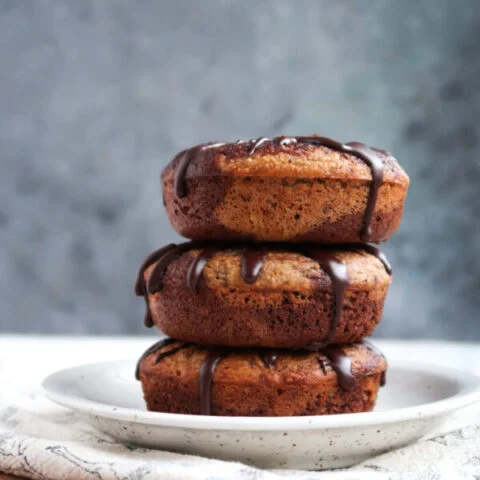
These gluten-free, dairy-free banana doughnuts are baked until tender, with a cocoa-banana batter swirled through the lighter banana mixture. They’re a handy way to use very ripe bananas and make a gently spiced treat without deep-frying.
Ingredients
- 50 galmond meal
- 90 grice flour
- 30 ggluten-free oat flour (or teff flour)
- 25 gtapioca flour
- 1 tspbicarbonate of soda
- 1 tspcardamom
- 1 tspcinnamon
- A pinchsalt
- 3very ripe bananas
- 1 tbsplemon juice
- 40 gcoconut sugar (or xylitol)
- 2eggs, at room temperature
- 30 gcoconut oil, melted
- 1 tbsphoney
- 1 tbspoat milk, at room temperature
- 1 1/2 tbspunsweetened cocoa powder
Instructions
- 1
Prepare the pan
Heat the oven to 175°C and prepare a large doughnut baking pan.
- 2
Mix the dry ingredients
In a bowl, whisk together the flours, tapioca flour, bicarbonate of soda, sugar, salt and spices.
- 3
Combine the batter
In a second bowl, whisk together the coconut oil, eggs and bananas. Add the wet mixture to the dry ingredients and whisk just until combined.
- 4
Make the cocoa batter
Transfer half of the batter to another bowl. Stir in the cocoa powder, honey and oat milk.
- 5
Fill and swirl
Spoon both banana batters into the doughnut pan, filling the moulds all the way. Gently swirl the mixtures with a toothpick.
- 6
Bake and cool
Bake at 175°C for 20 minutes, or until a toothpick inserted into the middle of a doughnut comes out clean. Leave the doughnuts in the pan for a few minutes, then transfer them to a wire rack to cool completely. The method also suggests glazing with melted chocolate.
What are baked banana doughnuts?
Doughnuts are sweet, ring-shaped bakes with roots in several European traditions; this version takes the shape but uses an oven rather than a fryer. Ripe banana brings sweetness and moisture to a soft, cake-like crumb.
The cocoa portion is folded through the plain banana batter to create a marbled finish. Cardamom and cinnamon add warmth without overpowering the fruit.
Nutrition and macros by portion
The nutrition label shows one serving as written: 300 calories, 7g protein, 48g carbs, 12g fat.
| Portion | Adjustment | kcal | Protein | Carbs | Fat |
|---|---|---|---|---|---|
| Lighter | Smaller doughnut portion | 210 kcal | 5g | 34g | 8g |
| This serving | As written | 300 kcal | 7g | 48g | 12g |
| Hungry | Serve two doughnuts | 450 kcal | 11g | 72g | 18g |
Bananas, rice flour, oat flour, tapioca and coconut sugar provide most of the carbohydrates; coconut oil and almond meal contribute much of the fat, while eggs and almond meal supply some protein. Pair a doughnut with plain yoghurt or a small handful of nuts for a more balanced snack.
Choosing the flours
Almond meal: it adds richness and helps keep the crumb tender, while rice flour supplies much of the structure.
Oat and tapioca: gluten-free oat flour gives the mixture body, and tapioca flour helps bind it. Teff flour can replace the oat flour as suggested; use certified gluten-free flour if that is important for your needs.
Getting the batter right
Ripe bananas: mash them thoroughly so there are no large lumps, then whisk them with the eggs and melted coconut oil. Room-temperature eggs and oat milk are less likely to make the coconut oil firm up as you mix.
Light mixing: combine the wet and dry mixtures only until no obvious dry patches remain. Overworking a gluten-free batter can make the finished doughnuts dense.
Making the marble
Half and half: divide the mixed batter evenly before adding cocoa, honey and oat milk to one portion. Stir until the cocoa is evenly distributed.
Gentle swirls: alternate the two batters in the moulds, then draw a toothpick through them lightly. A few passes are enough; too much swirling blends the colours rather than leaving a marbled pattern.
Checking for doneness
Oven cue: bake at 175°C for 20 minutes, then test the centre with a toothpick. It should come out clean rather than carrying wet batter.
Cooling: leave the doughnuts in the pan for a few minutes so they can settle before turning them out. Cool them completely on a wire rack before adding any glaze.
Serving and finishing
These are sweet enough to serve plain with tea or coffee, or alongside fresh berries for a fruity contrast. A little melted chocolate can be used as a glaze, as mentioned in the method, although it is not included in the listed ingredients.
For a more filling snack, serve one with unsweetened yoghurt or a handful of nuts. If serving them as dessert, keep any topping simple so the banana and spice remain noticeable.
Recipe notes & tips
- Choose very ripe bananas with plenty of brown spots for a sweeter, easier-to-mash batter.
- Measure the flours by weight for a more consistent result.
- Have the eggs and oat milk at room temperature before mixing.
- Avoid overmixing once the wet and dry ingredients come together.
- Swirl the two batters only a few times to keep the marbled pattern distinct.
- Let the doughnuts cool fully before glazing so the topping does not run off.
Variations
- Use teff flour: replace the oat flour with the same stated amount of teff flour.
- Change the sweetener: use xylitol instead of coconut sugar as suggested.
- Boost the spice: add a little extra cinnamon or cardamom to the dry mixture.
- Add a chocolate glaze: drizzle with melted chocolate after the doughnuts have cooled, as suggested in the method.
- Keep them plain: skip the optional glaze to let the banana and cocoa flavours stand out.
Common mistakes to avoid
- Unripe bananas: they are less sweet and harder to mash; choose very ripe fruit.
- Lumpy cocoa batter: sift or whisk the cocoa into the half portion until evenly mixed.
- Overmixing: it can make the doughnuts dense; stop as soon as the batter is combined.
- Over-swirling: it blurs the marble effect; make only a few light passes with a toothpick.
- Turning out too soon: the doughnuts may break while warm; leave them in the pan for a few minutes first.
- Glazing while warm: the topping can slide off; wait until the doughnuts are completely cool.
How to store
Once completely cool, store the doughnuts in an airtight container at room temperature for up to 2 days, or refrigerate for up to 4 days. Warm briefly in a low oven or microwave before serving; add any chocolate glaze after reheating.
Frequently asked questions
Can I use teff flour instead of oat flour?
Yes. The ingredient list suggests replacing the 30 g of gluten-free oat flour with the same amount of teff flour.
Do I need a doughnut pan?
The method is written for a large doughnut baking pan. Without one, you can use another small baking mould, but the shape and baking time may differ.
How do I know when the doughnuts are baked?
After 20 minutes at 175°C, insert a toothpick into the centre of a doughnut. It should come out clean, without wet batter.
Can I make the batter ahead?
It is best to bake the batter soon after mixing so the raising action is not lost. You can measure the dry ingredients in advance and combine them with the wet mixture just before baking.
Is the chocolate glaze included in the ingredients?
No chocolate for glazing is listed, although the method mentions glazing with melted chocolate. Leave it off or provide chocolate separately if you want that finish.
Can I freeze the baked doughnuts?
Yes. Once fully cool, freeze them in an airtight container and thaw at room temperature. Add any glaze after thawing.
Cook it from the original
This recipe comes from glutenlessyes.com. Their page has the author’s own photos, notes and tips — the best place to cook it from.
Open the recipe on glutenlessyes.com