
Sri Lankan Fish Curry with Coconut Milk
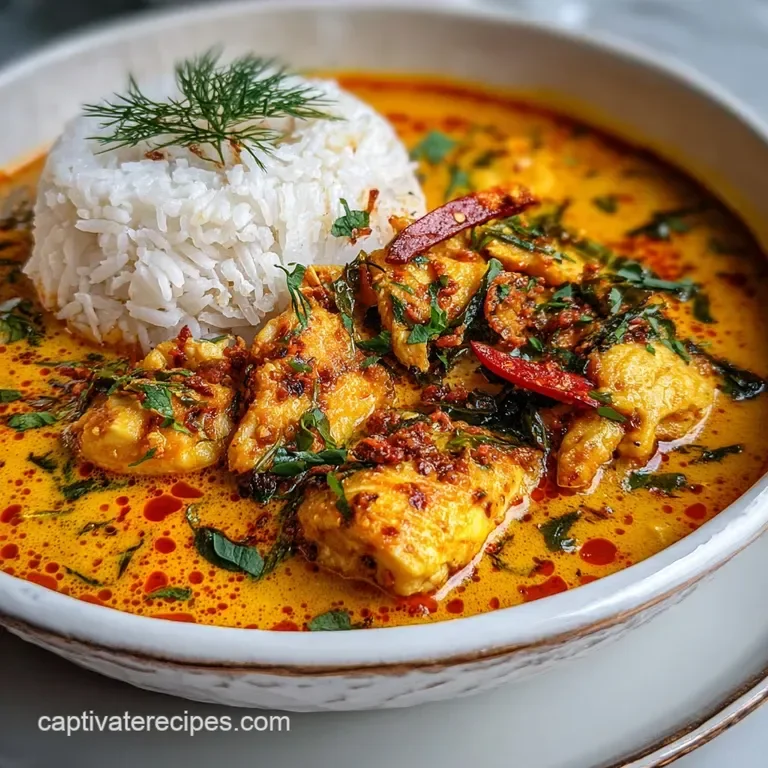
This Sri Lankan fish curry combines firm white fish with roasted spices, tamarind and full-fat coconut milk for a fragrant, gently tangy sauce. It makes a satisfying meal with rice and is ready in about 35 minutes, including the marinating time.
Ingredients
- 680 g (1.5 lb)firm white fish, such as barramundi, snapper or kingfish, cut into 2.5 cm cubes
- 0.5 tspground turmeric
- 0.5 tspsea salt
- 1 tbspfresh lime juice
- 2 tbspcoconut oil
- 1 mediumred onion, finely sliced
- 3 clovesgarlic, minced
- 2.5 cm (1 inch)fresh ginger, grated
- 2green chillies, slit lengthways
- 1 sprig (about 10–12 leaves)fresh curry leaves
- 5 cm (2 inches)pandan leaf
- 1 smallcinnamon stick
- 2 tbspSri Lankan roasted curry powder
- 1 tspchilli powder
- 0.5 tspfenugreek seeds
- 240 ml (1 cup)water
- 240 ml (1 cup)thick full-fat coconut milk
- 1 tbsp paste dissolved in 2 tbsp warm watertamarind paste
Instructions
- 1
Season the fish
In a glass bowl, toss the fish with the turmeric, salt and lime juice. Leave to marinate for 15 minutes.
- 2
Cook the aromatics
Heat the coconut oil in a pan over medium heat until shimmering, with the first faint wisps of smoke. Add the onion, curry leaves, pandan leaf and cinnamon stick; cook for 5 minutes, until the onion is translucent and the curry leaves are crisp and fragrant.
- 3
Add fresh aromatics
Stir in the ginger, garlic, green chillies and fenugreek seeds. Cook for 2 minutes, until fragrant.
- 4
Toast the spices
Lower the heat and add the roasted curry powder and chilli powder. Stir constantly for 1 minute, until the spices darken slightly and smell nutty.
- 5
Add the liquid
Pour in 240 ml (1 cup) of water and the tamarind paste dissolved in warm water. Bring the mixture to a gentle boil.
- 6
Simmer the fish
Carefully slide the marinated fish into the liquid. Reduce the heat and simmer for 8 minutes, until the fish is opaque but has not started to fall apart.
- 7
Finish with coconut
Pour in 240 ml (1 cup) of thick coconut milk. Gently swirl the pan rather than stirring, to help keep the fish intact. Simmer for another 5 minutes, until the sauce has a velvety sheen and coats the back of a spoon.
What is Sri Lankan fish curry?
Sri Lankan fish curry is a spiced fish dish shaped by the island’s use of aromatic curry blends, coconut and souring ingredients such as tamarind. Recipes vary by household and region, with different balances of heat, richness and acidity.
Here, roasted curry powder brings depth, tamarind adds a tart note and coconut milk softens the spices. Firm white fish helps the pieces hold their shape as they cook.
Nutrition and macros by portion
The nutrition label shows one serving as written: 386 calories, 37g protein, 9g carbs, 22g fat.
| Portion | Adjustment | kcal | Protein | Carbs | Fat |
|---|---|---|---|---|---|
| Lighter | Use less coconut milk | 270 kcal | 26g | 6g | 15g |
| This serving | As written | 386 kcal | 37g | 9g | 22g |
| Hungry | Serve with extra rice | 579 kcal | 56g | 13g | 33g |
The fish supplies most of the protein, while the coconut milk and coconut oil contribute much of the fat. The small amount of carbohydrate comes mainly from the onion, tamarind and spices; serve with rice or vegetables to round out the plate.
Choose fish that holds together
Firm fish: Barramundi, snapper and kingfish are suggested because their flesh can withstand simmering better than delicate fillets. Cut the fish into even 2.5 cm cubes so the pieces cook at a similar pace.
Seasoning: Turmeric, salt and lime coat the fish during its 15-minute rest. This short marination seasons the pieces without leaving them in the citrus for too long.
Build the curry base
Whole aromatics: Onion, curry leaves, pandan and cinnamon cook first in the coconut oil, giving the base time to release their fragrance. Cook the onion until translucent and the leaves crisp, rather than letting them burn.
Fresh aromatics: Ginger, garlic, chillies and fenugreek follow. The curry and chilli powders go in at lower heat; constant stirring helps toast them without scorching.
Keep the fish intact
Gentle simmer: Once the fish enters the tamarind liquid, keep the heat low enough for a steady simmer. After 8 minutes, the flesh should look opaque but not be breaking into flakes.
Swirl, do not stir: Coconut milk goes in for the final 5 minutes. Swirling the pan moves the sauce around the fish while reducing the chance of breaking the pieces.
Look for a silky sauce
Before adding the coconut milk, the fish cooks in water and tamarind. This gives it time to cook through while the sour, spiced base develops.
Finish cue: After the coconut milk simmers for 5 minutes, the sauce should look glossy and coat the back of a spoon. Avoid a vigorous boil, which can disturb the fish and make the sauce less smooth.
Serve it with rice
Rice: Plain steamed rice is a natural partner for the coconut and tamarind sauce, and makes it easy to serve the curry as a main meal. Spoon plenty of sauce over the rice.
Fresh contrast: Serve with a crisp salad or simply prepared vegetables if you want a fresher contrast alongside the rich curry. Add them separately rather than stirring them into the pan.
Recipe notes & tips
- Pat the fish dry before marinating if its surface is especially wet.
- Keep the fish pieces similar in size so they cook evenly.
- Have the spices and aromatics ready before heating the oil, as the spice stage moves quickly.
- Lower the heat before adding the powdered spices to reduce the risk of scorching them.
- Use a wide pan so the fish can sit in the sauce without being piled too deeply.
- Swirl the pan gently after adding coconut milk instead of stirring through the fish.
Variations
- Adjust the heat: Use fewer green chillies or less chilli powder for a milder curry.
- Change the fish: Choose another firm white fish that can hold together during simmering.
- Add more tang: Adjust the tamarind to taste, keeping the sauce balanced with the coconut milk.
- Make it dairy-free: The listed ingredients contain no dairy; check that your curry powder is also dairy-free.
- Serve with greens: Add a side of simply cooked greens for a fresh accompaniment.
Common mistakes to avoid
- Boiling hard: A rolling boil can break up the fish; keep the curry at a gentle simmer.
- Stirring after adding fish: The cubes can crumble; move the sauce by gently swirling the pan.
- Scorching the spices: Powdered spices can burn quickly; lower the heat and stir constantly for their 1-minute toast.
- Overcooking the fish: It may fall apart if simmered too long; check at 8 minutes for opaque flesh that is not yet flaking.
- Skipping the marination: The fish may be less evenly seasoned; allow the full 15 minutes with turmeric, salt and lime.
- Adding coconut milk too early: It is intended for the final 5-minute simmer; add it after the fish has cooked in the tamarind liquid.
How to store
Refrigerate leftovers in a sealed container for up to 2 days. Reheat gently in a covered pan over low heat until hot throughout, taking care not to stir vigorously or boil the fish.
Frequently asked questions
Can I use frozen fish?
Yes, thaw it fully in the fridge and drain away excess liquid before cutting and marinating. This helps keep the curry from becoming watery.
Can I make the curry less spicy?
Use fewer green chillies and reduce the chilli powder. The roasted curry powder still gives the sauce its characteristic spiced flavour.
How can I tell when the fish is cooked?
The fish should be opaque after its 8-minute simmer, but not yet falling apart. It finishes cooking gently as the coconut milk simmers for 5 minutes.
Can I prepare the curry ahead?
You can prepare the aromatics and measure the spices ahead, but the fish is best cooked close to serving so it stays intact. Refrigerate any cooked leftovers promptly.
What should I serve with this curry?
Steamed rice pairs well with the coconut-tamarind sauce. A crisp salad or simply cooked vegetables can provide a fresh side.
What if I cannot find pandan leaf?
You can leave it out if it is unavailable. The curry will still have flavour from the curry leaves, cinnamon, ginger, garlic and roasted spices.
Cook it from the original
This recipe comes from captivaterecipes.com. Their page has the author’s own photos, notes and tips — the best place to cook it from.
Open the recipe on captivaterecipes.com