
Orange Maple Roast Duck Recipe
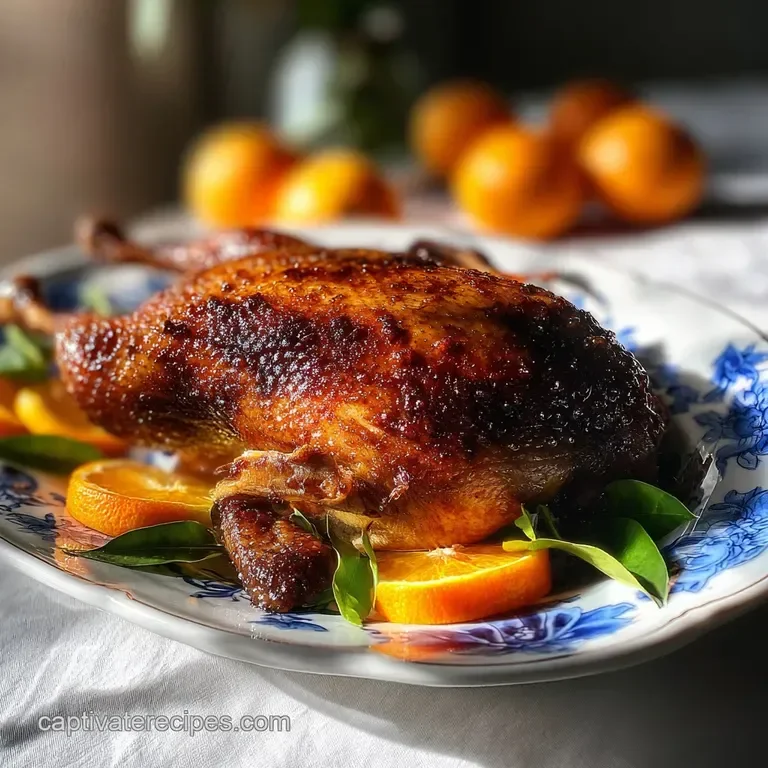
This roast duck pairs crisp, rendered skin with a glossy glaze of maple syrup, orange and warm star anise. The gradual roasting and repeated glazing make it a special-occasion centrepiece with a clear timing guide.
Ingredients
- 1 whole (approx. 2.5 kg)Pekin duck
- 2 tsp (about 10 g)kosher salt
- 1 tsp (about 2 g)freshly cracked black pepper
- 1 large, quarteredorange
- 1 head, halved crosswisegarlic
- 3 sprigsfresh thyme
- 120 mlpure Grade A maple syrup
- 120 mlfreshly squeezed orange juice
- 1 tbsp (15 ml)orange zest
- 1 tbsp (15 ml)rice vinegar
- 1 tbsp (15 ml)Dijon mustard
- 2 whole podsstar anise
Instructions
- 1
Dry the duck
Take the duck out of the refrigerator 30 minutes before cooking. Pat the skin completely dry with paper towels. Prick the skin all over with a sharp skewer, especially around the breast and thighs, taking care not to pierce the meat.
- 2
Season and stuff
Season the cavity and skin generously with 2 tsp salt and 1 tsp black pepper. Put the quartered orange, halved garlic and thyme sprigs inside the cavity, then tie the legs together with kitchen string so the bird is compact.
- 3
Roast the duck
Set the duck breast side up on the rack in a roasting pan. Roast at 177°C for about 1 hour 45 minutes. Every 45 minutes, carefully remove the pan and ladle the excess liquid fat into a heatproof jar; the skin will begin to look thin and translucent.
- 4
Make the glaze
As the duck roasts, combine 120 ml maple syrup, 120 ml orange juice, the orange zest, rice vinegar, Dijon mustard and star anise in a saucepan. Simmer over medium heat for 10–12 minutes, until reduced by half and thick enough to coat the back of a spoon.
- 5
Glaze and brown
Raise the oven temperature to 218°C and brush a thick layer of glaze over the whole duck. Return it to the oven for 10 minutes, then brush again every 5 minutes, for 15–20 minutes in total, until the skin is dark, bubbling and fragrant.
- 6
Rest before carving
Take the duck out when the thickest part of the thigh reaches 74°C internally. Transfer it to a chopping board and rest for 15 minutes before carving so the juices do not run out.
What is orange maple roast duck?
Roast duck is a classic celebratory dish in French cooking, while orange is a familiar partner for its rich meat; maple syrup brings an American note to this version. The combination makes a sweet-tart glaze with a gentle anise aroma.
The method works in two stages: a longer roast renders fat beneath the skin, then a hotter finish sets the glaze and deepens the colour.
Nutrition and macros by portion
The nutrition label shows one serving as written: 742 calories, 34g protein, 39g carbs, 49g fat.
| Portion | Adjustment | kcal | Protein | Carbs | Fat |
|---|---|---|---|---|---|
| Lighter | More greens, less duck | 519 kcal | 24g | 27g | 34g |
| This serving | As written | 742 kcal | 34g | 39g | 49g |
| Hungry | Larger duck portion | 1113 kcal | 51g | 58g | 73g |
The duck contributes most of the protein and fat, while the maple syrup and orange juice provide most of the carbohydrates. Balance a serving with green vegetables and a moderate portion of potatoes, rather than adding another rich side.
Preparing the skin
Dry skin: pat the duck thoroughly before roasting so the surface is ready to crisp.
Pricking: use a skewer to make small holes through the skin, especially over the breast and thighs, without piercing the flesh. This helps fat escape as the bird cooks.
Building flavour inside
Cavity aromatics: the orange, garlic and thyme sit inside the duck as it roasts, adding fragrance without complicating the glaze.
Seasoning: salt and pepper go on both the skin and the cavity, so the flavour is not limited to the outer surface.
Getting the glaze right
Reduction: simmer the maple syrup, orange juice, zest, vinegar, mustard and star anise until the mixture has reduced by half. It should cling thickly to the back of a spoon before brushing.
Layering: apply the glaze during the final, hotter stage rather than at the start, when its sweetness could darken too much during the long roast.
Watching the roast
Rendered fat: remove the pan carefully every 45 minutes and ladle the excess fat into a heatproof jar. The skin becoming thin and translucent is a visual cue that fat is rendering.
Doneness: check the thickest part of the thigh for 74°C, then rest the duck for 15 minutes before carving.
Serving the duck
Carve the rested duck and serve it with roasted or mashed potatoes to catch the savoury juices and sweet citrus glaze. Green vegetables, such as green beans or cabbage, make a fresh contrast.
Keep any extra glaze on the side so diners can add it as they like.
Recipe notes & tips
- Bring the duck out of the refrigerator 30 minutes before cooking, as directed, so it is easier to prepare.
- Use a sharp skewer to pierce the skin without making holes in the meat.
- Ladle the rendered fat into a heatproof jar each time you remove the roasting pan.
- Reduce the glaze until it coats a spoon before brushing it over the duck.
- Use a thermometer to check the thickest part of the thigh for 74°C.
- Rest the duck for the full 15 minutes before carving.
Variations
- More citrus: add a little extra orange zest to the glaze.
- Herb change: use rosemary in place of thyme inside the cavity.
- Milder spice: omit the star anise for a simpler orange-maple glaze.
- Sharper glaze: increase the rice vinegar slightly for a more tart finish.
- Side pairing: serve with braised red cabbage for a sweet-savoury contrast.
Common mistakes to avoid
- Damp skin: pat the duck thoroughly dry before seasoning so the surface is not wet.
- Piercing the meat: prick only through the skin, or juices can escape during roasting.
- Skipping fat removal: carefully ladle out excess fat every 45 minutes as the recipe directs.
- Glazing too early: wait until the oven is raised to 218°C for the final stage.
- Thin glaze: simmer it until reduced by half and able to coat the back of a spoon.
- Carving straight away: rest the duck for 15 minutes first to help keep its juices in the meat.
How to store
Refrigerate leftover carved duck in a covered container within 2 hours, and use within 3–4 days. Reheat until piping hot; warm the meat gently to avoid drying it out, and crisp the skin briefly in a hot oven if desired.
Frequently asked questions
Can I prepare the glaze ahead?
Yes. Make it ahead and refrigerate it, then warm it gently until brushable before glazing the duck.
How do I know the glaze is reduced enough?
It should be reduced by half and coat the back of a spoon thickly.
Why prick the duck skin?
Pricking the skin gives rendered fat a way to escape during roasting. Avoid piercing the meat itself.
Can I roast the duck without a rack?
The method calls for a rack in the roasting pan, which holds the duck above the collected fat. Use a roasting pan and rack if available.
Can I use the rendered duck fat?
Yes. Let it cool, store it in a covered container in the refrigerator, and use it for cooking another time.
How long should the duck rest?
Rest it for 15 minutes on a chopping board before carving.
Cook it from the original
This recipe comes from captivaterecipes.com. Their page has the author’s own photos, notes and tips — the best place to cook it from.
Open the recipe on captivaterecipes.com