
cube croissant
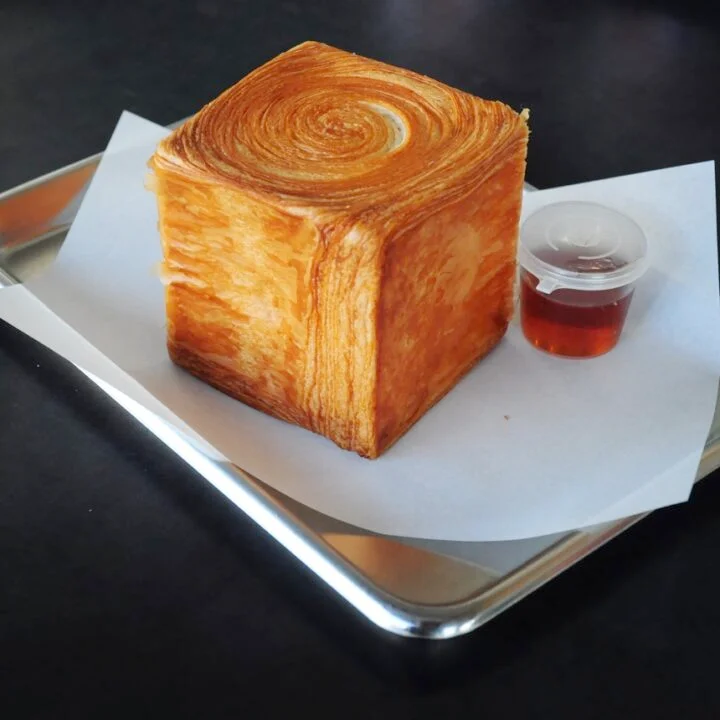
A cube-shaped take on a croissant, with flaky, buttery layers and a soft centre. The dough is folded to create layers, chilled overnight and baked in a cube mould for its distinctive shape.
Ingredients
- 375 g (3 cups)plain flour
- 50 g (1/4 cup)granulated sugar
- 2.5 g (1/2 teaspoon)salt
- 57 g (1/4 cup), coldunsalted butter
- 9 g (1 tablespoon)active dried yeast
- 120 ml (1/2 cup), warmwater
- 113 g (1/2 cup), at room temperatureunsalted butter
- Optional; to tastefilling or topping of your choice, such as chocolate ganache, whipped cream or maple syrup
- 1, required for a defined cube shapecube mould
- As neededplastic wrap
- 1rolling pin
- 1mixing bowl
Instructions
- 1
Mix dry ingredients
Put the flour, sugar and salt in a large mixing bowl and combine.
- 2
Activate the yeast
In a separate container, dissolve the yeast in the warm water and leave it for 5 minutes.
- 3
Rub in butter
Cut the cold butter into cubes and add 57 g (1/4 cup) to the flour mixture. Rub it in with your hands until the mixture has a texture like rough sand.
- 4
Make the dough
Gradually add the yeast mixture to the flour mixture, bringing it together into a dough. Knead for about 10 minutes, until smooth and elastic.
- 5
Let dough rise
Cover the dough with plastic wrap and leave it for 1 hour, until doubled in size.
- 6
Roll into rectangle
Roll the dough out into a large rectangle.
- 7
Spread the butter
Spread the room-temperature butter over two-thirds of the dough.
- 8
Fold the dough
Fold the unbuttered third over the middle third, then fold the other end over it, like a letter.
- 9
Roll again
Roll the dough out again into a large rectangle.
- 10
Repeat the folds
Repeat the folding and rolling steps.
- 11
Chill overnight
Wrap the dough fully in plastic wrap and refrigerate it overnight.
- 12
Shape the dough
The next day, choose one of two shapes. For cubes, cut squares slightly smaller than the base of the mould to leave room for expansion, then stack them until they form a cube. If desired, carefully pipe filling into the centre after stacking halfway. For a spiral, cut long triangles and roll them into a spiral that fits diagonally into the mould.
- 13
Bake until done
Bake at 190°C (375°F) for approximately 20 minutes.
- 14
Add toppings
Add any toppings you like before serving.
What is a cube croissant?
A cube croissant is a shaped variation on the classic French laminated pastry, made from dough layered with butter and baked until flaky. Its square-sided form comes from shaping the dough in a cube mould rather than rolling it into a crescent.
This version uses a yeast dough with two butter additions: cold butter rubbed into the flour, followed by room-temperature butter spread between folds. The overnight chill gives the dough time to firm up before shaping.
Nutrition and macros by portion
The nutrition label shows one serving as written: 592 calories, 12g protein, 91g carbs, 22g fat.
| Portion | Adjustment | kcal | Protein | Carbs | Fat |
|---|---|---|---|---|---|
| Lighter | Use less butter | 414 kcal | 8g | 64g | 15g |
| This serving | As written | 592 kcal | 12g | 91g | 22g |
| Hungry | Serve a larger portion | 888 kcal | 18g | 137g | 33g |
Most of the carbohydrates come from the flour and sugar, while the butter supplies most of the fat and saturated fat. The flour contributes some protein, but this is a pastry-led serving; pair it with fruit and a protein-rich food such as yoghurt for a more balanced plate.
The two butter additions
Cold butter: rubbing it into the flour until the mixture resembles rough sand gives the dough a crumbly starting texture. Keep this stage brief so the butter does not become warm and greasy.
Soft butter: spread it over two-thirds of the rolled dough, as directed, before folding. This butter is what forms layers as the dough is rolled and folded.
Folding and rolling
Letter fold: bring the unbuttered third over the centre, then fold the remaining end over it. Keep the edges reasonably aligned so the dough can be rolled out evenly again.
Second turn: roll the dough into a rectangle and repeat the fold and roll once more. Work gently; if the dough resists rolling, let it rest briefly rather than forcing it.
Shaping the cube
Square layers: cut the dough slightly smaller than the mould’s base, since the dough needs space to expand. Stack the squares to build the cube, keeping the stack even.
Spiral option: roll long triangles into spirals and check that each one fits diagonally inside the mould. The mould is key for keeping the cube shape during baking.
Chilling and baking
Overnight rest: wrap the dough completely before refrigerating so its surface does not dry out. The chilled dough is easier to cut and shape than soft, warm dough.
Doneness: bake at 190°C (375°F) for approximately 20 minutes, as specified. The outside should look baked and flaky; the exact finish can vary with the mould and the size of the pieces.
Filling and serving
Filling: the recipe makes filling optional and suggests piping it into the centre while stacking the squares. Add it carefully so the layers remain stacked and the dough still fits in the mould.
Toppings: chocolate ganache, whipped cream or maple syrup are suggested options. Serve the croissant after baking with a topping of your choice.
Recipe notes & tips
- Measure the butter for each stage separately before starting.
- Use a large bowl so you can combine the dough without spilling flour.
- Wrap the dough fully before its overnight chill to prevent a dry surface.
- Cut the squares a little smaller than the mould base to allow room for expansion.
- Pipe any optional filling carefully into the centre while stacking the dough.
- Check the croissants at around the 20-minute mark, as moulds and piece sizes can affect baking.
Variations
- Chocolate centre: pipe chocolate ganache into the middle of the stack as it is assembled.
- Cream topping: add whipped cream after baking for a soft, creamy finish.
- Maple finish: drizzle maple syrup over the baked croissant just before serving.
- Spiral shape: cut the dough into long triangles and roll them into spirals that fit diagonally in the mould.
Common mistakes to avoid
- Warm cold butter: it can turn greasy during rubbing; work it in briefly while it is still cold.
- Uneven folds: they can make rolling difficult; align the edges as you fold the dough like a letter.
- Oversized squares: they may not fit the mould with room to expand; cut them slightly smaller than its base.
- Loose wrapping: the dough surface can dry in the fridge; cover it fully with plastic wrap.
- Forcing the roll: stretching resistant dough can make it awkward to shape; ease off rather than pulling hard.
How to store
Keep any leftovers covered in an airtight container at room temperature and eat within 1–2 days for the best texture. Reheat briefly in an oven until warmed through; avoid adding toppings until serving.
Frequently asked questions
Do I need a cube mould?
The recipe specifies a cube mould as required for a perfect cube shape. Without one, the dough may not keep its square-sided form.
Can I make the dough the day before?
Yes. The method calls for wrapping it fully and refrigerating it overnight after the folds.
Can I add a filling?
Yes, filling is optional. The method suggests carefully piping it into the centre after stacking the dough halfway.
Can I make the spiral version instead?
Yes. Cut the dough into long triangles and roll them into spirals, making sure they fit diagonally in the mould.
How long does it bake?
Bake at 190°C (375°F) for approximately 20 minutes. The recipe does not give a separate visual doneness test.
Cook it from the original
This recipe comes from gluttodigest.com. Their page has the author’s own photos, notes and tips — the best place to cook it from.
Open the recipe on gluttodigest.com