
Perogies Two Ways
These gluten-free perogies come in two flavours: a classic cheddar-and-onion filling and a creamy sweet-potato filling with cinnamon. Boil them until they float, then brown them in butter for a soft centre and a lightly crisp finish.
Ingredients
- 155 g (1¼ cups)gluten-free flour
- 10 ml (2 tsp)xanthan gum
- 245 g (1 heaped cup)plain Greek yoghurt
- for rollingcornflour
- 120 ml (½ cup)water
- 3 mediumwhite potatoes, mashed
- 50 g (⅓ cup)white onion
- 110 g (1 cup)cheddar cheese, grated
- 28 g (2 tbsp)butter
- 2.5 ml (½ tsp)salt
- 2.5 ml (½ tsp)pepper
- 1 largesweet potato, mashed
- 14 g (1 tbsp)butter
- 30 g (2 tbsp)cream cheese
- 12 g (1 tbsp)brown sugar
- 5 ml (1 tsp)cinnamon
- 2.5 ml (½ tsp)vanilla
- 2.5 ml (½ tsp)salt
- 2.5 ml (½ tsp)pepper
Instructions
- 1
Prepare the trays
Line two large baking sheets with baking parchment and bring a large pot of water to the boil. If the potatoes are not already mashed, boil and mash them now.
- 2
Mix the fillings
In a medium bowl, combine the mashed white potato or sweet potato with the other ingredients for the filling you are making. Set the filling aside.
- 3
Make the dough
Mix the gluten-free flour, xanthan gum and Greek yoghurt in a bowl until sticky. If the dough seems crumbly or grainy, mix in a little more yoghurt.
- 4
Dust the surface
Dust a large, clean work surface with cornflour, along with your hands, rolling pin and cutter. A drinking glass about 5 cm (2 inches) across can be used as a cutter.
- 5
Roll and cut
Roll the dough on the dusted surface as thinly as possible without making it translucent. Cut out as many circles as you can and place them on the prepared baking sheet. Gather and reroll the dough, cutting more circles until too little remains to use, then discard the scraps.
- 6
Add the filling
Spoon a small amount of filling onto one half of a dough circle. Dip a finger in the cup of water and run it around the edge of the circle.
- 7
Seal the edges
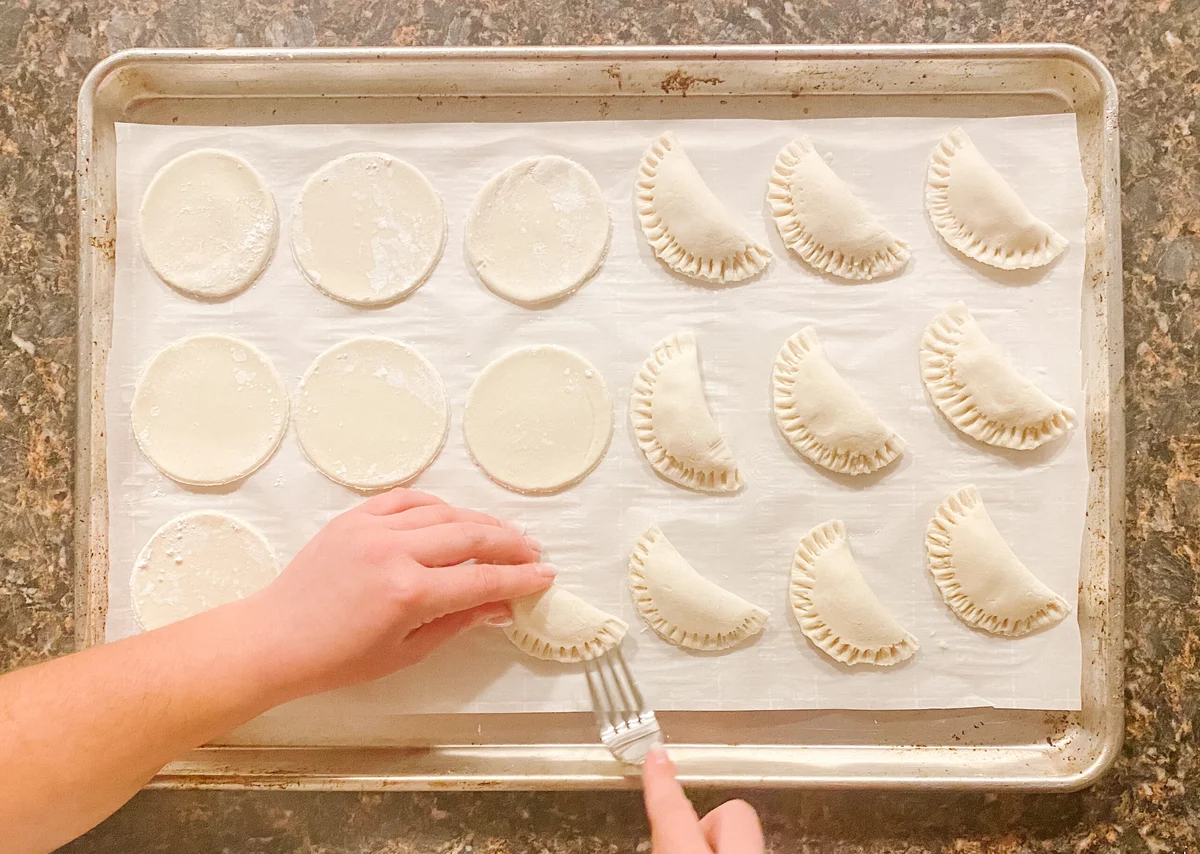
Fold the dough over the filling to make a crescent or half-moon shape, lining up the edges. Press around the edge with a fork to seal it, and repeat with the remaining dough and filling.
- 8
Boil the perogies
Carefully lower the perogies into the boiling water and cook until they float.
- 9
Brown in butter
Warm a couple of tablespoons of butter in a large pan or skillet over medium heat, then transfer the perogies to the pan. For the sweet-potato version, fresh sage can also be cooked in the butter before adding the perogies.
- 10
Drain the perogies
Once browned, after a few minutes, transfer the perogies to a wire rack with kitchen paper underneath or place them directly on kitchen paper.
- 11
Serve with toppings
Divide the perogies between plates and add toppings as desired. The cheddar-and-onion perogies are served with sour cream and bacon bits; the sweet-potato ones can be served plain or with sour cream.
What are perogies?
Perogies, also known as pierogi, are filled dumplings associated with Central and Eastern European cooking. They are commonly boiled and may be browned afterwards for extra colour and flavour.
This version uses a simple gluten-free dough made with flour, xanthan gum and Greek yoghurt. Two fillings give you a savoury potato, onion and cheddar option alongside a sweet-potato filling scented with cinnamon.
Nutrition and macros by portion
The nutrition label shows one serving as written: 100 calories, 4g protein, 14g carbs, 4g fat.
| Portion | Adjustment | kcal | Protein | Carbs | Fat |
|---|---|---|---|---|---|
| Lighter | Use less butter for browning | 70 kcal | 2g | 10g | 2g |
| This serving | As written | 100 kcal | 4g | 14g | 4g |
| Hungry | Serve a larger portion | 150 kcal | 5g | 21g | 5g |
The flour and potato provide most of the carbohydrates, while the cheddar, butter, yoghurt and cream cheese contribute much of the fat and some protein. For a more balanced plate, serve a few perogies with vegetables or salad rather than relying on toppings alone.
The two fillings
Cheddar and onion: mashed white potato makes a mild, hearty base for the onion and grated cheese. Mix the filling evenly so each dough circle gets a little of each ingredient.
Sweet potato: mashed sweet potato is paired with cream cheese, brown sugar, cinnamon and vanilla for a creamy, gently sweet centre. Keep the fillings separate while shaping so the two flavours remain distinct.
Working with the dough
Texture: the dough should be sticky rather than dry or grainy. If it crumbles as you work it, add a little more Greek yoghurt as directed.
Rolling: use cornflour on the worktop, hands, rolling pin and cutter to help prevent sticking. Roll the dough thinly, but stop before it becomes translucent.
Sealing each dumpling
Moist edges: a little water brushed around the rim helps the two sides of the dough adhere. Use only enough to dampen the edge.
Fork finish: fold the circle over the filling, line up the edges and press them together with a fork. Keep the filling away from the rim so the seal can close properly.
Boiling and browning
Boiling cue: lower the perogies carefully into the boiling water and cook until they float. The recipe does not give a set boiling time, so use this visual cue.
Pan finish: brown the boiled perogies in butter over medium heat. For the sweet-potato batch, the method suggests cooking fresh sage in the butter first.
Serving ideas
The suggested topping for the cheddar-and-onion perogies is sour cream and bacon bits. Sweet-potato perogies can be served plain after cooking with sage butter, or with sour cream.
A crisp salad or a portion of cooked vegetables makes a fresh contrast to the soft dough and rich fillings. Keep toppings separate if serving both flavours together.
Recipe notes & tips
- Mash the potatoes before you start shaping so the fillings are ready to use.
- Keep the dough and cut circles lightly dusted with cornflour to reduce sticking.
- Use a small amount of filling in each circle so the edges can be sealed.
- Press the fork around the full edge of each perogy to close any gaps.
- Transfer boiled perogies gently so they keep their shape.
- Brown the two flavours in separate batches if you want to keep their toppings and sage butter distinct.
Variations
- Sage butter: cook fresh sage in the butter before browning the sweet-potato perogies.
- Sour cream: serve it alongside either filling for a cool, tangy topping.
- Bacon bits: add them to the cheddar-and-onion perogies as suggested.
- Different cutter: use a round cutter or a glass about 5 cm across to shape the dough.
- Mixed batch: make both fillings and serve the two flavours together for a savoury-and-sweet selection.
Common mistakes to avoid
- Dry dough: mix in a little more Greek yoghurt if the dough is crumbly or grainy.
- Sticky worktop: dust the surface, hands, rolling pin and cutter with cornflour.
- Overfilled circles: use a small amount of filling so the dough edges can meet.
- Unsealed edges: dampen the perimeter with water and press it firmly with a fork.
- Thick dough: roll it thinly, stopping before it becomes translucent.
- Rough handling: lower the perogies carefully into the water and move them gently after boiling.
How to store
Store cooled cooked perogies in a covered container in the fridge and use within 3 days. Reheat in a pan with a little butter until hot, or warm them in the microwave; pan reheating helps restore a browned exterior.
Frequently asked questions
Can I use potatoes that are already mashed?
Yes. The method allows for mashed potatoes to be prepared ahead; combine them with the other ingredients for the filling you are making.
How do I know when the perogies are cooked?
The method says to boil them until they float. After that, brown them in a pan with butter.
Can I make both fillings from one batch of dough?
Yes. The recipe uses one dough and two separate fillings, so shape the circles with whichever filling you prefer.
Why is my dough crumbly?
The method recommends adding a little more Greek yoghurt if the dough is too crumbly or grainy. Mix it in gradually until the dough becomes sticky.
What can I serve on top?
Sour cream and bacon bits are suggested for the cheddar-and-onion filling. The sweet-potato version can be served plain or with sour cream.
Cook it from the original
This recipe comes from glutenfreetreatsandeats.com. Their page has the author’s own photos, notes and tips — the best place to cook it from.
Open the recipe on glutenfreetreatsandeats.com