
Gluten Free Oreo Cookie Cheesecake
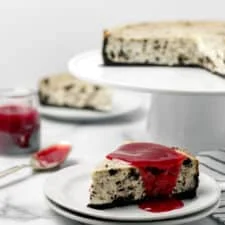
This gluten-free Oreo cheesecake has a buttery cookie crust and a smooth, tangy cream cheese filling studded with chopped cookies. Bake it with a water bath, then chill it thoroughly for neat slices and a creamy texture.
Ingredients
- 24gluten-free Oreo cookies
- 57 g (¼ cup)unsalted butter, melted
- 3 blocks (227 g each; 8 oz each)Philadelphia cream cheese, at room temperature
- 150 g (¾ cup)granulated sugar
- 2 eggs and 1 egg yolk, at room temperatureeggs
- 12.5 ml (2½ teaspoons)pure vanilla extract
- 240 ml (1 cup)sour cream, at room temperature
- 8gluten-free Oreo cookies, chopped
Instructions
- 1
Prepare the oven
Heat the oven to 180°C (350°F), with one rack in the middle and another just below it for a baking dish. Coat a 23 cm (9-inch) springform tin with non-stick cooking spray.
- 2
Make the crumbs
Pulse the 24 cookies in a food processor until finely ground. Add the melted butter and pulse again until combined and the crumbs look like wet sand.
- 3
Shape the crust
Tip the crumb mixture into the prepared tin. Press it evenly over the base and halfway up the sides, using the bottom of a measuring cup.
- 4
Bake the crust
Bake the crust for 10 minutes, then remove it from the oven to cool. Put a large baking dish on the lower oven rack.
- 5
Boil the water
Bring 1.4 litres (6 cups) of water to the boil in a medium saucepan for the water bath.
- 6
Mix the filling
Using a stand mixer fitted with the paddle attachment, mix the cream cheese and sugar on low until smooth and just combined. Scrape the bowl's base and sides, then mix on low for another 20 seconds. Add the eggs one at a time, mixing just until each is incorporated. After the second egg, scrape the bowl again and mix on low for another 20 seconds. Add the egg yolk and vanilla and mix until combined.
- 7
Fold in cookies
Take the bowl off the mixer. Fold in the sour cream with a spatula, then fold in the chopped cookies.
- 8
Fill the tin
Pour the filling into the crust and smooth the top with a spatula. Tap the tin gently on the worktop a few times to release air bubbles.
- 9
Bake and chill
Open the oven and slide out the lower rack with the baking dish. Carefully pour the boiling water into the dish and push the rack back in. Put the cheesecake on the middle rack just above the dish, close the oven door promptly and bake for 50–60 minutes. It is ready when the edges are puffed, the centre is slightly sunken and a gentle nudge makes it wobble like jelly. Turn off the oven, crack the door open and leave the cheesecake inside for 1 hour. Remove it and cool at room temperature for 30 minutes. Carefully run a knife between the cheesecake and tin, then remove the springform ring. Refrigerate uncovered for at least 4 hours, preferably overnight.
What is Oreo cheesecake?
Cheesecake is a baked dessert made with a rich cheese-based filling, usually set over a crumb crust. This version takes its flavour from gluten-free Oreo cookies, using them in both the base and the filling.
The method relies on a gently mixed filling, a water bath and a slow cool-down. Together, these help the cheesecake bake evenly and keep its centre creamy.
Nutrition and macros by portion
The nutrition label shows one serving as written: 1580 calories, 25g protein, 143g carbs, 105g fat.
| Portion | Adjustment | kcal | Protein | Carbs | Fat |
|---|---|---|---|---|---|
| Lighter | Smaller cheesecake slice | 1106 kcal | 18g | 100g | 74g |
| This serving | As written | 1580 kcal | 25g | 143g | 105g |
| Hungry | Larger cheesecake slice | 2370 kcal | 38g | 215g | 158g |
The cookies and sugar provide much of the carbohydrate, while cream cheese and butter contribute most of the fat; cream cheese, eggs and sour cream supply the protein. Serve a slice with fresh fruit to add a lighter, fresh contrast to the rich dessert.
Why use room-temperature ingredients?
Cream cheese: softened blocks blend more readily with sugar, helping the filling become smooth without prolonged mixing.
Eggs and sour cream: bringing these to room temperature helps them combine evenly with the cheese mixture. Add the eggs one at a time and mix only until incorporated.
Making a sturdy cookie crust
Fine crumbs: pulse the cookies until there are no large pieces, so the butter can coat them evenly.
Even pressing: use the flat bottom of a measuring cup to compact the crumbs over the base and partway up the sides. A well-packed crust is less likely to crumble when sliced.
How the water bath helps
Hot water: the baking dish of boiling water creates a humid environment in the oven as the cheesecake cooks. Take care when pouring it into the hot dish.
Gentle mixing: use low speed for the cream cheese and eggs, and fold in the sour cream and cookie pieces by hand. Excessive beating can make the filling airy.
Knowing when it is done
Edges and centre: look for puffed edges and a centre that has dipped slightly. A gentle jiggle should move the centre like jelly; it should not slosh.
Cooling: leave the cheesecake in the switched-off oven with the door cracked for an hour, then cool it at room temperature before chilling. This gradual change in temperature is part of the recipe's method.
Chilling and serving
Chill time: refrigerate the cheesecake for at least 4 hours, or preferably overnight, before cutting. The filling firms up as it cools, making slices easier to serve.
To serve: use a clean knife, wiping it between cuts for tidier portions. The rich cookie-and-cream flavour pairs well with fresh berries or a simple cup of tea or coffee.
Recipe notes & tips
- Scrape down the mixing bowl where directed so the cream cheese blends evenly.
- Press the crust firmly into the tin, including where the base meets the sides.
- Have the boiling water ready before opening the oven for the water bath.
- Use a spatula to fold in the sour cream and chopped cookies without beating air into the filling.
- Allow the full cooling and chilling time before slicing.
Variations
- Extra cookie topping: reserve a few chopped cookies to scatter over the filling before baking.
- Chocolate drizzle: finish chilled slices with a little melted chocolate.
- Berry pairing: serve each slice with fresh raspberries or strawberries.
- Vanilla accent: add a little extra vanilla if you prefer a stronger vanilla note.
- Gluten-free check: confirm that every cookie and any topping you use is labelled gluten-free.
Common mistakes to avoid
- Lumpy cream cheese: bring it to room temperature before mixing, then scrape the bowl as directed.
- Overmixing the eggs: mix on low only until each addition is incorporated.
- Loose crust: press the crumbs firmly and evenly into the tin before baking.
- Skipping the water bath: place the dish on the lower rack and add the boiling water as instructed.
- Cutting too soon: chill the cheesecake for at least 4 hours so it can firm up.
How to store
Keep the cheesecake covered in the refrigerator and eat within 4 days. Serve chilled; if preferred, let a slice stand briefly at room temperature, as reheating is not needed.
Frequently asked questions
How long does the cheesecake need to chill?
Chill it for at least 4 hours after cooling at room temperature. Overnight chilling is preferred for a firmer texture.
How can I tell when it is baked?
The edges should be puffed and the centre slightly sunken. A gentle nudge should make the centre wobble like jelly.
Can I skip the water bath?
The recipe uses a dish of boiling water on the rack below the cheesecake. Follow that method for the intended humid baking environment.
Why mix the filling on low speed?
Low-speed mixing helps combine the ingredients without whipping in too much air. Fold in the sour cream and cookie pieces by hand.
Can I make it ahead?
Yes. The recipe calls for at least 4 hours of refrigeration and preferably an overnight chill, so it suits making ahead.
Cook it from the original
This recipe comes from glutenlessapron.com. Their page has the author’s own photos, notes and tips — the best place to cook it from.
Open the recipe on glutenlessapron.com