
Roast Beef
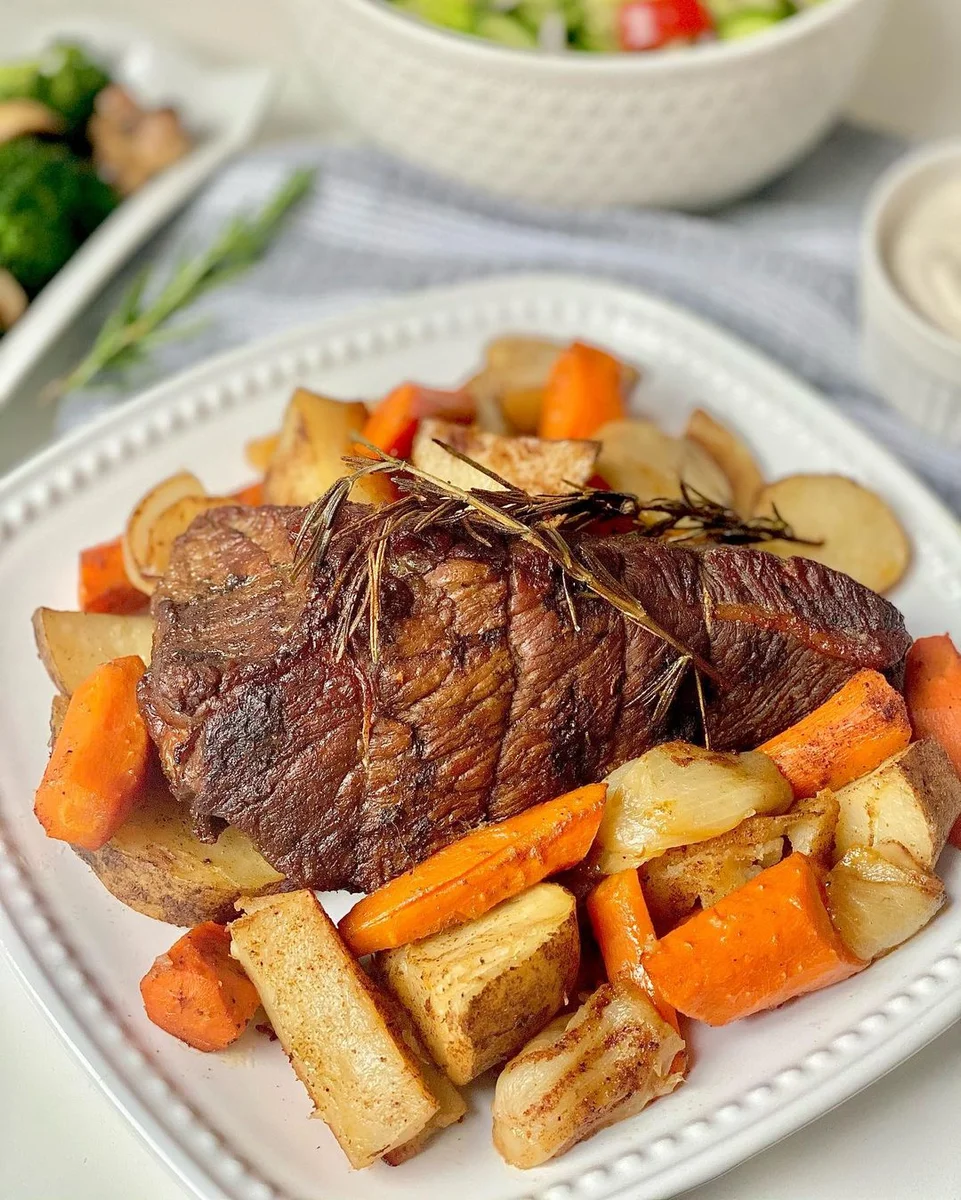
This roast beef is cooked with potatoes, onions and carrots in the same pan, so the vegetables take on the savoury juices as they soften. Garlic tucked into the joint and a browned exterior add flavour to a straightforward centrepiece meal.
Ingredients
- 1.5 kgsirloin roasting joint
- 4–5potatoes, quartered
- 2onions, peeled and quartered
- 3carrots, peeled and cut into thick slices
- 6–8 slivers (from 3–4 cloves, halved)garlic
- 30 g (2 tbsp)butter
- to tasteolive oil
- to tastesalt and pepper
- to tastegarlic powder
- to tasteseasoning salt
Instructions
- 1
Bring to temperature
Take the beef out of the fridge at least 45 minutes before cooking so it can lose some of its chill.
- 2
Preheat the oven
Heat the oven to 190°C (375°F).
- 3
Prepare the beef
Pat the joint dry with paper towels. Make 6–8 small cuts around it with the tip of a sharp knife and tuck a garlic sliver into each cut.
- 4
Sear the joint
Rub olive oil over the beef and season with salt and pepper. Melt the butter in a hot frying pan, then brown the base and sides of the joint.
- 5
Arrange the vegetables
Put the beef in a roasting pan and arrange the potatoes, onions and carrots around it. Sprinkle the vegetables with garlic powder and seasoning salt, coating them evenly, then drizzle with olive oil.
- 6
Roast and baste
Cook uncovered for 1 hour 30 minutes, basting once halfway through. The recipe gives a thermometer reading of 150–160 for well done.
- 7
Rest before carving
Take the pan out of the oven and cover the beef loosely with foil for 15–20 minutes before slicing. Pour hot gravy over the beef before serving.
What is roast beef?
Roast beef is a joint of beef cooked whole and carved into slices, often served as a traditional British Sunday roast. This version roasts potatoes and other vegetables alongside the meat, making the pan a useful source of both the main dish and its sides.
Garlic inserted into the beef seasons it from within, while searing gives the outside a browned start before it goes into the oven.
Nutrition and macros by portion
The nutrition label shows one serving as written: 1100 calories, 75g protein, 42g carbs, 70g fat.
| Portion | Adjustment | kcal | Protein | Carbs | Fat |
|---|---|---|---|---|---|
| Lighter | Less oil and butter | 770 kcal | 53g | 29g | 49g |
| This serving | As written | 1100 kcal | 75g | 42g | 70g |
| Hungry | Larger beef portion | 1650 kcal | 113g | 63g | 105g |
The beef supplies most of the protein and a substantial share of the fat; potatoes provide most of the carbohydrates, with smaller amounts from the carrots and onions. Oil, butter and the fat in the joint affect the overall fat and energy, while seasoning salt makes sodium particularly difficult to estimate precisely. Balance the plate with an extra serving of non-starchy vegetables if you like.
Choosing the beef
Sirloin: this joint is the recipe’s centrepiece and is large enough to carve for four. Patting it dry helps the surface brown in the frying pan.
Garlic: use the knife cuts to tuck the slivers into the meat rather than leaving them all on the surface, where they could fall off during searing.
Searing before roasting
Brown the base and sides in a hot pan with butter after rubbing the joint with oil and seasoning. Work carefully when turning the beef so the surface gets contact with the pan.
Searing adds colour to the exterior, but the oven time and thermometer reading are what this recipe uses to guide doneness.
Roasting the vegetables
Cut the potatoes into quarters and the carrots into thick slices so the pieces can roast alongside the joint. Arrange the vegetables around the meat and coat them with the garlic powder, seasoning salt and oil.
The recipe does not specify a vegetable doneness cue, so check that the potatoes and carrots are tender before serving; if they need longer, give them additional oven time.
Checking doneness
The method specifies 1 hour 30 minutes and a thermometer reading of 150–160 for well done, but does not state the temperature scale. If interpreting that as Fahrenheit, it is about 66–71°C; check the centre of the joint with a meat thermometer.
Ovens and the shape of a joint can affect cooking time, so use the thermometer reading as well as the stated time rather than relying on time alone.
Resting and carving
Rest the beef loosely covered for 15–20 minutes before slicing. This pause makes the joint easier to carve and gives you time to finish checking the vegetables.
Slice across the grain for more tender-feeling pieces, and serve with the roasted vegetables and hot gravy, as suggested in the method.
Serving the roast
The potatoes, carrots and onions are already cooked in the roasting pan, so they make natural accompaniments. Add gravy at the table or pour it over the carved beef just before serving.
For a fresh contrast, serve with a green vegetable or a crisp salad; these are optional additions rather than ingredients in the recipe.
Recipe notes & tips
- Take the joint out of the fridge at least 45 minutes before cooking, as the method recommends.
- Dry the surface of the beef thoroughly before adding oil and seasoning.
- Make the garlic cuts small and distribute them around the joint.
- Baste once halfway through the stated roasting time.
- Rest the beef loosely covered for the full 15–20 minutes before carving.
- Check the beef with a thermometer and confirm the temperature scale, since the recipe does not specify one.
Variations
- Herb finish: add chopped rosemary or thyme to the vegetables before roasting.
- Extra garlic: scatter a few additional whole cloves among the vegetables.
- Crispier potatoes: turn the potato pieces once during cooking so more sides meet the pan.
- More vegetables: add parsnips cut into thick pieces alongside the listed vegetables.
- Peppery crust: add extra black pepper to the outside of the joint before searing.
Common mistakes to avoid
- Skipping the drying step: wet beef browns less readily, so pat the surface dry first.
- Crowding the frying pan: the joint may not brown evenly; sear the base and sides in turns.
- Guessing the thermometer scale: the recipe omits it, so confirm the unit before using the 150–160 reading.
- Cutting straight away: the juices can run out more readily; rest the joint for 15–20 minutes first.
- Uneven vegetable cuts: pieces may finish at different times; keep the potatoes and carrots in similarly sized pieces.
How to store
Refrigerate leftover beef and vegetables in a covered container within 2 hours, and use within 3–4 days. Reheat until steaming hot, adding a splash of gravy or water to help keep the meat moist.
Frequently asked questions
What oven temperature should I use?
Preheat to 190°C (375°F), as stated in the method.
How long should I roast the beef?
The recipe specifies 1 hour 30 minutes, with one baste halfway through. Check the centre with a thermometer as well, since joint shape and oven performance can affect timing.
What does 150–160 mean on the thermometer?
The recipe does not state a scale. If it means 150–160°F, that is approximately 66–71°C; check your thermometer’s units before using this as the target.
Can I prepare the vegetables ahead?
You can peel and cut them ahead, then keep them covered in the fridge. Arrange and season them in the roasting pan when you are ready to cook.
Can I make this without searing the beef?
The method includes searing the base and sides in butter before roasting. You can omit that step, but the exterior will have less pan-browned colour.
Why should I rest the beef before carving?
The recipe calls for a 15–20 minute rest under loose foil. It also gives you time to check that the vegetables are tender and get the gravy ready.
Cook it from the original
This recipe comes from fooooods.com. Their page has the author’s own photos, notes and tips — the best place to cook it from.
Open the recipe on fooooods.com